
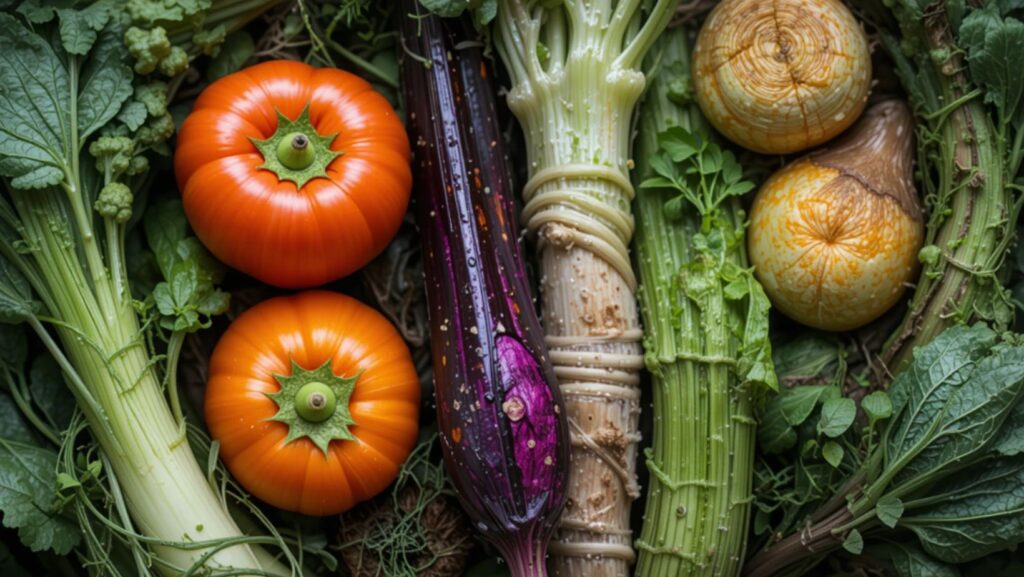
Would you want to know Which vegetables contain natural antioxidants? Vegetables, in general, and dark leafy greens like kale and spinach in particular, along with brightly colored veggies like carrots, bell peppers, and tomatoes, are excellent sources of natural antioxidants, as I’ve learned from personal experience.
Some natural antioxidants stand out for their remarkable effectiveness, despite the fact that there are a number of natural antioxidants that are essential.
That is not all, however; as you continue reading, I will provide you with further information on the topic matter.
Now, let’s get started
What are the Best Antioxidant-Rich Fruits & Vegetables
The antioxidant capacity of okra is 4.2 mmol/3.5 oz.
Okra, like curly kale, is a fantastic method to increase your intake of antioxidants. Folate, manganese, B vitamins, and vitamins A, C, and K are all found in okra.
Okra’s potential to lower the risk of type 2 diabetes, heart disease, and digestive issues has been investigated.
Artichokes: 3.5 mmol/3.5 oz of antioxidant capacity
In addition to antioxidants, artichokes include flavonoids, caffeic acid, cynarine, and chlorogenic acid, among other bioactive substances.
Artichokes have been used to decrease cholesterol and blood pressure, as well as to enhance liver and digestive health.
Curly Kale: 2.8 mmol/3.5 oz of antioxidant capacity
Kale and other cruciferous vegetables are known to be high in antioxidants. Kale is a nutrient-dense option since it contains vitamin C, carotenoids, folate, calcium, potassium, and fiber.
Kale’s antioxidant activity is enhanced by its abundance of polyphenolic components; boiling kale decreases its antioxidant levels. So, if you want to get the most out of this famous Brassica vegetable, you might want to use it raw in salads.
Antioxidant content of frozen spinach: 1.10 mmol/3.5 ounce
You may increase your intake of antioxidants by eating this leafy green. Spinach and other dark green vegetables are excellent providers of vitamins, minerals, and antioxidants.
Vitamins A, C, K, folate, and fiber are all found in spinach. Spinach contains powerful antioxidants called carotenoids, such as lutein and zeaxanthin, which are good for the eyes.
What vegetable has the highest antioxidant
Broccoli, spinach, carrots, and potatoes are just a few of the many vegetables rich in antioxidants.
Avocados, radishes, artichokes, cabbage, asparagus, sweet potatoes, pumpkin, kale, collard greens, and beetroot are among the many foods that are abundant in antioxidants.
likewise, Cooking using a large quantity of spices is an excellent idea.
Cinnamon, oregano, turmeric, cumin, parsley, basil, curry powder, mustard seed, ginger, pepper, chili powder, paprika, garlic, coriander, onion, and
cardamom are just some of the spices that are filled with antioxidants. Dill weed, sage, thyme, marjoram, tarragon, peppermint, oregano, savory, basil, and
dill weed are all examples of popular herbs. Your meals will be more flavorful and complex as a result of all of these ingredients, which are also rich in antioxidants.
Why Do I Need Antioxidants
Antioxidants are essential because they assist in the elimination of free radicals that are present in the body.
Free radicals have the potential to have an effect on cells and can produce oxidative stress when they are present in large concentrations.
When you have antioxidants in your body, you are better able to protect yourself from the harmful effects of free radicals. All right, let’s take a step back and figure out why.
Every every day, our bodies go through millions of different processes. Oxygen is necessary for the process of converting the food that we consume into cellular energy that our body can use, which is one of the processes that occurs.
The combustion of oxygen results in the production of oxidants, which are sometimes referred to as “free radicals.”
Free radicals can be obtained from the outside environment, such as through pollution and sunshine, in addition to free radicals that arise within the body.
However, free radicals can have a harmful impact on our cells regardless of whether they are obtained from the outside environment.
There are antioxidants, which are the opposite of oxidants. In order to accomplish their function, these chemicals attach to oxidants before the oxidants may cause any damage.
Certain nutrients perform the role of antioxidants inside the body, hence contributing to the elimination of free radicals.
In spite of the fact that the word “anti” is included in the name, antioxidants are beneficial to your health.
What are the most healthful vegetables
1. Spinach
Calcium, minerals, iron, and antioxidants are abundant in spinach.
Spinach is beneficial for meat- and dairy-free diets because of its iron and calcium.
Raw spinach is mainly water and has 6.9 calories per cupTrusted Source. It also fills an adult’s everyday needs.
plenty of vitamin A
C vitamin
Minerals: magnesium, folate, iron
The antioxidants in calcium
Vitamin K promotes calcium absorption, making it vital for strong bones. Also necessary for appropriate blood coagulation.
Spinach has plenty of magnesium for muscle and nerve function and iron for energy and blood.
Dark leafy greens should be eaten cautiously by people on blood thinners like warfarin (Coumadin).
Doctors advise patients to use these drugs to maintain vitamin K consumption.
How to consume spinach:
Raw spinach is popular in salads, sandwiches, and smoothies. Cooked spinach adds flavor to pasta and soups and is healthy.
2. Kale
Popular leafy green kale has several health advantages. Raw leaves include 7.35 caloriesTrusted Source per cup, and excellent vitamins A, C, and K.
High cholesterol may benefit from kale. Eight weeks of kale juice powder therapy boosted HDL and lowered LDL.
Blood thinners like Coumadin should be taken with caution while increasing dark, leafy green consumption. Vitamin K consumption should be regular when using these drugs.
Kale eating
Baby kale is used in pasta, salads, and sandwiches. A person can eat kale chips or juice.
3. Sugar potatoes
Sweet potatoes are roots. Medium sweet potatoes baked in their peel have 103 calories and 0.17 g fat.
Each sweet potato provides more vitamin A than the daily need for adults.
25% of vitamin C and B6 needs
12% potassium needs
beta carotene, which may prevent cancer and enhance vision.
Diabetes patients may like sweet potatoes. Because they are low in glycemic index and high in fiber, they may help manage blood sugar.
Sweet potatoes are healthy and may help control blood sugar if eaten in moderation.
Eat sweet potatoes:
Bake a sweet potato in its skin with fish or tofu for a simple supper.
4. Fermented veggies
Fermented foods include probiotics and all the benefits of unfermented vegetables.
Probiotics are helpful microorganisms found in the body and some foods and supplements. Some researchers think they can boost intestinal health.
IBS symptoms may improve with probiotics. They may also prevent antibiotic- or infection-induced diarrhea.
Good fermented veggies include cabbage for sauerkraut and cucumbers for pickles.
carrots
cauliflower
Fermented vegetable eating:
People consume fermented veggies in salads, sandwiches, and sides.
5. Tomatoes
Most people consume tomatoes as vegetables in savory meals despite their fruit status. Each cup of diced, uncooked tomatoes has 32.4 calories.
427 mg potassium
24.7 mg vitamin C
Lycopene, an antioxidant, is in tomatoes. Research Lycopene and beta carotene in tomatoes may prevent prostate cancer.
Lutein and zeaxanthin, additional antioxidants in tomatoes, may preserve eyesight.
High dietary intakes of these chemicals prevent age-related macular degeneration by 25%,
Tomato eating instructions:
People like tomatoes fresh or cooked, but cooking releases lycopene.
Is onion an antioxidant
Yes. A common root vegetable and a mainstay in many different cuisines are onions.
Vitamin C, fiber, and antioxidants abound in them.
Antioxidants are substances that can help prevent disease by shielding your cells from oxidative damage.
Numerous health advantages may be linked to eating onions.
For example, discovered that consuming 3.5 ounces (100 grams) of raw onions daily dramatically lowered blood sugar levels in diabetics.
Furthermore, additional studies have found that onions may have potent anticancer effects, with observational studies associating a higher consumption of this root vegetable with a decreased risk of common cancers.
Onions are a versatile ingredient that may be used in rice or pasta dishes, salads, soups, casseroles, scrambled eggs, and many other recipes.
Does cooking onions destroy antioxidants
In spite of this, heating these veggies does not completely remove the advantages that they naturally possess. E.g
The availability of some antioxidants, such as quercetin, can actually be increased by the Cooking of onions with heat.
Cooking onions, particularly employing techniques such as sautéing or frying, has the potential to increase the bioavailability of the antioxidants that they contain.
As a result of the possibility that the chemicals found in one onion can interact with those found in the other, there is a fear that cooking onions and garlic together would reduce the advantages that they provide.
There is no information to suggest that there is a major loss of nutrients when these veggies are cooked together that is currently available.
There is a possibility that garlic and onions, when diced, produce sulfur compounds that are complementary to one another rather than competing with one another.
Despite the fact that it is vital to utilize suitable procedures in order to improve nutrient retention, cooking them together at moderate temperatures can still deliver a variety of health advantages.
Final thought
Now that we have established Which vegetables contain natural antioxidants, Lots of colorful veggies are rich in antioxidants that occur naturally.
Some examples are cruciferous vegetables like broccoli and Brussels sprouts, leafy greens like spinach and kale, and vibrant vegetables like carrots and bell peppers.