
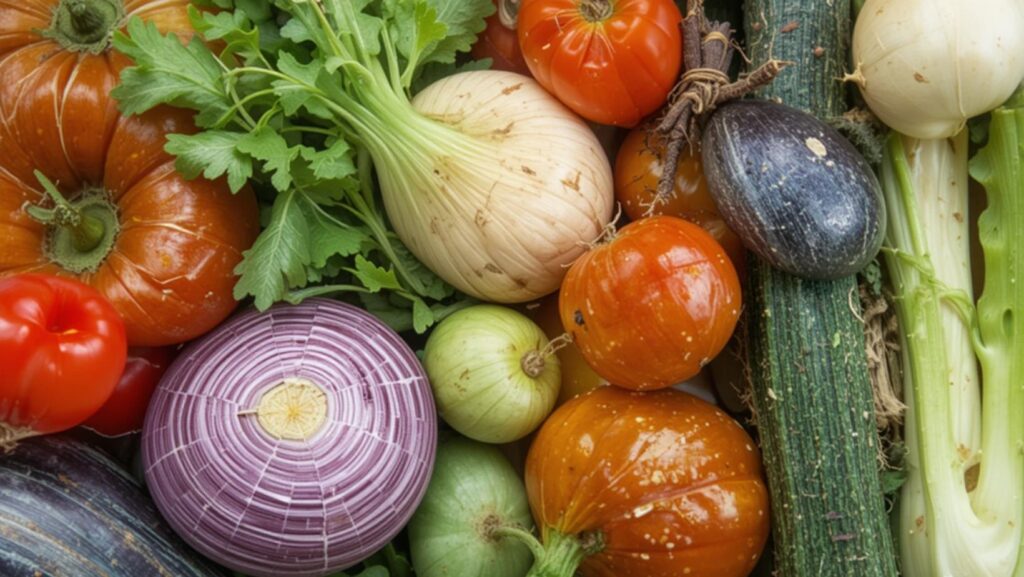
Would you want to know which vegetables are safe for a gluten-free diet? All fresh vegetables, in my experience, are naturally free of gluten, which means that a gluten-free diet allows you to enjoy a broad variety of foods.
Some examples of these foods are zucchini, green beans, peas, lettuce, carrots, eggplant, peppers, onions, broccoli, cauliflower, and potatoes.
However, that is not all; as you continue reading, I will provide you with further information on the topic matter.
Now, let’s get started
Are Fruits and Veggies gluten-free
Unprocessed, fresh ones certainly are! Go ahead and dive in. However, processed ones, like those found in fruit snacks, juices, jams, and other products, may include gluten.
These processed fruit products may also contain hydrolyzed wheat protein, modified food starch, malt (malt syrup, malt vinegar, malt extract, and malt flavoring), gluten stabilizers, and maltodextrin.
It can also be employed as a thickening agent or for flavoring. When manufactured from maize, potato, or rice starch, maltodextrin is OK; however, when made from wheat, it is not.
You may consume starchy vegetables as long as they aren’t made with sauces or other items that contain gluten.
Are potatoes gluten-free, then? Is popcorn, like corn in general, gluten-free? Yes, these are either popped by themselves or cooked as is.
If popcorn has already been processed and packaged in a bag, make sure to check the labels to ensure it wasn’t produced in facilities where cross-contamination might happen or with oils, glazes, or other substances that may contain gluten.
Corn flour, potato starch or potato starch flour, distilled vinegar, mono- and diglycerides, oat gum, citric acid, lactic acid, and malic acid are all considered safe ingredients.
Therefore, things on a label shouldn’t worry you!
Do any vegetables have gluten.
A healthy diet can include a variety of naturally gluten-free items, including:
While dry, frozen, and canned fruits and vegetables may include gluten-containing substances, such as those found in sauces, fresh fruits and vegetables are gluten-free.
Nuts, seeds, legumes, and beans are in their raw, natural states.
eggs
Fish, poultry, and lean, unprocessed meats without seasoning.
The majority of low-fat dairy products, such as unprocessed cheese, plain milk, and plain yogurt.
The following grains, starches, or flours can be included in a gluten-free diet:
- Amaranth.
- Arrowroot.
- Buckwheat.
- Corn includes gluten-free cornmeal, grits, and polenta.
- Flax.
- Rice, soy, maize, potato, and bean flour are examples of gluten-free flour.
- Hominy corn.
- Millet.
- Quinoa.
- Wild rice is one kind of rice.
- Sorghum.
- Soy.
- Tapioca (root of cassava).
- Teff.
- Grains are prohibited.
Avoid consuming meals and beverages that include any of the following:
- Wheat.
- Barley.
- Rye.
- Triticale.
Oats, unless otherwise noted on the label.
Oats don’t contain gluten by nature. However, when they are produced using rye, barley, or wheat, they might get contaminated.
We call this cross-contamination. Cross-contamination has not occurred between oats and oat products with a gluten-free label.
However, avenin, another protein found in oats, may cause a response in certain celiac disease patients. Find out from your doctor if eating oats that are labeled as gluten-free is acceptable.
What vegetables can gluten-free eat
There is no gluten in any of the veggies. When it comes to shopping at the grocery store, the produce area is the most convenient location.
All fresh veggies that have not been seasoned are included on this list.
Once you have purchased frozen, canned, or any other processed veggies, you should always check the label. Salad is not the only option available to you.
Apply some gluten-free alfredo sauce on spaghetti squash, or create some simple potato tacos using gluten-free frozen French fries.
Both of these options are gluten-free.
bell peppers, green tomatoes, and tomatoes
a variety of vegetables, including mushrooms, potatoes, maize, broccoli, cauliflower, squash, pumpkin, and zucchini
each variety of lettuce cabbage
Are all carrots gluten-free
Indeed. When they are in their natural condition, all fresh vegetables, including potatoes and tomatoes, onions, carrots, cauliflower, and everything else, are always free of gluten.
Before using anything, you should be sure to wash everything thoroughly to eliminate any possibility of cross-contamination.
In the same vein, basic frozen vegetables are likewise free of gluten; this includes frozen peas, frozen broccoli, frozen spinach, and frozen French beans, among other vegetables.
There are just two instances in which you need to exercise caution:
When it comes to frozen potato goods, like french fries, and when it comes to non-plain frozen vegetables, such as stir-fry mixes that contain spices or sauces.
Always make sure to check the label, as there is a possibility that some of these contain gluten.
If you are concerned about whether or not the food you are consuming contains gluten, choose fresh vegetables rather than processed ones.
Due to the fact that processing can destroy vitamins, fiber, and other useful elements, fresh and frozen vegetables often have a higher nutritional value than processed vegetables.
When it comes to a gluten-free diet, fresh vegetables that are high in nutrients are essential. You may add more to your meal planning by experimenting with some of these delicious and entertaining dishes.
Are cucumbers gluten-free
Indeed. Foods that are naturally devoid of gluten include the following:
Apples, bananas, berries, grapes, kiwis, oranges, peaches, pears, pineapple, watermelon, and certain other fruits are included in this category.
Carrots, cucumbers, bell peppers, broccoli, cauliflower, sweet potatoes, kale, spinach, and other vegetables as well as other vegetables.
In order to provide a more in-depth explanation:
What exactly is gluten? Wheat, barley, and rye are just a few of the grains that contain gluten.
Instead of being grains, cucumbers are fruits. There is no gluten in cucumbers since they are the fruit of the cucumber plant, which does not contain any of the grains that are known to contain gluten.
In the event that you are adhering to a gluten-free diet, it is OK for you to consume cucumbers due to their lack of gluten.
Other fruits and vegetables that do not contain gluten: Apples, bananas, grapes, broccoli, carrots, and tomatoes are just a few of the fruits and vegetables that do not contain gluten by their very nature.
What are Gluten-Free Food Alternatives
Despite the fact that gluten is included in a great number of popular meals that children like, there are now more gluten-free choices accessible than there have ever been before.
Alternatives such as the following are examples:
Gluten-free pizza (GFS)
Gluten-free wheat pasta
ingredients for gluten-free pancakes and waffles
combine ingredients for gluten-free cakes, cupcakes, and brownies
There have been tremendous advancements achieved over the years in terms of the quality and safety of gluten-free goods.
These advancements have made it simpler for children to adhere to a gluten-free diet without compromising on the flavor or nutrients of their food.
On the other hand, it is constantly suggested to carefully examine product labels in order to confirm that the products in question are, in fact, gluten-free.
Final thought
Now that we have established which vegetables are safe for a gluten-free diet, To determine whether or not processed foods contain gluten, it is necessary to check the labels on the products before purchasing them.
A food is said to be processed if it has undergone some alteration from its original condition.
Most of the time, they are prepared or packed. Check the list of ingredients that are printed on the label of a product.
Examine the list to see whether it contains wheat, barley, rye, or a cross of these grains, such as triticale.
Certain products have a statement at the bottom of the label that identifies wheat as a potential allergy.
Labeled as gluten-free in the United States, items must have less than 20 parts per million of gluten in order to be considered gluten-free.