
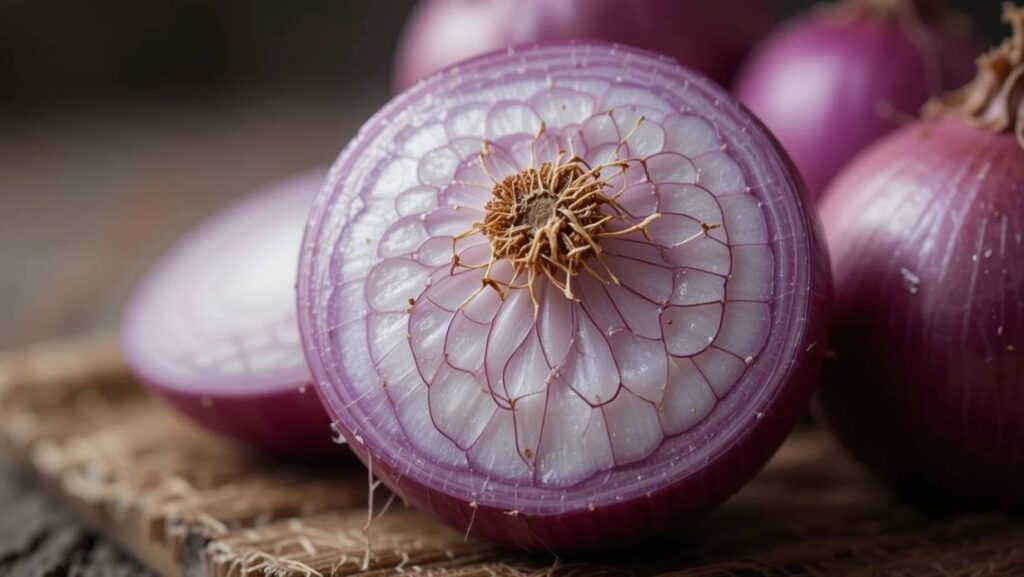
Do you want to know which onions are the best for your health? There is no doubt that red and yellow onions have more vitamins than other types.
It’s possible that yellow onions have eleven times more vitamins than white onions. Some antioxidants can be greatly reduced when they are cooked.
Until I proved her wrong, my mom always said that white onions are sweeter and better for you. I knew all onions were good for you, it was just the color that made me wonder.
As a way to try them all, she had to eat raw slices of different colored onions.
While she wasn’t happy, she had to ask around and find out that everyone had a different job to do.
Let’s find out more about onions.
Is Raw Red Onion Good for You
In red onions, there is twice as much quercetin as in white onions, and 14 times as much in garlic.
Studies show that eating onions may lower your chance of heart disease by keeping your cholesterol levels in check, lowering your blood pressure, and reducing inflammation.
To get the most sulfur chemicals, it’s best to eat onions raw instead of cooked.
It is known that quercetin and organic sulfur compounds in onions can help your body make more insulin. If you have diabetes, this makes onions a good food to eat.
Onions have a lot of antioxidants and at least 17 different kinds of flavonoids. The deep color of red onions comes from plant pigments called anthocyanins, which are in the flavonoid family.
People who eat these might be less likely to get diabetes and some types of cancer.
What Is the Best Onion for Everyday Cooking
When you cook, yellow onions are best.
This onion has a strong flavor because it has a lot of sulfur in it, which gives it a yellow skin. When cooked, the flavor becomes sweet and mild.
Yellow onions are the most common type of onion used in cooking. They’re the onion that cooks use most often because they’re cheap and easy to find.
The taste is strong but not too strong. It has a light onion taste. They often taste a little sweet, brown well, and stay together well after being cooked.
When chopped, both garlic and onions give off sulfur chemicals that may work well together instead of against each other.
Even if you cook them together at reasonable temperatures, they will still be very good for you, but you need to be careful to keep as many of the nutrients as possible.
Which Onion Is Better to Eat Raw
When you eat raw onions, you should go for the white ones.
Even though they’re already pretty mild, you can make them even tamer by cutting one in half and letting it soak in cold water for an hour. They’ll be so sweet that you can eat them like a salad.
There are more antioxidants in red and yellow onions than in other kinds.
It’s possible that yellow onions have eleven times more vitamins than white onions.
Some antioxidants can be greatly reduced when they are cooked.
These onions taste a little sweeter and softer than yellow onions.
You can cut them up and serve them raw on salads, sandwiches, or in fresh salsas.
For some people, eating raw onions may make their stomachs hurt.
It can be hard to digest fructans, which are a type of carbohydrate. This can cause gas, bloating, and stomach pain.
People who have weak tummies or digestive problems might want to limit how many raw onions they eat to avoid these side effects.
Which Onions Are Best for the Immune System
Onions of every kind are good for you. Still, this dark reddish-purple type, which is sometimes called purple onion, has very high amounts of quercetin and other flavonoids, which are helpful plant chemicals.
A lot of the colors in fruits, veggies, and flowers come from flavonoids.
Vitamin C is found in large amounts in onions. This vitamin may help your defense system, make collagen, and absorb iron.
It’s also a strong antioxidant that may help shield your cells from free radicals, which are unstable molecules that can damage them.
There are a lot of B vitamins in onions, like folate and vitamin B6.
If you only have white onions, they will work.
Some people say not to use Red, but if you’re stuck and that’s all you have, use it!
Onions, white: A stronger, hotter, and more bitter taste than yellow onions. For lack of a better word, they taste more like onions than yellow onions.
When cooked, they don’t hold together well and fall apart—red Onion: The onion for salad.
Which Onion Is Best for Cholesterol
The “good” form of LDL cholesterol moves it to your liver, where it is flushed out and its bad effects are cancelled out.
A study in the Royal Society of Chemistry magazine Food and Function strongly suggests that people should eat red onions.
It is the organic sulfur molecules in onions that give them their sharp, bitter taste and smell.
It’s possible that these chemicals can help lower your cholesterol and break up blood clots, which can lower your risk of heart disease and stroke.
Eating onions regularly has been shown to lower blood sugar, lower the chance of colon and other cancers, lower inflammation, and lower high cholesterol and blood pressure. Green onions have many of the same health benefits as grown onions.
Allicin, which is found in garlic, has been shown to lower cholesterol. Onions, on the other hand, have quercetin, which may help keep LDL cholesterol from oxidizing.
When you mix these two, they make stews, soups, and gravies taste great and be healthier.
Conclusion
A study in the Royal Society of Chemistry magazine Food and Function strongly suggests that people should eat red onions.
You might have more gas if you eat raw onions. Onions are usually thought to be safe for pregnant women to eat in moderation.
But pregnant and nursing women shouldn’t eat too many onions or take pills with them because there isn’t enough information on how safe they are.
Anytime of the day is a good time to eat onions.
Now that you know when to eat onions, let’s talk about how to do it.
In salads, eat it raw. It will keep you cool and is good for you in many ways.
Adding a little salt and lemon juice will make it look good and taste good.