
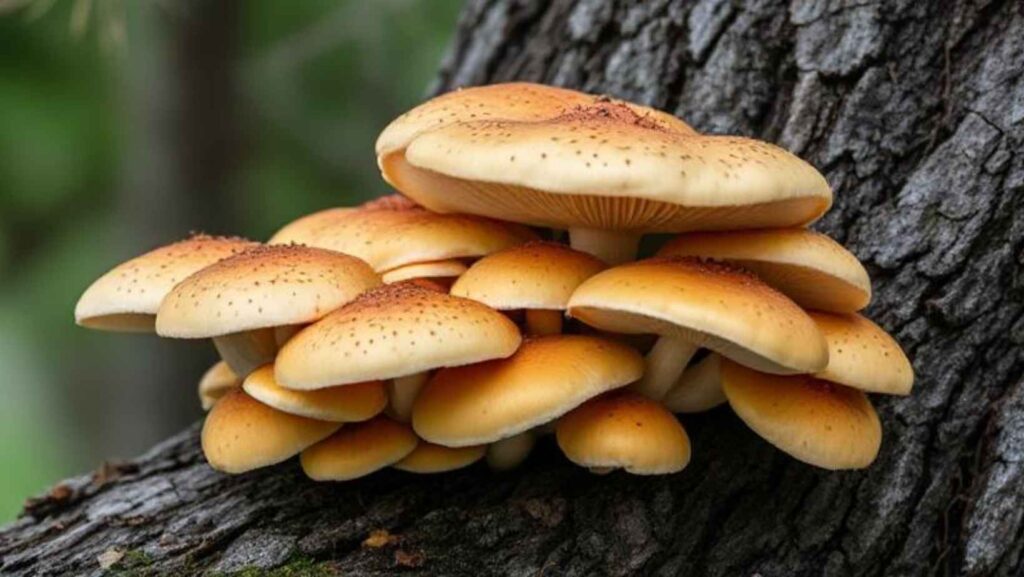
Would you like to know about the mushrooms that grow on pine trees that you can eat? Based on what I’ve seen, the pine mushroom.” People all over Asia really like this traditional treat, and Japanese chefs love making meals that go well with its strong, spicy, clean smell and taste.
Fresh matsutake mushrooms taste very different from other mushrooms because they only grow in certain places. They only grow under pine trees that are 20 to 60 years old, and they never grow in the same place twice.
They have a great, spicy smell that is like a mix of pine and cinnamon. They make recipes taste better and make great stuffed mushrooms. They don’t have much fat and are high in protein and vitamins B1, B2, and D. They might be good for your health.
Pine trees and their leaves, on the other hand, make the soil acidic, which is bad for many plants and fungus.
There are, however, some kinds of mushrooms that can live and even do well in the ground under pine trees. There are both poisonous and tasty mushrooms in the pine tree. The death cap is deadly, but the king bolete and matsutake can be eaten.
It’s time to begin.
What are the Mushrooms That Grow Beneath Pine Trees
There is a link between spruce and pine trees and the European bolete mushroom, also called “king bolete” or Boletus edulis.
The cap of this huge mushroom is smooth and brown, with a sticky surface. The stem is meaty and bulging.
Michael Kuo, who wrote “Morels” and “100 Edible Mushrooms,” says that experts aren’t sure if North American and European king-boletes are really the same species.
No matter what it is called, this pine-loving fungus is highly valued for its bitter and nutty taste, which goes especially well in soups.
There is a link between pine and spruce trees and the European bolete mushroom, also called “king bolete” or Boletus edulis.
No matter what it is called, this pine-loving fungus is highly valued for its bitter and nutty taste, which goes especially well in soups.
The American matsutake mushroom, Tricholoma magnivelare, is linked to the very popular Japanese matsutake mushroom. It is a white to brownish fungus with a narrow veil on the stem.
The taste is rich, and the smell is very strong. There is a lot of this fungus on jack pine trees in the northeast of the United States.
It’s a fungus that grows next to conifers and is sometimes called the hedgehog mushroom. It can be orange to tan in color.
It gets its name from the spines that are on the bottom of its head. It looks a lot like the chanterelle mushroom, which is also edible, but has spines instead of caps.
Hedgehog mushrooms taste a lot like chantarelles, though their flavor is usually softer. Some older ones might have a harsh taste.
The formal name for hedgehog mushrooms is Hydnum repandum. They are orange to tan fungi that grow next to conifers.
Death Cap: This huge white toadstool is thought to be one of the most dangerous mushrooms in North America because it looks a lot like eating field mushrooms and is very poisonous.
This fungus grows under a few different types of pine trees, but it is mostly connected to European oak trees. The bases of death cap mushrooms look like a sack and have a white ring under the cap.
What are the mushrooms that grow on living trees
I mostly look for mushrooms on trees that are still alive or that have been destroyed. The two do touch on each other, as you will see. These are some popular mushrooms that you might find on your next hike.
1. Porifera and other oyster mushrooms
One type of mushroom that grows a lot on trees is the oyster mushroom (Pluerotus species and similar species). Most of them are easy to spot, and none of them look like poisonous mushrooms; they are all harmless.
There may be more than one type to look for, based on where you live and the trees that grow there. An oyster mushroom has white spore prints and gills on all of its caps.
There is a type of mushroom called elm oyster that grows on box elder and elm trees.
The aspen oyster mushroom (Pluerotus populina) grows very well on aspens.
Trees like beech and oak are full of Pluerotus dryinus late in the season.
Japan eats late-fall oysters, which are also called mukitake or Sarcomyxa serotina. Some people said that the mushroom has chemicals that can cause cancer, but these claims have been debunked, and the fungus is safe to eat. How to Cite.
Golden oyster mushrooms are a new species that has spread quickly and can be found on elms, cherries, and other hardwoods.
2. LAETIPORUS, also known as “chicken of the woods”
You can eat chickens of the woods, which are common and can be found all over the world. They grow from tree stumps, roots, and both living and dead trees. Based on the species, they can grow from trees that lose their leaves or trees that grow new leaves. While all of them should be eaten with care, there are several kinds.
3. Maitake mushrooms or hen of the woods (Grifola frondosa)
Like chicken of the woods, maitake is a parasite that lives on trees, mostly white and red oak but sometimes on maple as well. A lot of them live on tree stumps, downed trees, and olive trees, where they cause butt rot in the host tree.
Many foragers east of the Rocky Mountains value them highly because they are tasty and can be eaten. Japan has used them for a long time and calls them maitake, which means “dancing mushrooms.”
Can you eat pine mushrooms
It is possible to eat mushrooms that are grown on logs of wood, but you should be careful and follow certain safety rules.
On wood logs, you can find many kinds of mushrooms, such as oyster, shiitake, reishi, and turkey tail mushrooms. These steps are taken to keep everyone safe:
Name: Identification It’s important to know what kind of mushroom you’re collecting because some that grow on wood logs can be deadly or dangerous. If you want to eat a fungus, make sure you know how to identify it properly and what it tastes like.
Check for any wear and tear or rot: Avoid mushrooms that are starting to rot or decay because they could make food sick.
Closely look at the mushroom to see if there are any signs of bug damage or illness.
Make sure that the mushrooms are cooked all the way through. Making sure the mushrooms are fully cooked will help get rid of any germs or parasites that might be on them.
Stay away from mushrooms: If you are allergic to them, have any health problems, are pregnant, or are nursing, stay away from wild mushrooms.
What are the Mushrooms that grow under white pine trees
Every year, tens of thousands and tens of thousands of these fungi grow under our white pine trees.
They look like they could be eaten and are called Russula. I’ve only tried a small amount, but it looks good enough that I want to be sure before giving it to my family.
Do you know anything about this mushroom? The mushroom’s cap looks like light brown leather, and its gills are white to very light tan and don’t have a veil covering them. The cap breaks into pieces when you squeeze it.
On the other hand, I believe that the most common mushroom species in eastern white pine woods are Amanita muscaria guessowii, Lactarius chelidonium, Lactarius vinaceorufescens, Phaeolus schweinitzii, Suillus americanus, and Suillus weaverae.
Some other types of mushrooms that can be found near eastern white pine are Clitocybe acerba and Clitocybe hygrophoroides, Cortinarius species, Gymnopus dryophilus, Hydnellum species, Laccaria ochropurpurea, Lactarius deliciosus deter rimus, Lactarius vinaceorufescens, Marasmius pulcherripes, Mycena clavicular, Peziza badioconfusa, Phellodon alboniger, and many Russula species, such as Russula essays and Russula annua.
Are all mushrooms that grow under pine trees edible
For people who want to find mushrooms, it’s a Big Deal. There are no absolutes.
Of course, you can eat some of those mushrooms. There are a few that are dangerous enough to kill you, but most of them wouldn’t.
Another big chunk is made up of “inedible” mushrooms, which are ones that are so tough or taste so bad that no sensible person would eat them.
The more you know, the better, but you MUST be able to tell which mushrooms are poisonous at the very least.
If you can’t ask such important questions, you should stay away from wild mushrooms. It would be very easy for you to set a bad example.
What are the Mushrooms and Their Relationships with Trees
Even though trees are what the forest is all about, smaller creatures like wild fungi, which are some of the most important, live alongside them.
Some of these mushrooms can be found hunting in Georgia, and they’re not just next to trees.
For example, mushrooming books for beginners tell you which tree types you are most likely to find mushrooms on, under, or close to. Different types of mushrooms have different tastes and grow in ways that comply with those tastes, while others are harmful.
A relationship between fungi and the roots of a vascular plant, like a tree, that benefits both is called mycorrhiza.
In a mutual relationship, both the fungus and the host get something good out of it, but in different ways. The fungus’s invasion of the root cells makes it easier for the host to take in water and food.
In exchange, the host plant gives the fungi sugars that are made through photosynthesis. I highly recommend the golden chanterelles (Cantharellus cibarius) and king boletes (Boletus edulis), two types of edible mushrooms that are considered to be of good quality.
Each of these species has different tastes when it comes to its mutual partner. King boletes usually live under spruce (Picea), pine (Pinus), birch (Betula), and oak (Quercus) trees. Other species in the Boletaceae family, many of which are edible, can be more picky.
As an example, aspen boletes (Leccinum insigne) and American slippery Jack (Suillus americanus) will only live together with Eastern white pines (Pinus strobus) and aspens (Populus).
In northern Georgia, golden chanterelles are most often found in pine woods or under other conifers.
People sometimes call this common mushroom Gryphon frondosa or Hen-of-the-Woods. It doesn’t get along well with its host.
The parasite Hen-of-the-Woods, on the other hand, can cause rot on trees, especially oaks. By weakening the stem, butt rot makes it harder for nutrients to move through the tree.
The honey mushroom (Armillaria gallica), on the other hand, is much worse for trees. This wild mushroom is very popular because it tastes good.
These “shrooms” don’t stand out, but they can kill stressed trees, especially oaks and conifers.
While someone might be thrilled to find a lot of tasty honey mushrooms, the trees nearby might not be as happy.
Final thought
Now that you know what kinds of edible mushrooms grow on pine trees, you should know that the state forest has a lot of pine trees and hundreds, thousands, or even millions of mushrooms that you can pick and eat.
The Apiosporina morbosa fungus, also known as the black knot or cherry knot, is another example. It shows up on the twigs of damaged cherry and plum trees as black growths that get bigger and look like charcoal.
Fungicides or regular pruning can help get rid of cherry knot fungus, but it will stop the trees from blooming.