
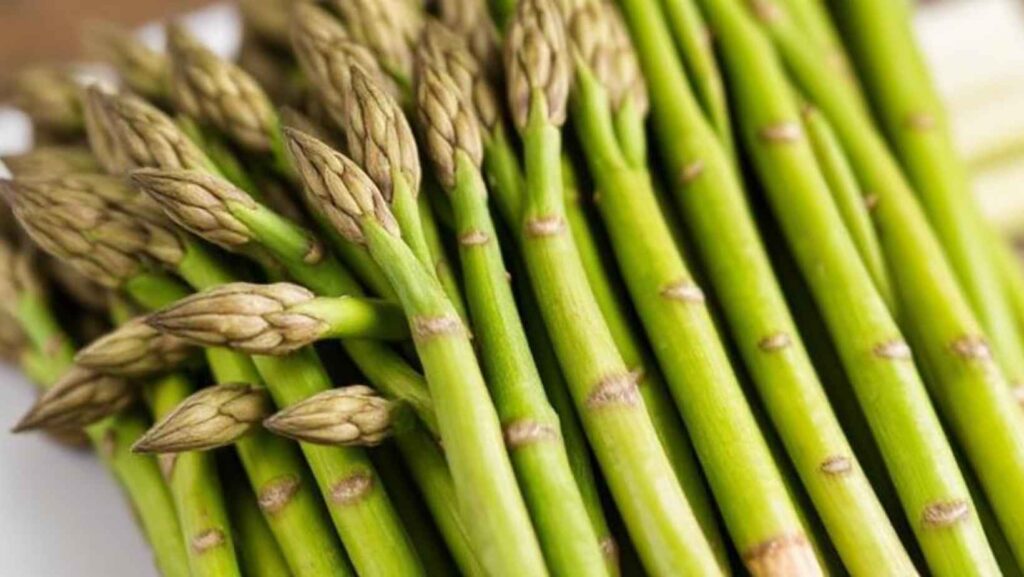
Would you like to know what asparagus tastes like? Drawing from personal experience with asparagus flavor, I would like to assert the following:
Initially, the flavor profile of each variety will vary subtly, encompassing verdant “green leaf” undertones, faint bitterness, and a more nutty, buttery richness.
Each variety of asparagus is highly valued for its delicate, buttery sweetness complemented by a subtle vegetal acidity.
Typically, asparagus imparts a mild bitterness. This is entirely typical. If, however, the cooked asparagus becomes excessively acrid, this could be due to a number of factors.
The asparagus spear may have been severed too near the root during harvesting. However, that is not all; I will provide additional information on the subject as you continue to read.
Now, let’s get started.
What does asparagus taste like
A delicate and mild flavor may be found in the white asparagus.
When white asparagus is harvested from a plant grown in settings that are too chilly or variable in temperature or when cut too near to the rootstock, bitter overtones are always discernible.
When purple heads are present, the flavor of the stalks takes on a somewhat more nutty quality.
Green beans, broccoli, and artichokes are some vegetables often likened to asparagus by their peculiar flavor.
Fresh asparagus has a mild, grassy flavor and is slightly astringent compared to other vegetables.
When cooked, the flavor can become more apparent, yet it tends to absorb the tastes of other ingredients throughout the cooking process.
What tastes similar to asparagus
It is referred to as salsify. Salsify may be cooked in the same way as asparagus and has a nutty fragrance.
It is preferable to thinly slice or grate the roots before eating them raw and squeeze in some lemon juice to keep them from turning brown.
Salsify can be cooked similarly to asparagus as a main meal or vegetable side dish: peel, boil in salted water, and serve with sauce, potatoes, or other desired side dishes.
Furthermore, most recipes may include green beans instead of asparagus.
Compared to asparagus, they need more preparation work since you have to clip the ends, which might take some time.
On the other hand, asparagus and its flavor, texture, size, and color are comparable.
String beans, French beans (haricots verts), and even purple string beans are excellent alternatives to fresh asparagus. Like asparagus, green beans can be steamed, roasted, or sautéed.
Green beans are perhaps the most excellent option if you’re searching for a raw asparagus substitute.
Is asparagus supposed to be Sweet or Bitter?
While there are numerous types of asparagus, the three most often available are purple, white, and green.
Green asparagus is the most popular in grocery shops; it tastes grassy, sweet, and somewhat bitter.
Though it lacks color because it grows in the dark, white asparagus tastes like its green cousin. In Europe, white asparagus is regarded as a delicacy and can be pretty costly.
Anthocyanin, the antioxidant that gives purple asparagus its color, is present in high concentrations in purple asparagus.
Because of its decreased fiber content, it is also a much more sensitive kind of asparagus than its white and green siblings.
Its flavor is also significantly sweeter than other asparagus due to its tendency to contain more sugar.
Nevertheless, Nothing compares to eating asparagus for the first time in the spring. This traditional seasonal vegetable tastes sweet and somewhat bitter when cooked, yet it’s always fresh and fabulous.
Simmer the asparagus stalks for a few minutes, then combine with melted butter for a simple and quick vegetable side dish.
It could not be simpler, ready in only ten minutes. Keep in mind that the length of the cooking time will depend on how big your vegetables are.
The stems of asparagus can be either thin or quite thick. After cooking for just one minute, start inspecting the skinny stalks.
There is no need for additional spice while making this side dish recipe, although you can add some fresh dill or thyme.
Verify the freshness of the asparagus. It should be solid and free of any soft or moist places when you purchase it. There should be no visible blooms, and the tips should be securely closed.
As an accompaniment to ham, steak, chicken breasts, and other dishes, serve asparagus. It goes well with potato recipes such as scalloped or mashed potatoes.
Can you eat asparagus raw?
Vegetables high in nutrients, like asparagus, may be consumed fresh or cooked. Its chewy texture makes cooking the most popular way to prepare it.
But fresh asparagus chopped thinly or seasoned may add just as much flavor to the recipe.
Asparagus adds fiber, antioxidants, and other nutrients to your diet, whether cooked or eaten raw. What advantages does eating raw asparagus provide for your health?
You may vary your eating habits and try both cooked and raw asparagus to get the most out of its health advantages.
Try topping salads and pasta dishes with chopped, raw asparagus. Alternatively, you may have asparagus as a side dish or as a sautéed or softly steamed frittata.
Contrary to popular belief, asparagus must not be cooked before eating.
Without cooking it at all, it may be a nutrient-dense supplement to your diet.
Nevertheless, the stiff plant fibers in asparagus are softer when cooked, facilitating simpler chewing and digestion.
Raw asparagus may be as flavorful and straightforward as any cooked variation if appropriately prepared.
First, trim the spears of their woody ends precisely when cooking them.
You could bite right into them at this point, but it won’t be a fun experience.
Instead, finely chop or shred the spears using a sharp knife, grater, or vegetable peeler. The chunks will be simpler to chew if they are thinner.
Toss the pieces in a primary dressing made of vinegar, lemon juice, and olive oil to soften the rougher sections of the stalk. This is also a terrific way to incorporate some flavor.
Why does asparagus taste bitter after cooking
If asparagus has a bitter flavor, there are a few possible explanations: The bitter compounds are located near the roots of the asparagus plant, which is the process of pricking.
The asparagus likely became bitter because it was chopped extremely near the rootstock when harvested.
Interestingly, the monodesmosidic saponins 5a/b were shown to be the key contributor to the bitter taste of fresh asparagus spears for the first time.
On the other hand, the bidesmosides 1a/b and 2a/b may be regarded as the principal determinants of the bitter flavor of cooked asparagus.
What do you do if asparagus tastes bitter?
A few different factors can cause the bitterness of cooked asparagus. One typical cause is overcooking, which can result in the release of bitter chemicals.
Furthermore, the bitterness of the asparagus can be affected by its age since older asparagus tends to be more bitter than younger asparagus.
There is also the possibility that an additional component is the presence of certain chemicals inside the asparagus, which might differ from plant to plant.
Blanching the asparagus in boiling water for a brief period and then immediately moving it to freezing water to stop the cooking process is one method that may be utilized to lessen the bitterness of the asparagus.
Another option for reducing the bitterness is to incorporate a small amount of acid, such as lemon juice, into the mixture.
On the other hand, you should begin by peeling the asparagus so that the skin and any potentially bitter compounds it may contain are removed entirely.
Additionally, it would help to eliminate the lower end liberally. Cutting off a bit more than is required is preferable.
To lessen the bitterness of the asparagus, it is recommended to simmer it for a little longer. This is the mantra when it comes to cooking.
The water that contains the asparagus might also have a teaspoon of sugar added to it. Because of this, the bitter flavor is neutralized.
Final thought
Now that we have established what asparagus tastes like, rapidly consuming it will prevent it from becoming fibrous. Do not store them in the vegetable drawer for longer than three days.
Isolate them with newspaper. Asparagus that has been cooked cannot be preserved.
Although bitter asparagus may not be widely embraced due to its unpleasant flavor, it possesses potentially beneficial human health properties.
The acrid compounds it comprises exert a beneficial influence on hepatic health and digestion. Thus, acrid asparagus is quite nutritious.