
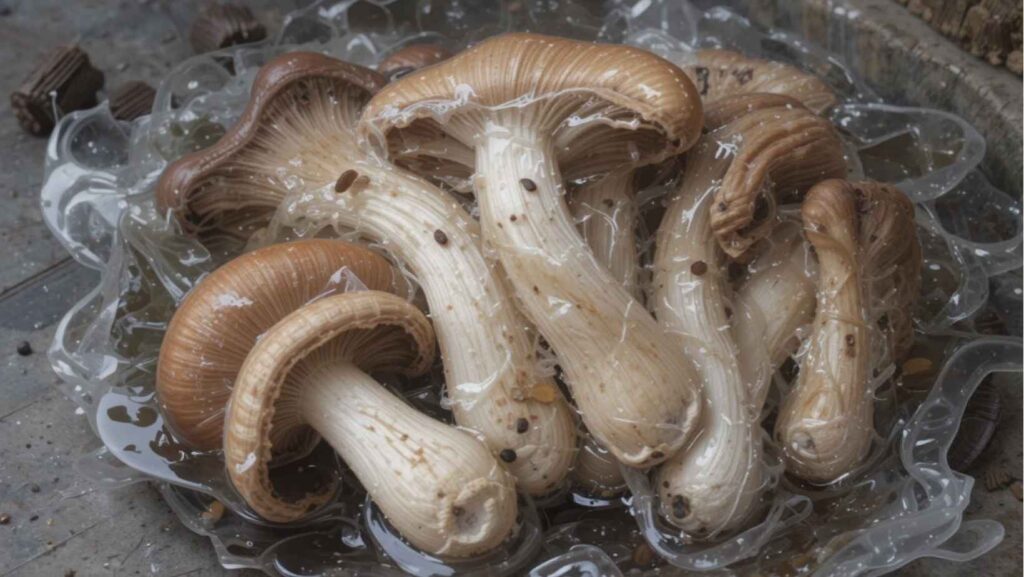
Are you interested in learning more about the health benefits of eating shiitake mushrooms?
Shiitake mushrooms are good for your heart, lower your risk of getting prostate cancer, treat gingivitis, boost your immune system, and make plant-based diets more nutritious.
In traditional medicine, shiitake mushrooms have been used for thousands of years as a natural cure.
The taste of shiitake mushrooms is very different from other foods. It tastes meaty and rootsy.
These mushrooms have broad caps that are between 2 and 5 inches wide. The caps are light to dark brown, which stands out against the cream-colored bottom very nicely.
You can cook with both fresh and dried shiitake mushrooms. On the other hand, dried ones are used more often.
That umami taste is a lot stronger in dried shiitake than in fresh shiitake.
Beta-glucan, which can be found in shiitake mushrooms and shiitake powder, helps defense cells work better and get activated.
This can help people stay healthy and get better after getting sick with things like the flu and colds.
Shiitake mushrooms go well with soups, salads, meat meals, and stir-fries because they taste great and have a meaty feel.
They are often used in Japanese food, along with oyster and maitake mushrooms.
It’s partly because they are full of chemicals that protect your DNA from environmental damage that shiitake mushrooms are good for you.
For example, lentinan fixes damage to chromosomes that is caused by cancer drugs.
Are shiitake mushrooms safe to consume every day
If you eat too many mushrooms, you might get stomach problems and diarrhea.
If you want to stay safe and still enjoy the bitter taste of shiitake mushrooms, you shouldn’t eat more than 3–8 of them every day.
Many studies have shown that people who regularly ate a certain amount of shitake mushrooms had better health. “Everyday Shitake Eating” included information on these studies.
There were good results on the lower amounts of cholesterol.
One person got eczema (a skin rash) after eating shitake mushrooms every day for two weeks, but this is not the normal reaction.
You can eat most edible mushrooms without getting sick as long as you don’t have an allergy.
It’s likely that you’ll get tired of them long before they become harmful or have bad effects.
Without chemicals: Shiitake mushrooms are the best food to eat if you want to lose weight.
It has been shown that they make you feel fuller, make you eat less, delay the absorption of nutrients, and lower the amount of fat in your plasma lipids.
They have two soluble fibers that help lower fat: erythridine and b-glucan. You can find these fibers in barley, rye, and oats.
A study from 2011 in the Journal of Obesity looked at how shiitake mushrooms affected plasma lipid patterns, fat distribution, energy efficiency, and body fat index. For six weeks, rats were fed a lot of fat.
When is too much shiitake mushroom consumption
Most people think that shiitake mushrooms are very safe to eat when they are fully cooked. But balance is a good idea.
If you eat too many mushrooms, you might get stomach problems and diarrhea.
There were good results on the lower amounts of cholesterol.
One person got eczema (a skin rash) after eating shitake mushrooms every day for two weeks, but this is not the normal reaction.
You can eat most edible mushrooms without getting sick as long as you don’t have an allergy.
It’s likely that you’ll get tired of them long before they become harmful or have bad effects.
Mushrooms have a surprisingly high amount of protein, which helps the immune system work well and muscles grow and fix themselves.
Onions like portobellos, shiitakes, and cremini all have five grams of protein per cup.
Between 10 and 35% of your daily calories should come from protein.
One cup of creminis may have 3 to 11 percent of the protein that a person on a 2,000-calorie diet needs every day.
Is shiitake mushroom harmful in any part
The shiitake mushroom is safe to eat.
However, if it’s not made correctly, it could have some bad results. The beneficial ingredient beta-glucan, or lentinan, in shiitake mushrooms is less likely to cause Shiitake dermatitis when they are cooked correctly. Shiitake dermatitis is a type of allergic skin reaction that usually goes away on its own.
Moss is one of the best foods to find while foraging. There are many kinds of mushrooms that can be eaten, but some are very dangerous.
Before you go mushroom hunting, make sure you know how to tell the difference between different kinds of mushrooms. They could save your life.
It can be hard to tell the difference between mushroom types that are safe to eat and those that are poisonous, and only a professional can do that.
Toadstools used to be the name for mushrooms that are deadly. They look pretty much the same as any other type of edible mushroom.
Crowns, gills, and stems are some of the things that most of them have in common.
Folktales say that the fungus is safe to eat if an animal eats it and waits a while without getting sick.
Both are not true! It’s also not true that cooking a deadly plant will make it safe to eat. Also, not all standard tests are correct.
Some people said that eating white mushrooms is safe, but eating dangerous mushrooms would make silver rust.
Some people say that a mushroom that grows in woods, fields, or farms is not dangerous. There is even a myth that if you peel a dangerous fungus, it stops being poisonous.
All of these are not true; the only ways to know which species are safe to eat are to identify them and learn about them properly.
What section of the shiitake mushroom can be consumed
Mushroom roots can usually be eaten and are easy to digest.
They are used in cooking all the time, especially for soups and stir-fries.
Besides being full of good things for you, roots may also make your food taste and feel better.
Fresh shiitake mushrooms are easy to spot because they have big, dark brown heads that look like umbrellas and thin, cream-colored stems.
Shiitake mushrooms are a bit more expensive per pound than crimini or white button mushrooms, but the benefits are worth it.
The mushrooms add a nice earthy and meaty flavor to soups, sautés, stuffings, risotto, and other foods.
Because they taste like meat, shiitakes taste best when they are thinly sliced or cut into quarters.
Shiitake mushrooms are proud to have a lot of iron and protein.
Plus, eating them might make your immune system stronger, lower your cholesterol, and help fight a number of different types of cancer.
Mushroom branches can be either a cute feature or a problem because they are woody.
Remember that you can eat the stems of portabella, oyster, king oyster, white button, and crimini mushrooms. They taste rich and tasty.
The unique tastes of maitake and enoki mushrooms can shine through after a quick cut.
When eating shiitake mushrooms, it’s best to cut off the tough stems so you can only enjoy the soft tops.
Can you consume shiitake mushrooms as a whole
Shiitake mushrooms are not dangerous, and their tips could even be eaten.
The roots, on the other hand, are too tough and hard to eat, and they taste awfully like wood, so most people choose not to use them.
It’s fine to eat the roots of shiitake mushrooms.
Even though they are harder and feel a little different than the caps, the stems can still be eaten and have nutrients in them.
Some people may throw them away if they don’t like the way they feel, while others like to chop them up very small for cooking.
In the end, it all comes down to what you like.
You might be surprised to learn that shiitake mushrooms are one of the five best mushrooms to eat. They can be cooked and are safe to add to your diet.
You can eat shiitake mushrooms quite often now that you know they are safe to eat when they are cooked and served in the right amounts.
Most people who eat mushrooms do so because they like the way they taste and how quickly they can add flavor to a dish. They are less interested in the health benefits that some species, like shiitake, may offer.
Is the entire shiitake mushroom edible
Shiitake mushroom stems are not poisonous, so it is possible to eat them.
The roots, on the other hand, are too tough and hard to eat, and they taste awfully like wood, so most people choose not to use them.
They won’t hurt you. The problem is that they are so tough.
If you eat for days, you will have a lot of seeds in your mouth.
Take the stems off the caps before you boil and freeze them.
They add a lot of delicious flavor to the stock.
Fresh shiitake mushrooms are easy to spot because they have big, dark brown heads that look like umbrellas and thin, cream-colored stems.
Shiitake mushrooms are a bit more expensive per pound than crimini or white button mushrooms, but the benefits are worth it.
The mushrooms add a nice earthy and meaty flavor to soups, sautés, stuffings, risotto, and other foods.
Because they taste like meat, shiitakes taste best when they are thinly sliced or cut into quarters.
Shiitake mushrooms are proud to have a lot of iron and protein.
Plus, eating them might make your immune system stronger, lower your cholesterol, and help fight a number of different types of cancer.
conclusion
b-glucan and eritadenine are soluble fibers found in shiitake mushrooms. These fibers have hypolipidaemic (fat-lowering) qualities. b-glucan can also be found in barley, rye, and oats.
Studies show that b-glucan can lower plasma lipid (fat) levels, slow down the absorption of nutrients, make people feel fuller, and make them eat less.
The ingredients in dried shiitake mushrooms (shiitake powder) work together to make their immune-boosting effects even stronger.
Pathogens, vitamins, minerals, dietary fiber, and B-glucans all work together to fight diseases, trigger immune cells, improve the gut environment, and protect cells, which makes the immune system stronger in many ways.
To get the most out of these benefits, you should eat dried shiitake mushrooms or shiitake powder on a regular basis.
Some of the highest amounts of natural copper can be found in shiitake mushrooms. Copper is good for your blood vessels, bones, and nervous system.
Eating 1/2 cup of shiitake mushrooms could give you 72% of the mineral you need every day.