
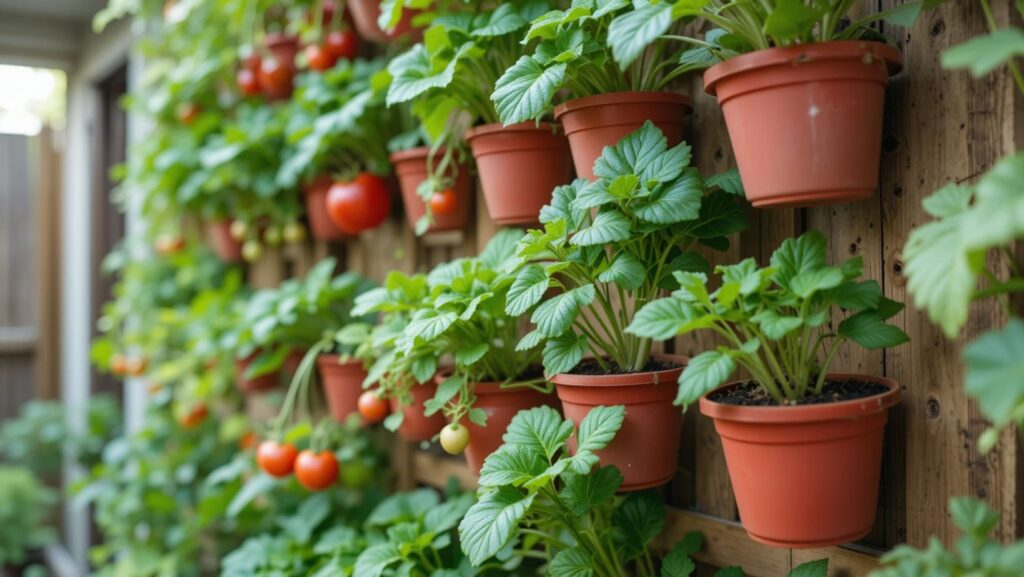
Would s ypu want to know about Vertical vegetable gardening? In my experience, vertical vegetable gardening is the process of growing vegetables not on the ground but on vertical surfaces like trellises or walls.
If you lack access to a conventional outdoor garden plot or live in a tiny location, vertical vegetable gardens are the ideal option.
But that is not all; however, as you read further, I will educate you more on the subject matter.
Now let get started
What are the Vertical Vegetable Garden Growing Tips
As you begin creating the vertical garden of your dreams, keep these tips in mind.
For the highest yield, pick a location that is shielded from severe winds and receives full sun.
Consider weighting or anchoring your vertical structures if you’re growing on a balcony to keep them from tipping over in inclement weather.
• Plant near the north side of your garden plot so that other plants won’t be shaded.
It dries out faster if it is not buried in the ground. Check the soil moisture in your raised beds and containers on a regular basis, especially in the warmer months.
It will be easier to water often if you plant near a water source, such as somewhere you can carry a watering can or where your hose can reach.
What vegetables can one grow in a vertical garden
Peas: All three varieties—snow peas, snap peas, and garden peas—grow well in vertical environments and don’t need a particular kind of support structure.
Pea plants cling to any support with tiny, delicate tendrils that lift the vines upward.
The most common vegetable that can be grown vertically is green beans. French filet beans, green beans, and wax beans all grow vertically, scaling any sturdy trellis that is built.
Some plants can grow up to 8 or 10 feet tall.
Cucumbers: Growing cucumbers vertically has several advantages, one of which is that it is much simpler to identify when they are ready.
The cucumber may easily hide behind a leaf while the vines are sprawling out on the ground. This makes it possible to utilize the ripe cucumber without recognizing it.
Vining tomatoes, also known as indeterminate tomatoes, may be trained to climb vertical structures and continue to grow from the tip of the plant around objects like poles or cages.
Pumpkins: Smaller types, such as baby pumpkins, may be grown on various support systems, but large-scale pumpkins cannot be grown vertically.
Knowing exactly how to construct a vertical vegetable garden frame is crucial in this situation since the weight of the vegetable during its various growth phases must be supported by a sturdy vertical support.
What are The Benefits of Vertical Vegetable Gardening
Aside from increasing a space’s visual appeal, vertical vegetable gardening has several advantages, such as optimizing space utilization in constrained areas,
enabling the cultivation of a greater variety of plants, improving aesthetics, improving air quality, making harvests easier to access, and possibly lowering pests due to increased air circulation.
Principal advantages of vertical gardening:
Efficiency of space:
The biggest benefit is that it’s perfect for tiny gardens or urban locations since it can produce a lot of veggies in a short space by using vertical surfaces like walls, fences, or hanging planters.
Plant diversity: By employing varying heights and growth patterns, vertical gardening enables the simultaneous cultivation of a greater range of plants, such as tiny vegetables, leafy greens, herbs, and vining vegetables.
Better aesthetics: With their vivid hues and flowing foliage, vertical gardens may add visual appeal to a place, improving a house or garden’s overall look.
Enhancement of air quality: By collecting carbon dioxide and releasing oxygen, plants in a vertical garden help to improve the quality of the air.
How to Building Your Vertical Vegetable Garden
Create a Living Wall: This lovely project will turn any plain, dowdy wall into a vertical area that is a riot of color and life.
It’s straightforward yet efficient: a wall-mounted trellis panel supports a variety of pots filled with flowers, veggies, and herbs.
Select a panel that is the right size, then paint or stain it to make it stand out and preserve it.
Using a masonry drill bit, drill holes in the wall, line them with rawlplugs or wall anchors, and then screw in a sturdy L-shaped hook.
Three are used in this panel. Before hanging your panel, make sure the hooks are level and equally spaced.
Construct a Bean Teepee:
A basic bean teepee comes next. It’s straightforward yet eternal in its appeal! Any climbing bean may be grown atop a teepee, and its inherently resilient form should lessen wind damage.
Hazel poles, bamboo canes, or any other long, straight prunings can be used. Using the lid of a huge garbage can as a guide, push the canes into the earth.
The ideal number of canes is six to eight, but you may use four or even seven, as the page’s top illustrates, with the eighth cane missing to create a live hiding entrance for children to play in.
Now bind the canes firmly together using string or garden twine after pulling them together at the top. For each cane, plant one bean seed or plant.
To aid with their navigation, if needed, carefully attach the beans to their canes. Tying string in two or more horizontal bands will give the construction an additional leg up and increase its rigidity.
How to Maximizing Your Vertical Vegetable Garden
Take into account these extra pointers and methods to maximize the benefits of your vertical vegetable garden:
Planting companion plants:
Create a symbiotic relationship by carefully matching flowers, herbs, and veggies that work well together. This can boost pollination, keep pests away, and make your garden healthier overall.
Planting Successions :
To increase the length of your harvest season and guarantee a steady supply of fresh produce, space out the planting of several vegetable species.
Accessories for Vertical Gardening :
To maximize your growing area and make care easier, choose specialist vertical gardening equipment like vertical grow bags, hanging baskets, or tiered planters.
Management of Microclimates :
To establish the perfect growth environment, pay attention to the particular microclimate conditions in your vertical garden and make necessary adjustments to watering, light exposure, and wind protection.
You can turn even the tiniest areas into a flourishing haven of delicious produced produce by embracing the potential of vertical gardening.
The satisfaction of growing your fresh produce is accessible to all gardeners, regardless of experience level.
Final thought
Now that we have established Vertical vegetable gardening Be inventive and look for a solution that is suitable for you and the specific circumstances you are facing.
A vertical vegetable garden is an ideal solution for urban gardeners and other individuals who want to continue to get the benefits of a plentiful crop of freshly produced veggies without taking up additional room in their already constrained environment.