
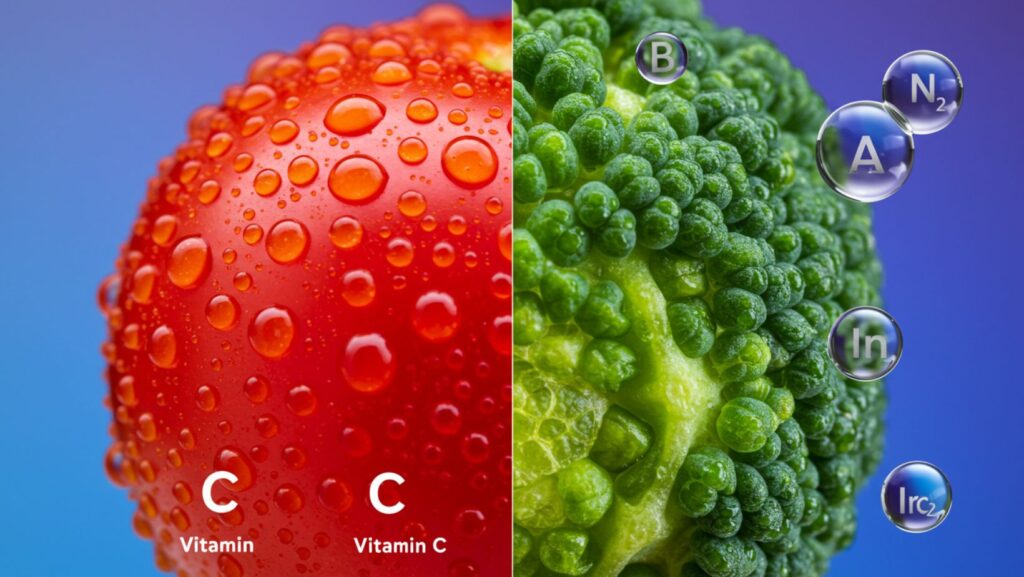
Would you want to know about Vegetable vitamins and minerals? My experience has shown me that vegetables are a good source of vitamins A, C, E, and K, as well as magnesium, zinc, and phosphorus.
The best method to make sure you receive enough of each vitamin is to adopt a varied, nutritious diet, but it may feel daunting to be presented with such a big list of nutrients and the vegetables that contain them.
You can pack your body full of vitamins and minerals by eating a variety of vegetables, vegetables, grains, and legumes.
While the foods on this list are nutrient-dense, others should also be considered (aside from sprouts, of course). Just continue reading to learn more about the topic.
Now let get started
What are the Vitamins and Minerals in Varieties of Vegetables
Minerals may be categorized into two classes. We need some in small amounts and others in large amounts.
Major minerals include calcium, magnesium, potassium and phosphorus.
We require trace minerals, including iron, zinc, and selenium. Main minerals Check out some of the important minerals and their health benefits.
Strong bones and teeth need calcium. Most people associate calcium with dairy, although there are many vegetable sources. Start with spinach, watercress, and artichokes.
Phosphorous supports healthy cells, teeth, and bones. Sweetcorn, potatoes, artichokes, and tomatoes contain enough, as do dairy and meat.
Your body releases dietary energy with magnesium. It’s in broccoli, tomatoes, and cabbage.
Potassium helps cells. Many foods contain it. Good sources are potatoes, tomatoes, and artichokes.
Vegetable:
But here are several veggies you presumably consume often and are easy to get, along with their nutrients.
Artichokes are mineral-rich—check the stats! They are becoming more common in British supermarkets and veggie box systems, and they are easy to cook.
An average artichoke Potassium of 425mg, 103mg, phosphorus Mg 72mg Calcium 54mg
Average four stalks of asparagus Potassium 144mg Phos 48mg Mg 9mg Calcium 18mg
Per-average green pepper Potassium 131mg Phos 141mg Magnesium 7mg. The average onion has 6.5mg of calcium.
Potassium 110mg Phos 23mg Magnesium 7mg Calcium 14mg Selenium 0.5mg
Potato (for one medium potato with skin) Potassium 610 mg Phos 78mg Magnesium 30mg Calcium 8mg
Selenium 0.5mg Iron 0.5mg Zinc 0.5mg
Sweetcorn per average ear Potassium 191mg Phos 79mg Magnesium 25mg Calcium 1.5mg Selenium 0.6mg Iron 0.5mg Zinc 0.5mg
Per-average tomato Potassium 397mg phosphorus 63mg Mg 23mg Calcium 32mg Selenium 0.8mg Iron 0.5mg
Vegetables and Vitamins
Vitamins and minerals are essential for wellness. Check out these vitamin-rich vegetables.
B vitamins are in spinach. Spinach boosts neurological function, eyesight, skin, and digestion with vitamins B1, B2, and B3. Vitamins C and K are in spinach. Eat it raw or lightly steamed for optimum vitamins.
Spinach provides vitamin K, which is essential for blood clotting and bone formation.
Mango, butternut squash, carrots, sweet potatoes, pumpkin—think orange for vitamin A. Vitamin A boosts immunity, eyesight, skin, and bone formation.
Vitamin A is found in broccoli or tomato juice, but orange makes it easier to remember. Oranges are high in vitamin C, not vitamin A.
Vitamin C-rich broccoli. Yes, oranges and other citrus vegetables contain lots of vitamin C, but superfood broccoli is a fantastic source, too.
It also includes vitamin K, beta-carotene, calcium, and iron. Broccoli provides vitamin E and B6.
What are the Benefits of Eating Your Greens (and Other Fresh Vegetables!)
Variety makes your meals more exciting, and fresh veggies offer a cornucopia of nutrients. Don’t forget to add these winners to your shopping list!
Iron, potassium, folic acid, and vitamin C are all found in good amounts in green beans.
Iron, magnesium, potassium, folic acid, B vitamins, and protein are all found in dried beans.
Vitamin C, folic acid, calcium, potassium, and fiber are all abundant in cabbage.
Beta-carotene, potassium, and vitamins A and K are abundant in carrots.
Beta-carotene and lutein are abundant in sweet corn. In addition, it provides folic acid, iron, magnesium, potassium, and B vitamins.
Vitamin B1, potassium, manganese, and fiber are all abundant in eggplant.
In addition to being an excellent source of fiber, iron, and vitamins A and C, leeks also contain diallyl sulfide, a phytochemical that fights cancer.
Vitamin C, potassium, magnesium, lutein, and the B vitamins are all found in okra.
Protein, B vitamins, vitamins C and A, manganese, iron, potassium, and lutein are all abundant in peas.
Beta-carotene, potassium, and vitamins B6, C, and A are abundant in peppers.
Skinned potatoes are a good source of potassium, vitamin C, iron, and protein.
Manganese, folic acid, potassium, and vitamin B6 are all found in good amounts in shallots.
Vitamin C, fiber, potassium, and magnesium are all abundant in summer squash. Squash, both yellow and dark green, is a great source of lutein.
Vitamins A, B6, and C, iron, fiber, and potassium are all abundant in sweet potatoes. Furthermore, one cup of sweet potatoes has four times the daily necessary amount of beta-carotene!
What are the Nutrient-Dense Vegetables
1. Watercress
An excellent addition to any soup, salad, or sandwich, watercress is a potent leafy green that is rich in antioxidants.
Consuming more watercress helps reduce the risk of diabetes, high blood pressure, and heart disease since it is a notable source of vitamin K, vitamin C, and other minerals.
It also includes minerals like calcium and potassium, which are essential for healthy bones.
Vitamin C strengthens your immune system, while vitamin K is essential for blood coagulation and calcium regulation.
You should consume watercress fresh or steamed for maximum health advantages.
2. Spinach
If you haven’t already, one of the finest things you can do for your health is to include spinach in your diet.
Spinach helps lower blood pressure, promote healthy tissue growth, lower cancer risk, and boost the health of your eyes, skin, bones, and immune system. Iron, calcium, folic acid, vitamin A, vitamin C, and insoluble fiber are all abundant in the vegetable.
Try adding a portion to your next sandwich or replacing spinach in your salad with conventional iceberg lettuce.
3. Kale
With good cause, this superfood has made a significant resurgence on dinner tables in recent years.
Vitamins A, K, folate, potassium, calcium, and zinc are all abundant in kale.
A serving of kale can help prevent cancer, decrease cholesterol, safeguard brain development, strengthen your immune system, and enhance the health of your eyes and bones.
Because it keeps you fuller for longer with fewer calories, kale, like most nutrient-dense plants, can help you maintain a healthy weight.
4. Brussels sprouts
Fiber, vitamin C, and vitamin K are abundant in these rounded, nutrient-dense buds.
Consuming a lot of Brussels sprouts supports immune system function, tissue healing, iron absorption, and bone and gastrointestinal health.
It could even help prevent diabetes, high blood pressure, cancer, heart disease, and chronic inflammation.
Better more, you can incorporate Brussels sprouts into your diet in a variety of ways, such as baking them in a zesty lemon sauce or roasting them with garlic as a savory side dish.
5. Green turnip
Turnip greens, like kale, are rich in folate, vitamin C, vitamin K, and vitamin A.
The vegetable may help maintain the beauty of your skin and hair in addition to strengthening your immune system, protecting your bones and eyes, and preventing cancer.
Skin and hair are among the body components that vitamin A promotes the growth of, keeping them hydrated and healthy.
Choline, which is also found in turnip greens, aids with memory, learning, and sleep.
Turnip greens may be cooked in casseroles, sautéed in your preferred sauce, or used raw in salads, sandwiches, wraps, and soups.
What vitamins and minerals do we need
First things first, let’s clarify what we are discussing.
Vitamins are classified as organic compounds because they are produced by or obtained from living organisms and often contain hydrogen and carbon atoms.
Conversely, minerals are inorganic, naturally occurring materials that can be found in rocks, soil, or water.
For most individuals, a diverse and balanced diet can provide the tiny amounts of vitamins and minerals that our systems require to operate.
Vitamin A, B vitamins, folic acid, and vitamins C, D, E, and K are all necessary for human health.
We need, among other minerals, calcium, iodine, iron, copper, potassium, and zinc.
What veg should we eat to get these nutrients into our diets
To make sure we’re receiving enough of all these vitamins and minerals, it’s crucial to eat a diverse range of vegetables and vegetables.
But certain vegetables are very nutrient-dense, providing us with a wealth of nutrients all at once. Here are a few of the major players:
Broccoli Broccoli, which is hated by children worldwide, is packed with minerals, including magnesium, salt, sulfur, and vitamins A, B-5, B-9, C, and K.
Greens with leaves: You should eat your greens, it turns out.
In addition to being rich in vitamins A, B-9, C, E, and K, leafy greens like spinach and kale are also good sources of calcium, magnesium, manganese, potassium, and iron.
Carrots: Although they won’t help you see in the dark, carrots are a good source of vitamins A, C, and K, as well as minerals like potassium and salt.
Sweet potatoes: The simple sweet potato is the perfect source of vitamins A and C, salt, and manganese.
Peppers: Vitamins A, C, and E are all rich in bell peppers, as is the mineral salt.
Legumes: The broad vegetable family includes legumes including beans, peas, and lentils.
They are also packed in minerals, such as copper, zinc, manganese, magnesium, potassium, selenium, and vitamins B-6 and B-9.
Vitamins B-9, E, K, and sulfur are found in asparagus, but did you know how it grows?
Avocado: Packed with vitamins B-3, B-5, E, and magnesium, this vegetable is a favorite among millennials.
Mushrooms, potatoes, and, if we’re included, vegetables, mangoes, melons, bananas, citrus vegetables, strawberries, and tomatoes are also excellent providers of vital vitamins and minerals.
Final thought
Now that we habe established Vegetable vitamins and minerals, Although botanists describe vegetable and vegetables by their structure and seeds, many individuals and chefs define them by their flavor.
In any case, both have vital minerals and vitamins that the body needs.
Eating vegetable and vegetables can help maintain healthy bones, a strong immune system, and healthy digestion, among other advantages.