
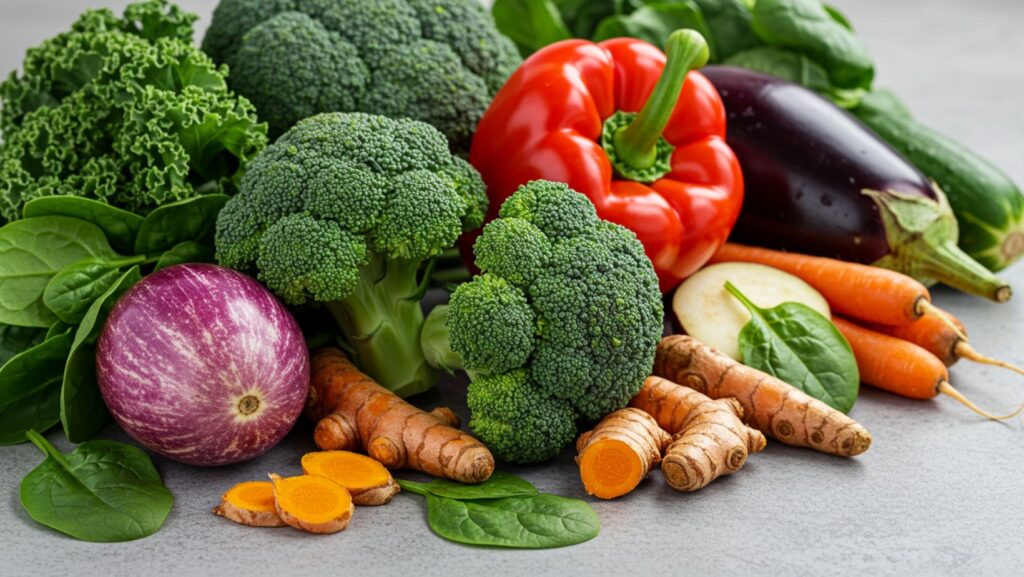
Would you want to know the Top anti-inflammatory vegetables for better health? In light of my experience, Include these anti-inflammatory veggies in your diet to improve your health and fight inflammation:
Bell peppers, tomatoes, cruciferous vegetables high in sulforaphane, cauliflower, broccoli, Brussels sprouts, and leafy greens like spinach and kale.
A tasty and efficient strategy to reduce inflammation in the body is to include a range of colorful, nutrient-dense veggies in your diet.
The selections are infinite, ranging from cruciferous vegetables like broccoli and Brussels sprouts to vibrant bell peppers and lush greens like spinach and kale.
But that is not all; I will continue to educate you on the topic as you read on.
Now, let’s get started
What are the Best Vegetables for Anti-Inflammatory Diets
1. Leafy green
Spinach, kale, and collards are nutritious powerhouses with many health advantages.
They include fiber, vitamins A, K, and folate, and minerals including calcium and magnesium.
Green leafy vegetables lessen the risk of chronic illnesses like heart disease, diabetes, and several cancers due to their anti-inflammatory properties.
Their anti-inflammatory effects can aid arthritis and autoimmune illnesses.
Wash green leafy vegetables thoroughly to eliminate pollutants before eating. To retain nutrients, prepare these veggies softly.
Add green leafy vegetables to salads, smoothies, soups, and stir-fries. They’re tasty and healthful when sautéed with garlic and olive oil or added to omelets.
2. Tomatoes
Tomatoes are anti-inflammatory powerhouses. Lycopene, an antioxidant that reduces inflammation, is abundant in them.
Interestingly, boiling tomatoes increases lycopene absorption, making it even more anti-inflammatory.
Tomatoes are rich in vitamins C, K, potassium, and folate. These nutrients reduce inflammation and improve health.
Tomatoes reduce the risk of chronic illnesses, including heart disease and several cancers, in anti-inflammatory diets. Tomato lycopene improves skin health and protects against UV damage.
To avoid contamination, wash tomatoes before eating. Cooking tomatoes reduces dangerous germs.
Serve tomatoes with salads, sandwiches, or pasta. Roasted or grilled, they make a wonderful side dish.
3. Beets
Anti-inflammatory diets benefit from beets. The antioxidant betalain gives them their rich color. Beets are great for your diet since this antioxidant fights inflammation.
Beets include betalain, potassium, and magnesium, which reduce inflammation. Blood pressure, blood vessel relaxation, and cardiovascular health are improved by these nutrients.
Wash beets before eating or cooking to ensure safety. This removes dirt and pollutants from the skin.
Beets can be eaten raw in salads, grilled with other vegetables, or juiced.
Beets may be roasted with olive oil and herbs, added to smoothies for nutrients, or thinly sliced and pickled for a tart salad or sandwich addition.
4. Broccoli
Vitamins, flavonoids, and carotenoids make broccoli a great anti-inflammatory food. These nutrients are essential for lowering inflammation and maintaining health.
Broccoli’s antioxidants fight chronic inflammation, which can cause heart disease, arthritis, and cancer.
Sulforaphane, an anti-inflammatory component in broccoli, may help prevent chronic illnesses.
Wash broccoli well to eliminate dirt and pollutants before eating. Instead of overcooking broccoli, softly simmer or roast it to preserve nutrients.
Broccoli goes well in salads, stir-fries, soups, and as a side dish with chicken or fish. For a tasty and healthy dinner, roast it with olive oil, garlic, and lemon.
What are the Anti-Inflammatory Vegetables to Stock Up
I stock up on six anti-inflammatory veggies after the holidays to feel better.
Cabbage:
We adore cabbage at EatingWell. We add it to Caesar salad riffs and creamy casseroles.
The versatility of cabbage is one of my favorite things about it. If I have a head of cabbage in my fridge, I’ll probably use it for supper.
Its high fiber content makes it full and pleasant. It’s affordable and lasts 10 days in the fridge. Purple cabbage adds inflammation-fighting anthocyanins to your dish, but any cabbage is healthful.
Carrots may aid in maintaining healthy vision, as reported by certain sources. Carrots are high in beta-carotene, an antioxidant that reduces inflammation and age-related eye damage.
Eat carrots for immunological, cardiac, skin, and other health benefits.
Leafy greens are known to be beneficial. They include fiber, vitamins, folate, calcium, potassium, and magnesium.
Did you know that kale, chard, collards, and arugula are in season in winter? It indicates the bunch or bag of greens you bought was gathered at optimal ripeness, flavor, and nutrients.
I love that leafy greens are one of the easiest veggies to cook with.
You may easily add them to a soup, spaghetti, or stir-fry before serving. Even easier, please put them in a dish with your favorite homemade vinaigrette for a nutritious side salad.
Brussels sprouts are cruciferous vegetables and are closely related to cabbage, leading to their appearance as little cabbages.
I associate winter with roasted Brussels sprouts. Love gardening, and they’re one of the few plants I can leave up through the first winter.
When made with one of our Brussels sprouts side dishes, they’re tasty, warming, and easy.
Beets:
Beets are maligned, but I think it’s because of how people cook them. Roasted beets have a crisp surface and a soft, candy-sweet inside that goes well with salads and kinds of pasta. Boiled or canned beets are mushy and soggy.
They’re a cheap vegetable that may last two weeks in the fridge if stored correctly, reducing food waste.
Beets are tough to beat for inflammation-fighting veggies. Betalains, antioxidants present in deep red and purple vegetables, are abundant in beets. Their benefits include decreasing inflammation, heart disease risk, and cancer risk. Beets naturally contain nitrates, which promote circulation and blood flow.
Cauliflower: While not a perfect substitute for pizza crust, rice, or Buffalo wings, it can be made wonderful. The flexibility of this vegetable is only one reason I keep it on hand.
one cup of cauliflower provides roughly 75% of your daily vitamin C and 20% of your vitamin K. It has fewer calories and carbs and more fiber, which may help you lose weight.
Plus, having a big bag of frozen cauliflower on hand makes adding veggies to meals easy and quick. At breakfast, you may use frozen cauliflower in our Berry-Banana Cauliflower Smoothie to get your veggies in.
What are The Best Anti-Inflammatory Fruits and Vegetables
For anti-inflammatory eating, try The Paleo Diet It automatically removes hazardous meals and promotes anti-inflammatory foods.
Some foods fight inflammation better than others. The produce area has our favorite anti-inflammatory fruits and veggies! Many offer a range of tastes and are anti-carcinogenic and healthy.
1. Broccoli: Rich in Phytochemicals
Vitamin C, fiber, and protein are abundant in broccoli.
Sulforaphane and indole-3-carbinol, powerful phytochemicals, protect against cancer, neurological disorders, and other illnesses in models.
Sautéed with garlic (another nutritious powerhouse) in olive oil makes a great Paleo side dish.
Improve your broccoli intake:
Chicken with Broccoli, 5 Ingredients
Cilantro Lime Broccoli Rice and Avocado Lime Dressing Vegan Buddha Bowl
2. Tomatoes: Antioxidants, Retinoids, Lycopene
Antioxidants, retinoids, and lycopene are found in tomatoes. The latter protects skin from UV radiation, which may be useful in summer when tomatoes are in season.
Summer appetizers benefit from cooking tomatoes to increase lycopene.
If you have an autoimmune condition, tomatoes should be avoided since their glycoalkaloids may promote intestinal permeability and include immunological adjuvants such as alpha tomatine that upregulate the immune response.
Recipe ideas for tomatoes: – Cucumber Tomato Salad – Slow Cooker Tomato Fennel Soup with Tomato Basil Pan-Seared Cod
3. Zucchini: Vitamin- and Mineral-Rich
This low-calorie vegetable is rich in folate, copper, and potassium and has just 10-15 calories per zucchini.
It’s one of the greatest providers of lutein and zeaxanthin, two eye-healthy phytonutrients. Some describe zucchini as tasty and delicate. It may be cut, grilled, and eaten in minutes.
Zucchini-packed meals:
Turkey-stuffed zucchini boats
Crispy Paleo Zucchini Fritters with Thai Curry Zoodle Bowl with Shrimp.
4. Raspberries: Antioxidants Galore
Another antioxidant and anthocyanin-rich fruit is raspberries. A couple of raspberries each day reduced blood inflammatory indicators, while another trial demonstrated colorectal cancer protection. 8
Add additional raspberries to your plate:
– Coconut Berry Smoothie Bowl – Cherry Berry Medley – Paleo-Inspired Pomegranate Raspberry Recovery Gummies
What Anti-Inflammatory Vegetables to Eat on Repeat
The anti-inflammatory chemicals described above are found in a plethora of nutrient-dense vegetables.
Here is a list of vegetables that are particularly rich in anti-inflammatory components and that, in order to reap their full, healthful benefits, you should include on a daily basis.
Essential Vegetables:
Kale, broccoli, bok choy, cabbages, Brussels sprouts, Swiss chard, watercress, collard greens, and cauliflower are examples of vegetables that are considered cruciferous.
They are all high in fiber and antioxidants, including flavonoids, vitamins C, E, and A, and, most importantly, sulforaphane, a phytochemical (plant chemical).
By lowering the body’s levels of inflammatory cytokines, sulforaphane can aid in the reduction of inflammation.
Garlic and onions: Without these flavorful bulbs, a lot of recipes would fail. Fortunately, they provide several health benefits in addition to being tasty.
Garlic includes sulfur components that may also decrease inflammation, and onions and garlic are rich sources of fiber and antioxidants in the form of vitamin C, vitamin A, and a polyphenol called phenolic acid.
Seven Leafy Dark Greens:
Antioxidants and fiber are abundant in dark, leafy greens. Vitamin C, vitamin A, carotenoids like beta-carotene and lutein, and polyphenols like quercetin are among the antioxidants they offer.
When you hear the term “dark leafy greens,” you probably think of spinach, bok choy, Swiss chard, or kale, and those are all great options.
What to know about an anti-inflammatory diet
Some foods assist in preventing inflammation, just as there are meals that make it worse. An anti-inflammatory diet can help with that. “
Eating foods that lower the chronic inflammatory response while also giving anti-inflammatory pathways the building blocks they need is known as an anti-inflammatory diet.”
Some human studies have demonstrated that a diet designed to do this can lessen the effects of asthma, coronary artery disease, and diabetes mellitus.
The dietary pattern emphasizes nutrient-dense plant sources and whole foods.
These might include:
- Whole grains
- Fruits and Vegetables
- Fish that are oily
- Seeds and Nuts
Foods high in omega-3 fatty acids may raise cholesterol, yet foods high in “good” fats (such as salmon, lentils, etc.) may lower the risk of chronic inflammatory illnesses.
Final thought
Now that we have established the Top anti-inflammatory vegetables for better health, The fact that eating in a way that satisfies your nutritional goals may be simple, delicious, and budget-friendly is demonstrated by the fact that these veggies are a good example.
Not only are they flexible, but they are also loaded with components that reduce inflammation, and during the winter months, you could even get them on sale at your neighborhood grocery shop.
When I get back after a lengthy Christmas vacation, I will be loading my refrigerator with them and incorporating them into my meal plan in every way that I can. This will help me feel my best.