
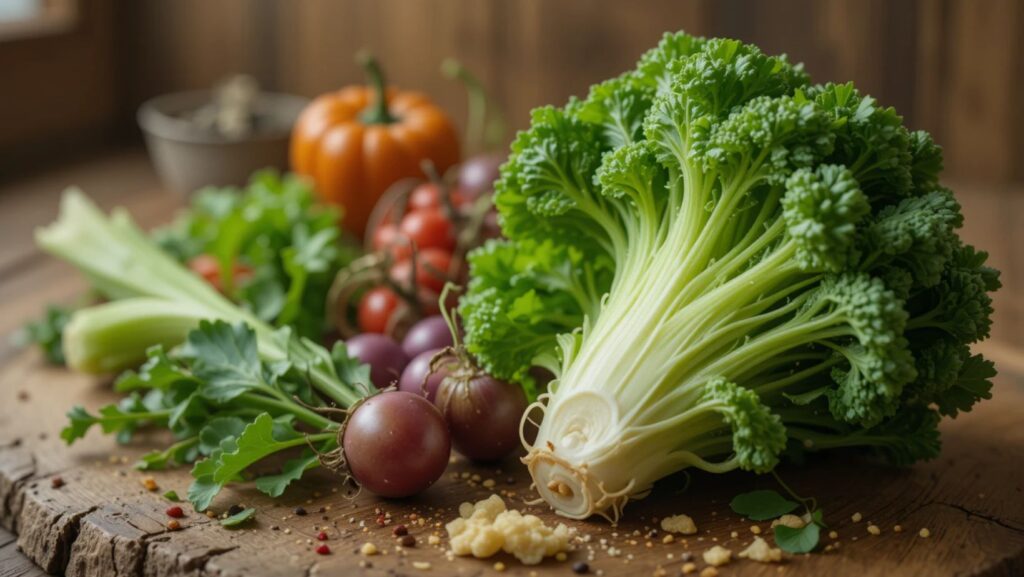
Would you want to know The most nutritious vegetable in the world? In my opinion, watercress is the vegetable that contains the highest concentration of nutrients, earning a flawless score of one hundred out of one hundred in their rankings.
Although watercress is at the top of the list, other plants such as spinach, kale, and Brussels sprouts are also good suppliers of nutrients.
However, that is not all; as you continue reading, I will provide you with further information on the topic matter.
Now, let’s get started
What is the healthiest vegetable in the world
The vegetable that contains the highest concentration of nutrients is watercress. When it comes to the digestion of proteins and the production of neurotransmitters, it is beneficial since it has a high quantity of amino acids.
Despite having a relatively low-calorie count per serving, watercress has an impressive amount of nutrients that have the potential to improve one’s overall health and well-being. Additionally, it is an antioxidant.
Those who ingest it two hours before exercising do not experience any discomfort in their muscles.
A significant quantity of iron, calcium, potassium, magnesium, and vitamin K are present in it, all of which work together to protect brain cells from being damaged.
This is the reason why watercress is thought to be very nutritious:
Strong in Nutrients:
The benefits of watercress include a high concentration of antioxidants, minerals (calcium), and vitamins (A, C, and K).
On the other hand, watercress is low in calories despite the fact that it is an extremely nutritious vegetable.
Cruciferous Family: Watercress, which is a part of the cruciferous family, which also includes kale,
Brussels sprouts and cabbage contain isothiocyanates, which have the potential to protect against cancer.
Antioxidant-Rich: Watercress contains a high concentration of antioxidants, which have been shown to lower the risk of illness over the long term, particularly for disorders affecting the heart and bones.
Other advantages include the fact that watercress is said to aid in the recuperation of muscles and is even consumed by athletes in order to mend injuries that are the result of physical activity.
What is the top 1 vegetable in the world
Tomatoes are the most widely consumed vegetable kind in the world. It is the most popular vegetable, accounting for 17% of all vegetables produced worldwide in 2017, with over 182 million tons produced worldwide.
Onions, which come in at 9%, are the second most popular crop.
The abundance of tomatoes varies from country to country in which the main offices of the Global Alliance for Improved Nutrition (GAIN) are located.
In Ethiopia, the average supply of tomatoes per person per week is approximately one-tenth of a medium-sized tomato (60 grams), while in India, the average supply is four medium-sized tomatoes per person per week.
In the United States, the average supply even reaches up to twelve medium-sized tomatoes per person per week.
What is the #1 healthiest vegetable
A leafy green vegetable, spinach is an excellent source of calcium, vitamins, iron, and antioxidants.
Spinach is also a wonderful supplier of iron.
Spinach is an excellent complement to any diet that does not include any meat or dairy products because of the iron and calcium it contains.
In terms of calorie content, one cup of raw spinach is primarily composed of water and has just 6.9 calories.
There is a reliable source. In addition, it offers:
A child’s complete daily needs for an adult High levels of vitamin A and vitamin C, as well as a reliable source of essential vitamin K
Folate, magnesium, and iron iron
antioxidants rich in calcium
Because it enhances the body’s ability to absorb calcium, vitamin K is a crucial component of a healthy body, particularly for the development of strong bones.
It also plays a significant role in the proper coagulation of blood.
Spinach also has a high level of magnesium, which is essential for the proper functioning of muscles and nerves, as well as a good quantity of iron, which is necessary for maintaining healthy blood and energy levels.
When increasing their consumption of dark leafy greens, those who are currently using blood thinners, such as warfarin (Coumadin), should exercise caution.
In patients who are taking these drugs, it is recommended by medical professionals that they maintain a constant dose of vitamin K over time.
Who is the king of vegetables
Brinjal, sometimes known as Bagan, is a common vegetable in both vegetarian and non-vegetarian cooking.
Because of its incredibly amazing purple covering and its juicy, high-nutrient content, the brinjal was dubbed the King of Vegetables.
The Solanaceae family includes brinjal, aubergine, and eggplant. Around the globe, Solanum melongena is grown for its delectable fruit.
The fact that brinjal belongs to the Solanaceae family suggests that the plant’s fruit and bloom are edible.
In North American and Australian English, the term “eggplant” is frequently used. In 1763, the term “eggplant” was first used to refer to white varieties that resembled hen’s eggs.
In 1811, the white, egg-shaped eggplant fruits were referred to as “garden eggs.” The Oxford English Dictionary states that the term “vegetable egg” was also in use from 1797 until 1888.
Brinjal is tannic and caustic when raw, but it softens and takes on a rich, complex flavor when cooked. Before cooking, rinse, drain, and salt the sliced fruit to eliminate any bitterness.
Brinjal dishes may taste better because of the fruit’s proven ability to digest lipids from cooking.
Brinjal is used in cooking in many countries. In some diets, it is occasionally used in place of meat. Its weight and texture are to blame. The flesh of the brinjal is very silky.
What vegetable has no health benefits
It’s possible that some fruits and vegetables, which are typically thought of as being extremely healthy, actually don’t give major health advantages.
The vital elements included in iceberg lettuce, cucumbers, celery, zucchini, bananas, grapes, tomatoes, beets, and apples are quite low in comparison to other vegetables.
Although no vegetable is completely devoid of all health benefits, iceberg lettuce is sometimes noted as having a comparatively low nutritional content in comparison to other variations of vegetables.
A breakdown is as follows:
When compared to other leafy greens or vegetables, iceberg lettuce has a comparatively low level of vital vitamins, minerals, and fiber.
Its primary composition is water, and it includes a relatively low amount of these nutrients.
Different kinds of vegetables that have superior nutritional profiles:
Certain dark leafy greens, such as broccoli, spinach, and kale, have much more minerals and antioxidants than other leafy greens.
The nutritional content of other vegetables is rather low.
Tomatoes, cucumbers, celery, and zucchini are three more vegetables that provide a comparatively low amount of vital elements.
It is more common to use iceberg lettuce as a “filler” in salads or sandwiches than as a source of major nutrients. Iceberg lettuce is considered to be a vegetable that is supposed to be a “filler.”
Final thought
Now that we have etsbalished The most nutritious vegetable in the world, Fiber, vitamins C and K, and minerals like potassium are all abundant in the veggies that have been mentioned above.
Additionally, they assist in the maintenance of a robust immune system and support good digestion.
By including these veggies in your diet on a daily basis, or at the very least on a frequent basis, you will be able to reap the benefits of a wide variety of vital nutrients that are necessary for maintaining optimal health.
In order to maximize the nutritional advantages of the foods you prepare, you should have fun and always try different colors and cooking techniques (such as pies, tarts, gratins, steaming, etc.).