
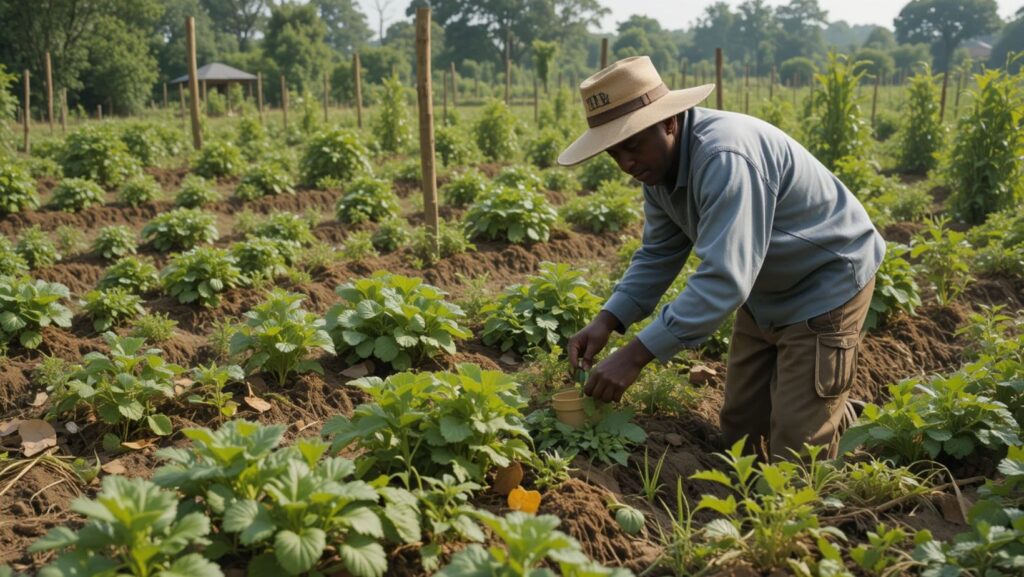
Would you want to know about The history of vegetable farming? My experience suggests that the practice likely began more than 10,000 years ago in various regions of the world, when households grew vegetables for local commerce or their personal sustenance.
Initially, physical labor was employed, but eventually, cattle were tamed and the plow was able to move the soil.
Additionally, The term ‘market gardening’ originated in France in the 18th century when vegetable gardens were built in the marshes around Paris.
Market gardening underwent a sea change during the 19th century’s Industrial Revolution.
Mechanization has an impact on cultivation methods and agricultural implements. But that’s not all; I’ll teach you more about the topic as you continue reading.
Now let get started
What is the History of Vegetable Gardening in the Americas
The first people to settle in what is now known as the “New World” in Central America were the ones who first produced maize.
They then went on to breed hundreds of different types of corn, which have now become a major food and fodder crop all over the world.
Tomatoes, potatoes, peppers, and beans are all examples of crops that originated in the western hemisphere and were brought back to Europe by Christopher Columbus and later exploratory parties.
The Peruvians were the ones who brought the potato into domestication in South America.
Since then, it has been bred into hundreds of different kinds, including every conceivable size, shape, and color. It has also expanded all over the world as a staple crop that provides calories.
What are Vegetable Gardening for Beginners
You wonder, why garden? Can you imagine eating the greatest veggies and vegetable ever? Sweet, juicy tastes and colorful textures will astound you if you’ve never had garden-fresh cuisine.
Nothing beats fresh vegetables, especially if you raise them yourself!
Gardening is rewarding despite its early difficulty. Vegetable gardening and planning basics: choosing a site, plot size, and veggies to cultivate are covered on this page.
Choose a Location:
The placement of your garden is crucial. Subpar vegetables might stem from poor placement! Tips for picking an excellent site:
A sunny spot: Most crops need 6-8 hours of direct sunshine everyday. Some leafy greens can endure shade.
Drains nicely and stays dry: Plant vegetables in a raised bed or row to aid drainage in waterlogged soil. moist roots can decay in moist soil. Till rocky soil to remove rocks, which hinder root development and weaken plants.
Plot size selection: Start Small:
Planting too much too soon—more than anybody can eat or want—is a classic starting mistake. Plan your garden carefully to avoid zucchinis in your attic. Plant only what your family will eat and start small.
Garden Size
For ground gardening, a 10×10-foot (100 square feet) garden is manageable. Consider buying three to five plants of each of your favorite vegetables.
A 4×4 or 4×8-foot raised bed is ideal for beginners. In our Raised Garden Bed Guide, we discuss the benefits of raised beds, how to build one, and what soil to use.
Choose Vegetables:
Choose simple, productive veggies as a beginning. Discover the simplest veggies for beginners below.
Unless otherwise stated, most seeds should be sown straight into the soil.
However, you should also ask your state’s Cooperative Extension Service what plants thrive there.
Vegetables that prefer colder temperatures may suffer under high heat.
When and where to plant:
Growing two or three tomato plants makes this procedure easier. When planning a comprehensive garden, consider where each plant will go.
When should each veggie be planted
Here are some vegetable arrangement tips:
Not all veggies are planted simultaneously. Early spring and fall provide lettuce, broccoli, and peas. Plant tomatoes, peppers, and cucumbers in late spring and summer as the soil warms.
Plant tall vegetables like pole beans on a trellis or sweet corn on the north side of the garden to avoid shading lower plants.
If your garden gets shadow, grow tiny, cool-season vegetables there. Your garden may need shade, so plant cool-season crops that like shade when it heats up.
What are the History of Vegetables – Story about Each Vegetable
Vegetable history dates back to the earliest periods of modern human history, when hunter-gatherers left Africa and began to disperse over the entire planet Earth.
Vegetables were recognized as the source of enormous nutritional and therapeutic potential at the dawn of contemporary human civilizations.
Discover the full history of veggies.
The History of Potatoes
European explorers recognized the potato’s potential to transform our diet and medical practices as soon as they laid eyes on it.
This is the ideal location for you to learn how the potato became one of the most popular crops in the world after decades of growth.
The History of Carrots
Carrot history covers the last 5,000 years and includes the amazing story of how they were domesticated in ancient Iran and Afghanistan, how they spread to Egypt and China, how popular they were in medieval Europe, and how the common orange carrot originated in the scientific circles of the
Netherlands in the 17th century.
The History of Tomatoes
The tomato’s history dates back 2500 years, to a time when the Aztecs recognized its benefits and used it into their food, medicine, and daily life.
These days, this intriguing vegetable is one of the most widely consumed vegetables worldwide, appearing in a wide variety of recipes and diets.
The History of Cucumbers
Discover the intriguing history of the cucumber, a member of the Cucurbitaceae family of gourds, and how it has evolved over the course of 5,000 years of human development and expansion.
his vegetable’s popularity grew steadily due to its high nutritional content and potential for physical healing. Go here to learn more about cucumbers.
What are Vegetable production and practices
Understanding a lot more than just crop biology and production methods is necessary for successful vegetable production in today’s cutthroat market.
By addressing contemporary cultural approaches and the recent issues of consumer demand facing farmers today, this significant new textbook brings the science and practice of vegetable production up to date.
It presents the production of vegetables from the standpoint of creating superior food that meets the demands of the contemporary customer.
The book starts with the fundamentals of growing vegetables using high and low input methods, such as organic and sustainable production techniques.
It then introduces and discusses a number of topics that were not fully covered in earlier texts, such as water management, cropping systems, plasticulture, protected culture, mineral nutrition, and Good
Agricultural Practices, which improve quality, reduce biological contamination, and ensure food safety.
The application of molecular biology to crop genetic improvement is also introduced in Vegetable Production and Practices.
Why is vegetable farming important
The value of growing vegetables
Vegetable cultivation plays a significant role in the nation’s agricultural growth and economy.
Growing vegetables is a significant source of revenue.
In a healthy diet, vegetables are an essential component.
It is the most affordable natural protective food supply.
In the shortest amount of time, vegetable growing produces a larger yield per unit area, which eventually raises revenue.
Vegetable exports are a significant source of foreign exchange earnings.
Growing vegetables is crucial for many human lifestyles.
Food security: Local populations may obtain fresh, wholesome food from vegetable cultivation, which contributes to food security.
Economic growth: Growing vegetables may boost the economy in rural regions by creating job possibilities.
Sustainability of the environment:) Crop rotation, cover crops, and decreased tillage are examples of vegetable farming techniques that can help preserve soil fertility, save water, and use less pesticides and fertilizers.
Health advantages A balanced diet must include vegetables since they are a good source of vitamins and minerals.
Diversity in Biodiversity Because it provides home for pollinators and other important insects, vegetable gardening may promote biodiversity.
What are the Process of Farming Vegetables
When one first begins to cultivate vegetables, it is vital to have a thorough understanding of the various requirements that are associated with each kind of vegetable.
These requirements include the soil conditions, the ideal growth temperature, and the needed nutrients.
During the time when vegetable plants are growing, it is essential to manage pests and weeds in order to have a successful harvest.
To cultivate certain veggies, you will need seeds. In order to facilitate the storage and transportation of seeds, these seeds are immature plants that are in an arrested state.
An operation that involves the generation of seeds comprises the following steps:
A collection of seeds obtained from wild sources or from vendors.
Seeds are planted in a field that is devoid of weeds and contaminations before they are planted.
Taking the seedlings from the plants.
Cleaning the seeds in preparation for assessing their quality and purity.
For agricultural purposes, storing seeds in a seed bank.
Final thought
Now that we have established The history of vegetable farming, When it comes to crops that have delicate roots and taproots, such as carrots, turnips, and radishes, planting is a procedure that is particularly advised.
The cultivation of vegetables from seedlings is more suitable in some circumstances, such as the cultivation of slow-growing permacultures, crops with excellent and expensive seed, and crops that are grown throughout the warm season.
In situations when the soil is either too cold or too wet for direct sowing, planting is advised for annual vegetable crops.
For instance, onions and asparagus are examples of crops that are often grown by planting.