
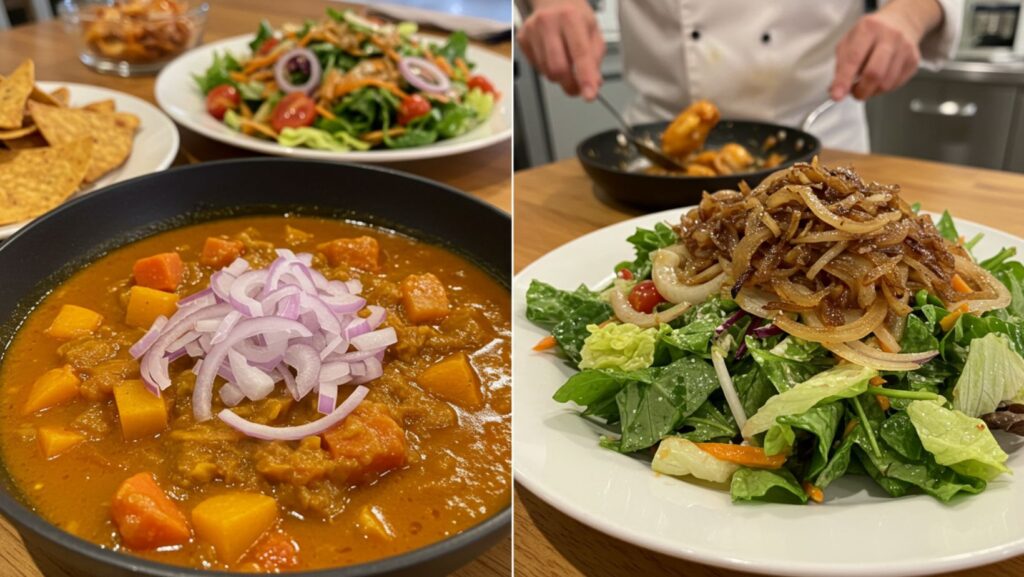
Would you want to know about onions in a vegan diet? In my experience, onions are regarded to be entirely vegan and may be freely included in a vegan diet since they are a plant-based food.
This means that vegans can consume onions without any limits as part of their lifestyle that is based on a plant-based diet.
However, that is not all; as you continue reading, I will provide you with further information on the topic matter.
Now, let’s get started
What are Vegetarian Diets
The consumption of meat, fish, and poultry is often not permitted on vegetarian diets; however, dairy products and eggs may be included in such diets.
Although there are numerous variants, the following are some of the practices that are utilized the most frequently:
Lacto-ovo vegetarians do not consume red and white meat, fish, or poultry, but they do consume eggs and goods made from milk.
This particular type of vegetarianism is the most prevalent one.
However, lacto-vegetarians consume dairy products despite their abstinence from red and white meat, fish, poultry, and eggs.
Eggs are consumed by ovo-vegetarians, who abstain from white and red meat, fish, poultry, and dairy products.
The Sattvic diet, also known as the Yogic diet, is a plant-based diet that may include dairy products and honey, but it does not include eggs, anything from the onion or
leek family, red lentils, durian fruit, mushrooms, blue cheeses, fermented foods or sauces, alcoholic beverages, and
Frequently excludes coffee, black or spring tea, chocolate, nutmeg, or any other type of stimulant, such as excessively sharp spices.
Vegetarianism in Buddhism — many Buddhist traditions have varied teachings on nutrition, and these teachings may also differ for ordained monks and nuns in comparison to teachers of other Buddhist traditions.
Not all people believe that the principle “not to kill” requires them to abstain from eating meat, although many others do.
In Taiwan, su vegetarianism does not only prohibit any goods derived from animals, but it also bans onions belonging to the allium family, which are known for their distinctive perfume of garlic and onion.
These onions include onion, garlic, scallions, leeks, chives, and spring onions.
When it comes to root vegetables, Jain vegetarianism does not include eggs or honey, but it does accept dairy products.
Why do some vegetarian diets forbid onion and garlic
Different Reasons:
1. Because onions and garlic are regarded as “tamasi” or “aphrodisiacs,” their use is strictly prohibited in the Jain faith, which is distinct from Hinduism.
In Hinduism, it’s believed—I’m not sure how scientific—that eating a lot of onions, garlic, and cardamom can boost your libido. The Jain faith, in certain ways discourages its usage for these particular reasons.
They want people to be less aggressive, more peaceful, and more devout.
2. cuisine and gravy are reserved for warriors and those who require a strong heart to do their duties.
This is because chicken was not considered a meat in India until the 15th century. The Brahmin caste is the one that works in research and education.
They require Satvic cuisine, which is essentially any natural diet devoid of gravy, oil, or meat, such as toasted wheat, rice, and other grains, along with a lot of fresh onions, milk, sugar derived from sugarcane, and ghee (clarified butter).
You truly don’t need onions and garlic to make such things.
3. The “Chaturmas” or four-month monsoon season comes in third and is crucial! This is quite scientific.
Previously, we lacked humidity-controlled storage and cold storage. The monsoon rains last for four whole months in India.
Due to the naturally humid conditions, onions and garlic are always rotting during these periods.
All meats, not just onions and garlic, should be avoided since dampness increases the number of bacteria and viruses that can infect humans and animals.
Additionally, fishing is prohibited because it is fish breeding season. (was permitted… no one seems to care now).
During this time of year, the number of outbreaks and cases of influenza is at its highest. Therefore, anything that may deteriorate in such an environment is completely prevented.
Otherwise, because onions and garlic have many therapeutic properties, Ayurveda highly advises using them.
Can Vegans Eat Onions
When following a vegan diet, have you ever thought of including onions?
Don’t be alarmed; onions are a great plant-based food that doesn’t include any animal products or byproducts during manufacture, so even the most discerning vegan may eat them.
In addition to being low in calories and high in fiber, which helps control blood sugar levels and aid in weight loss, onions are also a great source of antioxidants, vitamin C, and
Other vital nutrients that support optimal body function. These nutrients are essential for maintaining a plant-based diet.
Benefits of Potassium for Vegans:
Onions include potassium, a necessary element that is involved in the control of blood pressure, muscular function, and heart health.
They may be especially helpful as a source of potassium for vegans who have trouble getting enough from plant-based sources—an average medium-sized onion offers about 10% of the daily required amount!
Savoring Onions while Following a Vegan Diet:
Fundamentally, onions have shown themselves to be a crucial part of vegan diets.
It’s simple and satisfying to consume these wholesome vegetables without worrying about their vegan status, whether you sauté, caramelize, or roast them.
So embrace your inner gourmet and enjoy all the health advantages!
What is the Onion Usage in Vegan Diet
When it comes to vegan cooking, onions are a great addition.
Onions are one of the most notable ingredients in vegan cooking due to their versatility in terms of culinary innovation and their delicately subtle depth of flavor.
Their simple inclusion elevates anything from simple soups to incredibly flavorful curries.
Like magicians, sautéed onions change flavors: sweetness turns into savory, sugar turns into caramel, and a delicious richness permeates a dish.
Because of their adaptability, they may be used as the cherry on top of salads, sandwiches, and pizza meals, giving sweet and tangy accents that leave a lasting impression!
The inherent sweetness of the priceless onion bulbs is enhanced by grilling or roasting them, which also adds an enticingly smokey, charred scent that goes well with vegetables or in substantial grain-based salads.
A global taste:
These delectable treats are present in many ethnic vegetarian cuisines, including Mexican, Italian, Chinese, and Indian.
Consider onion bhajis, which provide a memorable dish of deep-fried and battered onions seasoned with different spices and served with chutney on the side.
What are the Nutritional Benefits of Onions for Vegans
Onions are nutrient-dense superfoods, not just any vegetable! You must include onions in your daily diet to meet vegan dietary needs since they contain vital vitamins and minerals, including fiber,
potassium, and vitamin C, among many other healthy ingredients. When vegans include onions in their diet, they will experience several health benefits.
Fibre
Fibre is essential for gut health because it helps control weight, avoid constipation, and regulate bowel motions.
An excellent source of this vital nutrient, a medium-sized onion provides around 14% of the daily required dietary fiber consumption.
Vitamin C:
A necessary nutrient for vegans, vitamin C is crucial for immunological response, collagen formation, and wound healing.
Including onions in your diet is a simple approach to increase immunity and speed up the healing of wounds since one medium onion provides around 12% of your daily vitamin C needs.
Potassium:
Onions are a rich source of potassium, an important element that controls blood pressure and fluid balance.
A crucial component of a well-rounded vegan diet, a medium-sized onion delivers around 10% of your daily necessary potassium consumption.
How to make vegan French onion soup
We begin by cutting all of the onions for our vegan French onion soup. Peel and cut as many as possible so that they may be placed in the pan to caramelize.
Put a generous amount of olive oil in a hot skillet, add the onions, and cook over medium heat for about 10 minutes or until they are tender.
Add the sugar once they’re tender. Stir thoroughly, then let the sugar and onions caramelize for 40 to 45 minutes, stirring often, until they are soft and sticky.
After the onions are nicely flavored and caramelized, deglaze the pan by adding a little white wine.
The nicest part is in the bottom of the pan, so make sure to scrape up all the yummy, gooey parts there.
Add the flour, mix, and simmer for a few more minutes after cooking for a few more.
Lastly, put the stock and the remaining white wine in the pan and heat to a boil.
To give the soup more depth of flavor, partially cover the pan with a lid, put it back on the stove, and cook it for 20 to 30 minutes.
Slice the baguette, spray each piece with a little olive oil, and grill it on each side till golden brown when the soup is almost done and boiling.
Put these aside so they may be assembled on each soup. To serve, arrange 6–8 bowls or small plates on a large baking pan.
Next, spoon the soup into each bowl or dish, add a good amount of shredded vegan cheese and toasted baguette pieces on top, and toast under the grill until the cheese is melted and golden brown.
Just keep an eye on them—this should take three to five minutes!
Enjoy it with a dash of oregano and a dash of black pepper.
What are the five vegan recipes with onions as the star
Most recipes call for onions; however, they are frequently used more as a supporting cast member than as the star.
These delectable vegan dishes demonstrate that onions may also be used as one of the primary stars of the show.
Carrot and Onion Bhajis for Vegans:
Onion bhaji, a common snack meal in India, is arguably the dish that best honors the simple onion.
This recipe, which also uses grated carrots, shows how simple it is to produce the crispy, tasty delicacy.
Mix the flour batter, seasonings, chopped onion, and shredded carrot.
Ancho-Spiced Barbecue Burgers With Caramelized Onions:
Naturally, vegan cheese and barbecue sauce go well with these flavorful black bean patties that are made with beef and ancho chili powder.
However, the caramelized onion topping is unquestionably the main attraction of this barbecued, meaty meal.
Roasted pumpkin, red onion, and sage on a pizza:
A pizzette is a classic Italian quick meal that is prepared similarly to a pizza but smaller. Perhaps the greatest ones are prepared with basic, plant-based components.
The ideal triad of toppings consists of sweet roasted pumpkin, caramelized red onions, and aromatic sage leaves.
Vegan Spiced Bhaji Naan Wraps With Mango Chutney:
While onion bhajis make a fantastic side dish, you can elevate them to a mouthwatering, flavourful main course by encasing them in naan bread with mango chutney, cucumber, cilantro, and lettuce.
Vegan Malai Kofta: Served in a rich, creamy sauce, this crispy, savory tofu-potato Indian dumplings—a plant-based alternative to the meaty original—taste their finest.
A blend of spices, tomatoes, and, of course, one big onion is used to make the latter.
Final thought
Now that we have established onions in the vegan diet, Overemphasis cannot be placed on the importance of include onions in a vegan diet.
This vegetable not only has a flavorful meat that is quite tasty, but it also includes necessary vitamins that may help one achieve the best possible health.
Please take pleasure in the fact that you are providing your body with the nutrients it requires to perform at its highest level by consuming this great vegetable.