
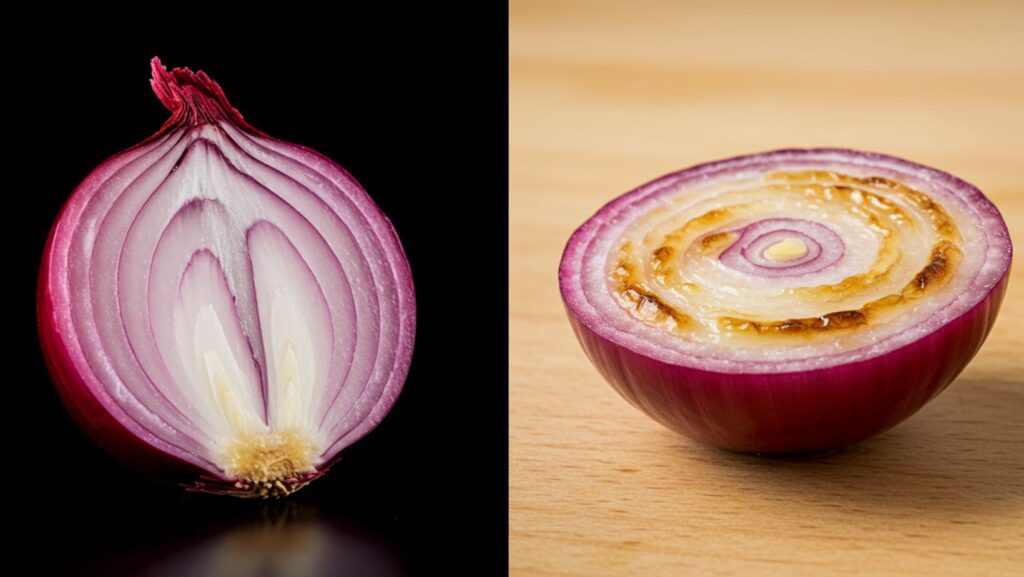
Would you want to know about the Nutritional difference between cooked and raw red onions? Based on my experience, red onions are nutritious whether they are cooked or raw.
However, depending on the cooking method, cooking can slightly increase the bioavailability of some antioxidants, such as quercetin, in onions.
Raw onions typically contain higher levels of certain beneficial compounds, particularly organosulfur compounds, which are responsible for their strong flavor and potential health benefits.
When red onions are cooked, they lose some of their natural vitamins and antioxidants, such as sulfur compounds and quercetin.
These substances are well-known for their antioxidant and anti-inflammatory qualities. But that’s not all; I’ll teach you more about the topic as you continue reading.
Now, let’s get started
What are the Benefits Of Consuming Raw Onion
Ten advantages of eating raw onions are as follows:
1. Increases immunity
Vitamin C, which helps to strengthen the body’s defenses, is abundant in raw onions.
Raw onions are crucial for avoiding common illnesses like the flu and the common cold because vitamin C helps produce white blood cells that protect the body from germs and viruses.
2. Encourages heart health
Antioxidants like quercetin, which are abundant in onions, can lower the body’s levels of harmful cholesterol, improving cardiovascular health.
Raw onion consumption also lowers blood pressure, improves blood circulation, and lowers the risk of heart disease.
3. Promotes better digestion
Dietary fiber, which is essential for healthy digestion and waste removal from the body, is found in raw onions.
The fiber improves nutrition absorption and guards against a number of conditions, including hemorrhoids, irritable bowel syndrome, and constipation.
4. Decreases inflammation
Raw onions high in quercetin contain anti-inflammatory qualities that help lower the body’s levels of inflammation. It helps treat ailments like bronchitis, asthma, and arthritis.
5. Promotes bone health
One of the best sources of sulfur-rich chemicals that help to improve bone health is onions. By encouraging calcium absorption, these substances can lower the risk of osteoporosis.
6. Enhances brain activity
Sulfur compounds found in raw onions boost the brain’s synthesis of neurotransmitters, which enhances focus, memory, and attention span.
7. Prevents cancer
Antioxidants and sulfur-rich chemicals found in raw onions can prevent cancer.
Allicin, flavonoids, and quercetin are examples of sulfur compounds with anti-carcinogenic qualities that prevent the body’s cancer cells from growing.
8. Encourages skin health Raw onions are rich in vitamin C and antioxidants, which help to improve skin health. Eating raw onions promotes healthy, radiant skin by lowering pigmentation, wrinkles, and age spots.
9. Controls blood glucose levels
Chromium, a mineral essential for controlling blood sugar levels, is found in raw onions.
By enhancing insulin effectiveness, chromium lowers the risk of diabetes by promoting blood sugar management.
10. Encourages weight reduction
Raw onions help people lose weight because they are high in fiber and low in calories.
By keeping one feeling full and content, fiber lowers the likelihood of overeating, which results in a calorie deficit and, eventually, weight reduction.
What are the Nutritional Benefits of Onions
Onions have several health advantages. Consider including more onions in your diet for the following main reasons.
Boost Heart Health:
Your cardiovascular system may benefit from eating onions. In particular, studies have shown that onions contain a polyphenol called quercetin, which lowers lipid and high blood pressure levels.
Onions with darker hues, such as red and chartreuse onions, have the largest concentrations of quercetin, which is why the “tearless onion” may help prevent heart disease.
Rich in Antioxidants: Packed with antioxidants that fight illness and free radicals, onions aid in the protection and repair of your body’s damaged cells.
They are among the greatest sources of phytochemicals with potent antioxidant qualities called flavonoids, which include quercetin.
At least 25 distinct flavonols may be found in onions.
“Compared to other onion varieties, red and yellow onions are higher in those antioxidants. Yellow onions may have about eleven times as many antioxidants as white onions.
A robust immune system and improved general health can result from consuming a diet high in antioxidants, which can also help lower inflammation and prevent damage from free radicals.
Could Lower the Risk of Cancer:
Onions may have a significant impact on preventing cancer.
Particularly, red onions are the best for lowering breast and colon cancer cells.
The high concentrations of quercetin and anthocyanin (an additional kind of antioxidant flavonoid) are the cause of this once more.
One to seven meals of allium vegetables, such as onions, are high in flavonols and organosulfur, which are substances that have been shown to contain components that suppress tumor growth.
what are the Health Benefits Of Eating Onions
- 44 calories
- 1.2 g of protein
- 10.3 g of carbohydrates
- 3.4% of the daily value (DV) of potassium
- 9 percent of the DV for vitamin C
- 4.7 g of sugar
- 1.9 g of fibre
- g of fat
It is said that because of its high vitamin C concentration, it can improve iron absorption, increase immunity, and aid in the synthesis of collagen, all of which are beneficial for the health of the skin.
It also includes antioxidants, which lower the risk of diabetes, heart disease, and cancer by shielding healthy cells from oxidative damage brought on by free radicals.
Onions are one of the allium vegetables whose flavanols and organosulfur compounds are thought to prevent the development of cancer.
Consuming more allium vegetables may lower the risk of colorectal cancer
“onions are a helpful vegetable choice for those with diabetes because both the quercetin and organic sulfur compounds found in onions are known to promote insulin production.”
“Onions’ organic sulfur compounds also help lower the body’s cholesterol levels and may also help break down blood clots, lowering the risk of heart disease and stroke.”
What’s healthier: Cooked onion or raw onion
Is it preferable to eat onions raw or cooked? A tiny bit of raw onions gives a strong flavor boost to any meal.
Since most onion preparations are a nutritious complement to a meal, the answer is whatever you want.
The molecules that cause your eyes to moisten when you chop an onion are called organosulfur compounds, and they are actually more prevalent in raw onions.
These sulfur compounds, which are somewhat reduced in cooked onions, have anticancer properties.
However, quercetin, an antioxidant associated with several health advantages, is found in somewhat greater concentrations in baked and sautéed onions.
Ultimately, onions are a healthy complement to any meal, whether they are cooked or raw. Thus, pick an onion variety according to your tastes.
What are the side effects of Eating Raw Onions
Although it is believed that eating raw onions is more advantageous than eating cooked onions, there are a few adverse consequences that should be taken into consideration.
These include the following:
- Hepatic acidity and heartburn
- Additionally referred to as halitosis, bad breath
Individuals who suffer from Irritable Bowel Syndrome (IBS) may discover that their symptoms, which include bloating, cramps, and gas, become more severe.
Onions, which have anticoagulant qualities, are associated with an increased risk of bleeding.
Final thought
Now that we have established the Nutritional difference between cooked and raw red onions, As was just said, eating raw onions has a multitude of positive effects on one’s health.
It is vital to keep in mind that consuming an excessive amount of something might result in stomach issues as well as poor breath.
Consequently, the key to getting the advantages of raw onions is to consume them in moderation.