
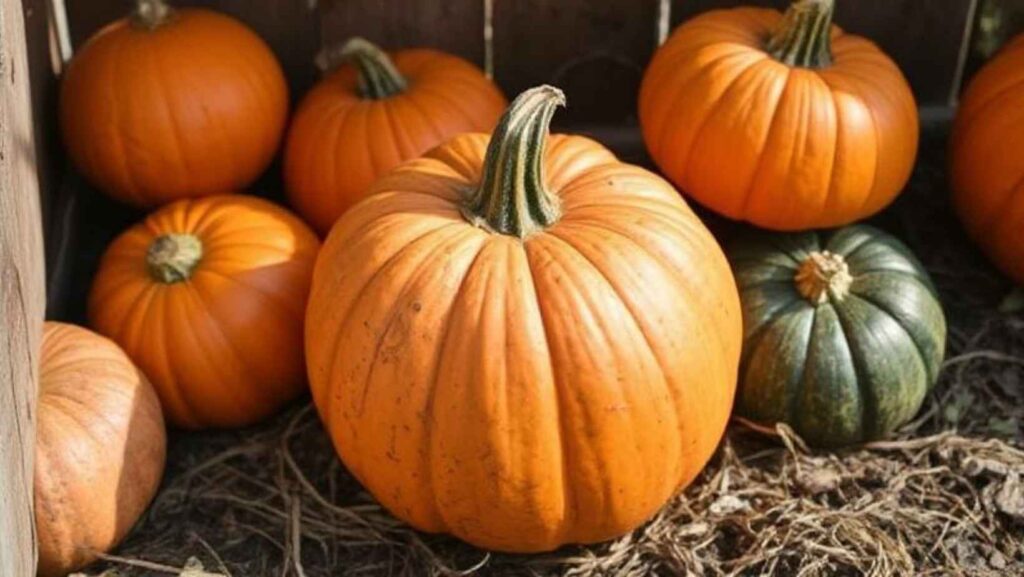
Would you want to know how to store pumpkins after picking? In my opinion, the best way to keep pumpkins after harvesting is to “cure” them for around a week in a warm, dry, and well-ventilated environment to ensure the stem base heals and the skin hardens.
After that, keep the pumpkins somewhere cold, dark, and dry with plenty of airflow, ideally between 50 and 55°F (10 and 13°C).
Place them on a layer of cardboard or straw to keep them off the ground, and check them frequently for indications of deterioration.
But that’s not all; as you continue reading, I’ll provide additional information on the topic.
Now, let’s get started
How to Store Pumpkins
To prevent rot, carefully wash and dry the pumpkins before wiping them down with a little bleach solution.
To make the bleach solution, mix one gallon (4 L) of water with two teaspoons (20 ml) of bleach. The pumpkins are prepared for storage at this point.
Pumpkins should be stored in dry. At lower temperatures, pumpkins that are stored at warmer temps may suffer cold damage and become rough and stringy.
Arrange the pumpkins in a single layer on wooden shelves, cardboard, or bales of hay. You may hang them in mesh-produce bags if you like.
Rot occurs when pumpkins are stored on concrete. Pumpkins that are stored properly can survive up to seven months, but they usually stay for at least three months.
Periodically inspect the pumpkins for mushy areas or other indications of rot.
Rotten pumpkins may be thrown out or chopped up and put in the compost pile.
How to store pumpkins so that they last longer
You can’t always utilize an entire pumpkin in one sitting, no matter how much you adore pumpkin soup.
When you go to take the remaining pumpkin out of the refrigerator for your next soup, you discover that it is coated with mold.
You throw out the entire slice of pumpkin since you’re not sure if it’s safe to eat.
What you need to know about keeping chopped pumpkin is as follows:
Cut pumpkin is best stored in the refrigerator after being carefully wrapped in cling film.
The pumpkin’s shelf life is unaffected by whether the seeds are left in or removed.
A thin layer of white mold will progressively grow on the cut pumpkin, followed by some black or gray mold if it is left longer.
The mold may be removed, and the pumpkin can be safely eaten if it is still solid. Just be careful to chop off a centimeter or so of flesh that extends past the mold.
The mold may have gotten into the pumpkin’s flesh if the surrounding region is mushy or moist, which usually happens when there is black or grey mold.
Regardless of whether the mold has been eradicated or not, the pumpkin, in this case, is unsafe to eat.
A big beeswax wrap, called a Honeywrap in New Zealand, can be used in place of cling wrap if you like, but in this case, be careful to remove the seeds first.
What you should know about keeping entire pumpkins is as follows:
You should keep them in a cool location, like your garage.
Pumpkins should be stored with the stalk on the bottom.
Instead of setting them directly on the floor, place the pumpkin on a piece of cardboard that serves as a mat.
Pumpkins may survive three to four months when stored in this manner.
What are the Essential Tips on Properly Storing Your Pumpkins
Your pumpkins were harvested successfully! It’s time to make your hard work count. Pumpkins must be stored properly to stay fresh for months.
Use these ways to preserve pumpkins like an expert.
Carefully handle: Pumpkin storage requires attention. Avoid dropping or tossing them to prevent internal damage and rotting.
Carry them by the stalk or base to avoid bruises on the sides.
Maintain cleanliness: Clean pumpkins before storage. Scrub filth and debris using a gentle brush or cloth and mild soap.
Rinse well to eliminate soap residue. This procedure is essential to avoid decay-causing bacteria and fungus.
Cure your pumpkins to increase their shelf life. Let the pumpkins remain in a warm, dry, well-ventilated location for two weeks.
This hardens the skin, preventing deterioration. Keep the temperature about 27°C (80°F) for best effects, but avoid direct sunshine to avoid sunburn.
Choose a storage spot: Choosing the appropriate storage position keeps pumpkins fresh. Store them in a cold, dry, dark area.
Their shelf life is best around 10-13°C (50-55°F). Avoid putting them in the fridge since the cold can quickly spoil them.
Ensure airflow: Preventing moisture buildup and rotting requires good ventilation. Leave room between pumpkins and avoid stacking them.
This circulates air and prevents deterioration from stored moisture.
Pumpkins rot even with proper storage, so check for symptoms of decomposition. Check your stored pumpkins for deterioration and rotting periodically.
If a pumpkin has soft areas, mold, or a bad smell, remove it immediately to prevent decomposition.
If you’re short on room or don’t have optimum storage conditions, try alternate alternatives. Pumpkins can be canned, frozen, or dehydrated.
These ways can help you preserve pumpkins and make tasty pumpkin puree or dried pumpkin slices.
What are the Common Mistakes to Avoid During Pumpkin Harvest and Storage
A good pumpkin harvest is thrilling! Before celebrating your bumper crop, be aware of certain frequent blunders that might ruin your hard work.
This tutorial covers the most frequent pumpkin harvest and storage errors.
Mistake #1: Early or late harvesting
Pumpkin harvesting requires timing. Pumpkins can be undeveloped and flavorless if picked early or overripe and mushy if picked late.
Remember the color change, stalk wilting, and hard skin as ripeness signals. Avoid impatience and delay when harvesting pumpkins!
Mistake #2: Improper harvest handling
Pumpkins must be handled carefully when harvesting. Dropping or tossing them might cause internal damage and decomposition.
The sides might bruise, so carry them by the stalk or base. Pumpkin quality may be preserved with a little harvest care.
Third mistake: Skipping cleaning.
Cleaning pumpkins before storing them is crucial. A gentle soap and water washing removes debris and germs, avoiding deterioration.
Rinse well to eliminate soap residue. If you skip this step, your pumpkins may deteriorate.
Mistake #4: Uncured pumpkins
Curing is essential to pumpkin preservation. Keep pumpkins in a warm, dry, well-ventilated place to harden the skin and extend shelf life.
To keep pumpkins fresh, you must do this. Please give them time to heal.
Incorrect storage location (5th mistake)
Pumpkins must be stored properly to stay fresh. They might deteriorate if stored under severe temperatures.
Choose a cold, dry, dark environment between 50-55°F (10-13°C). Your pumpkin doesn’t like the fridge!
Airflow neglect is mistake #6.
Preventing moisture accumulation and rotting requires good ventilation. Allow pumpkins to breathe by not stacking them too closely. Allowing air to circulate reduces deterioration.
Failure to check for deterioration is mistake #7.
Pumpkins may decay despite the finest care. Look for soft patches, mold, or a bad smell in stored pumpkins.
Remove any damaged pumpkins immediately to prevent rot from spreading.
Avoid these blunders to keep your pumpkins fresh and tasty. Don’t squander your efforts by falling into these traps.
What are the Storage Guidelines: Optimizing quality
Here are some tips to maximize squash quality while it’s being stored:
Up to a week or two at these higher temperatures immediately following harvest will significantly enhance sugar content and perceived flavor without reducing storage life,
but prolonged storage temperatures over 80 degrees Fahrenheit will shorten storage life and eating quality.
When maintained at the optimal temperature of 50 to 60 degrees Fahrenheit, a pumpkin or squash should survive two to six months, depending on the variety; a cool basement might be an effective storage space.
Acorn squash may be stored for up to two months, butternuts for two to three months, and hubbarbs for five to six months.
Short exposures to lower temperatures—even as low as 35 degrees—can be tolerated by the fruit as long as they are followed shortly by higher ones, such as room temperature, which will help undo some of the chilling damage.
Depending on the kind, eating quality may increase during preservation. After being stored for two months, butternut squash usually achieves its peak quality.
Conversely, acorn varieties require no additional ripening if taken with the dark-orange ground spot and have a very limited shelf life.
Buttercup and Kabocha types are in the middle, with rising quantities of carotenoid and sugar with time.
Squash of the Hubbard kind may be stored for up to six months.
Apples, ripe pears, and tomatoes all release ethylene, the ripening “hormone,” which reduces the shelf life of squash.
Although homeowners might not be able to attain the ideal circumstances, harvesting squash and pumpkins at the right time, managing them carefully, and
avoiding extremely hot or low temperatures when storing them could help them last longer
How Long Can You Store Fresh Pumpkins
Check reality before planning.
Your greatest attempts won’t keep winter squash fresh forever.
A Halloween variety with a thin rind and little meat can last a month at room temperature or two months if stored cold and dry.
Pies can survive two to six months with good storage.
Amish Cheese, a heritage cooking pumpkin with thick, delicious flesh, may be preserved for months.
The Australian culinary staple ‘Jarrahdale’ may be stored for a year. I’ve grown this kind and utilized the green-rinded fruits in a piano Christmas decoration last year.
Any maxed-out expiration date requires your attention. See how to increase your long-storage probabilities.
Planting and Growing:
Early preparation is hard to imagine, but the greatest time to ensure crops survive long after harvest is early. Determine the ideal time to select before sowing.
The harvest date for jack-o’-lanterns should be a few weeks before Halloween. That gives you time to cure the fruits before cutting.
If it’s too late for pre-planning and your harvest is several months before Halloween, follow all the other measures below to preserve your festive winter squash from spoiling.
Cooking crops should be harvested from late September to mid-October.
That lets you prepare the cured fruits in pie, soup, and other recipes for Thanksgiving, and they’ll stay fresh for months to make winter comfort meals and fruit butter you can freeze.
Pumpkins may be ready, but the seeds will keep ripening, and the flesh will sweeten after harvest.
If you prune and space your vines for air circulation before harvest, it will help your storage efforts.
This deters downy mildew, which rots fruits within. That may make choosing and storing them impossible.
Final thought
Now that we have established how to store pumpkins after picking, you will be rewarded at the end of the season with a crop of food and decorations if you decide to cultivate pumpkins in your garden.
To maximize your harvest, it’s critical to understand how to preserve them.
What you do with your pumpkins after you remove them from the garden on a sunny day will also determine how you store them.
Any pumpkin with rind or skin damage should be consumed right away rather than being saved for later use.