
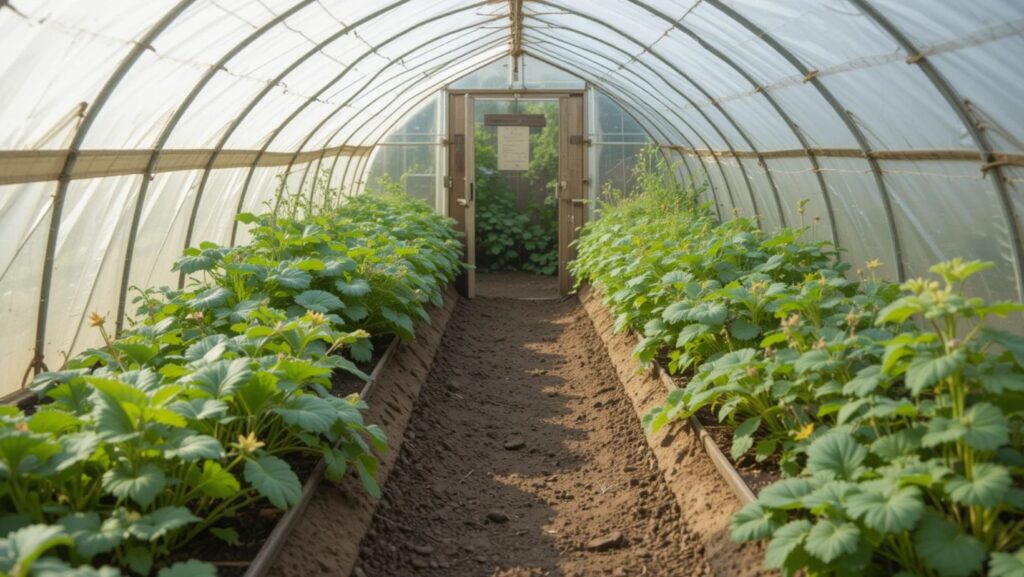
Would you want to know How to set up a greenhouse for year-round vegetable farming? Managing the temperature and humidity in the greenhouse is an essential part of proper greenhouse organization, in my experience.
In a nutshell, your greenhouse has to have doors and vents to provide enough ventilation, which will help reduce the amount of excess humidity and fungus.
Additionally, it should have a shade sail to avoid the intense heat of the summer sun.
However, that is not all; as you continue reading, I will provide you with further information on the topic matter.
Now, let’s get started
How do I set up a vegetable greenhouse
Here are some essential actions to do if you want to start a vegetable greenhouse:
1) Select the appropriate site: Your greenhouse’s location is crucial. You should pick an area that receives lots of sunshine all day long and is shielded from inclement weather.
The location’s accessibility, as well as its proximity to a water supply and power, should also be taken into account.
2) Pick the appropriate resources: The longevity, insulation, and light transmission of your greenhouse will all be impacted by the material you select.
Although glass is a conventional choice, it may be costly and bulky. In contrast, plastic is inexpensive and lightweight, but it cannot last as long.
When choosing your material, take your living conditions and budget into account.
3) Arrange your heating and ventilation systems: Controlling the humidity and temperature within your greenhouse requires enough ventilation.
Planning for heating systems is also necessary, particularly in colder areas. Gas or electric heaters, or a mix of the two, are available options.
4) Select the appropriate plants: Not every plant can thrive in a greenhouse.
While some prefer cooler, drier climates, others do better in warmer, more humid settings. Plan your garden based on your research about the plants that will thrive in your greenhouse.
5) Keep an eye on your greenhouse: You must frequently check the water levels, humidity, and temperature within your greenhouse to make sure your plants are flourishing and healthy.
Additionally, you will need to monitor for illnesses and pests and take preventative and remedial action as necessary.
In general, vegetable greenhouses are a great method to cultivate more plants all year round and prolong the growth season.
You can provide your veggies with the best growth circumstances and shield them from pests and weather-related harm by managing the environment.
You may successfully set up a vegetable greenhouse and enjoy fresh, home-grown veggies all year long with the correct preparation and maintenance.
What are the Vegetables to Grow in a Greenhouse
This includes vegetables, fruits, flowers, and other plants. Agriculture, horticulture, research, and education use greenhouses.
Growers use greenhouses to grow plants in a controlled environment regardless of weather.
Tomatoes:
Before planting tomatoes in a greenhouse, there are a few things to consider.
Consider your climate, sunshine, and tomato types’ greenhouse tolerance.
Good ventilation and a temperature over 50 degrees Fahrenheit are needed for tomatoes. This will boost growth and fruit production.
A high tunnel can help shield tomato plants from weather harm. These protect them from severe rain.
Though less watering than field crops, greenhouse tomatoes need lots of sunshine. Healthy plant development requires 24 inches between plants.
Peppers are delicate and need a warm atmosphere. They need lots of water and mulch. A trellis helps too.
Choose the correct pepper kind to start. There are spicy, moderate, and insect-resistant kinds. You may also vary forms, colors, and flavors.
Plant peppers in late April or early May. Plants should be 38-45 cm apart in 2–3-foot rows. Peppers are usually grown soilless, although a little manure can boost foliage development.
Peppers thrive at 65–85% humidity. Heat and light must be distributed to roots by ventilation. Once real leaves develop, move plants into permanent pots.
Aubergine thrives in warm climates with wet soil and ample sunlight.
Aubergine is like sandy or loamy, well-drained soil. Also grows in clay, alkaline, or acidic soils. Water the plant regularly to keep it healthy. We recommend a water mist sprayer.
Grow Aubergines in a greenhouse to avoid pests and illnesses. Aubergines grow best in greenhouses in winter or spring. It may be grown in early summer.
Aubergines are heavy eaters and need nutrition regularly. Fertilizing with compost or tea maintains soil nutrients. A balanced 10–10 liquid plant food is optimal.
To grow cucumbers in a greenhouse, select the appropriate variety.
Some kinds grow well in greenhouses, while others thrive better outdoors. Air temperature, humidity, and soil moisture are significant.
Make sure your greenhouse has adequate space before planting a cucumber seed. Plant seeds 1–2cm deep.
You must also water your plants. They need 2–3 liters per square foot of water. Make sure to water your plants every morning.
You must train seedlings to support after a few leaves. You can use a scaffold or string.
You must trim young plants as they develop. Cut 60cm side branches from the plant. This promotes growth and greater yields.
Grow your squash in a greenhouse, but make sure you have enough room. Choose a site with at least 65 degrees Fahrenheit because the plant thrives in warm weather.
Squash thrive in greenhouses due to consistent moisture and airflow. Choose the correct plants to maximize your investment.
Many squash types are ideal for container planting, including yellow squash. Some squash, like butternut, don’t have vines yet are nevertheless prolific.
Growing broccoli in a greenhouse requires careful preparation. Late spring and early summer are optimal for planting. This ensures your crop matures before the first harsh cold.
Water your plants, too. They can decay without enough water. Broccoli thrives with frequent watering.
Broccoli is delicious and vitamin-rich. Riboflavin, thiamine, vitamin C, and carotenoids abound.
Choose a sunny, wet, rich soil area. Broccoli is hungry and needs lots of nutrients.
Harvesting broccoli requires extra attention. The stalk must be trimmed at an angle to promote side shoots. Make sure the heads are snug and packed.
As a greenhouse vegetable, lettuce is a fantastic choice. It grows well in spring and fall due to its 55-70°F preferred temperature. Lettuce plants enjoy humidity, so greenhouses help maintain moisture.
They like damp but not soggy, somewhat alkaline soil. Lettuce plants require lots of sunshine, but not direct; thus, filtered greenhouse light is good.
Instead of head or romaine lettuces, grow loose leaf types for easy harvesting, storage, and usage. Plant them 6-8 inches apart in rows with barely covered seeds.
Thin out seedlings as they develop to give them room to grow and thrive. You should water lettuce often but not too much. I recommend watering once a week but make sure the soil is not too damp.
What is a vegetable greenhouse
One definition of a greenhouse for vegetables is a structure that is composed of materials that are transparent or semi-transparent, such as glass or plastic, and that enables sunshine to enter while also allowing heat to accumulate within.
A warm and regulated atmosphere is created for the plants to flourish in as a result of this.
There is a wide range of sizes and designs available for vegetable greenhouses, ranging from modest buildings installed in backyards to big commercial establishments.
The kind of greenhouse that you decide to purchase will be determined by your particular requirements, such as the dimensions of your garden and the types of plants that you intend to cultivate.
Why use a vegetable greenhouse
Growing vegetables year-round, even in areas with harsh climates, is one of the main advantages of using a vegetable greenhouse.
Greenhouses offer a warm, protected environment that makes it possible for plants to flourish even during the colder months, help shield plants from pests and other damage caused by animals, and
weather-related events like heavy rain, frost, and hail, and give you the ability to control the environment in which your plants are growing.
By adjusting the temperature, humidity, and light levels to your plants’ needs, you can grow a greater variety of plants and prolong the growing season for your favorite crops.
Why Grow Vegetables in a Greenhouse in Winter
Imagine entering your greenhouse on a frigid January morning to see vigorous root veggies and beautiful greens flourishing in spite of the bitter cold.
You may experiment with gardening techniques even during the off-season, manage your food source, and lessen your dependency on store-bought products by growing veggies in the winter.
It’s also a great method to guarantee that your greenhouse doesn’t sit idle throughout the winter and to get the most out of your investment all year long.
Winter gardening offers many gardeners a chance to develop a closer bond with their produce.
It’s about overcoming innate constraints, savoring fresher food, and developing the sense of accomplishment that comes from maintaining life under seemingly unfavorable circumstances.
How to Prepare Your Greenhouse for Winter Vegetables
The first step to success is preparation. Your greenhouse has to change from its summer configuration to a winter-ready setting as the days become colder:
Applying bubble wrap or thermal screens to windows can help keep warmth while letting light in. Proper insulation is crucial.
It’s also critical to check your greenhouse for drafts and plug any openings to stop heat loss.
Soil preparation is equally crucial. Restoring vital nutrients that were lost during the previous growing season can be accomplished by applying a new layer of compost or organic materials.
Your winter veggies will have the resources they require to flourish if you do this. Making the most of your planting space will allow you to grow a variety of crops in your greenhouse.
Final thought
Now that we have established How to set up a greenhouse for year-round vegetable farming, By utilizing the greenhouse effect, gardening is able to make use of this impact.
The walls of the greenhouse serve as an “atmosphere” and guarantee that part of the heat radiation is retained within the greenhouse and is “bounced” back and forth between the walls.
Furthermore, as a consequence of this, the temperature within the greenhouse is substantially greater than the temperature outside.