
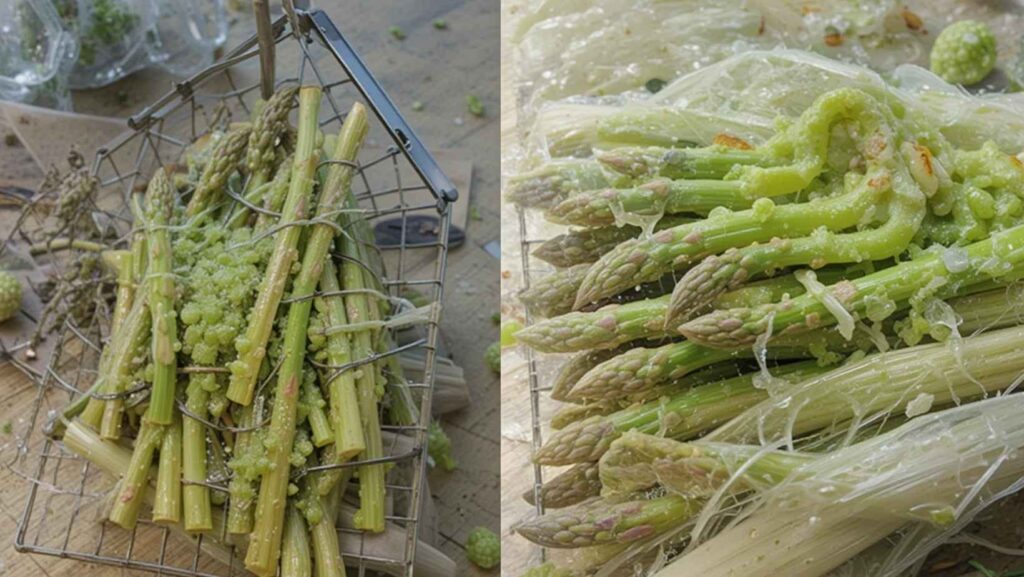
Would you want to know How to remove pesticides from store-bought asparagus? To remove pesticides from store-bought asparagus, I have found it necessary to rinse the spears under cold, running water thoroughly.
The spears can also be soaked for a few minutes in a mixture of vinegar and water or baking soda and water, then rinsed again.
However, that is not all; as you continue reading, I will provide you with further information on the topic matter.
Now, let’s get started.
How to remove pesticides from asparagus
Place the spears in a basin filled with cold water. Soak them for 5 to 10 minutes to remove any dirt or pesticide residue.
Next, begin swishing. To assist in removing any buried grit, especially close to the tips, move the spears gently in the water.
Hold each spear under cool running water after carefully removing it. To remove any remaining material, gently massage the stalks and tips with your fingertips.
In addition to rubbing or light brushing, the physical movement of water flowing over the spears helps remove dirt and soil particles.
The cool temperature also keeps the spears crisp and fresh by preserving their texture.
Soaking Option
Water cleaning is generally sufficient, but a soaking solution can give your asparagus an even deeper clean:
One quart of water and one teaspoon of salt
Three parts water to one part white vinegar
For every quart of water, add one teaspoon of baking soda.
By lowering the water’s surface tension, these solutions help loosen dirt and pesticide residues, making contaminants easier to wash away.”
Additionally, soaking asparagus in vinegar or baking soda may help remove certain contaminants more efficiently than plain water since pesticides sometimes break down faster in an acidic or alkaline environment.
However, don’t let them soak for longer than a few minutes. Asparagus may absorb water and go mushy due to its porous nature. After washing, thoroughly rinse to remove any residue.
How do you clean store-bought asparagus
After snapping or cutting off the woody ends of store-bought asparagus, the spears should be washed under cool running water and patted dry before being cooked or stored.
This will ensure that the asparagus is clean.
An even more in-depth analysis is as follows:
Cut off the bottoms:
Remove the woody and rough ends of each spear of asparagus by snapping or cutting them off approximately one to two inches from the bottom.
Rinse: After trimming the spears, place them in a basin or colander and rinse them thoroughly under cool running water.
This will clear away any possible dirt or debris.
It is possible to immerse the asparagus in a basin of cold water for a few minutes to achieve a more thorough cleaning.
After this, you may gently swirl the asparagus around in order to expel any particles that may still be present.
After the asparagus spears have been rinsed, they should be dried by patting them with a clean kitchen towel or sheets of paper towels.
To preserve its moisture, the cleaned asparagus should be kept in the refrigerator, ideally wrapped in a damp paper towel or put in a container with a damp paper towel.
If the asparagus is not going to be cooked right away, it should be stored in the refrigerator.
It is best to refrain from washing asparagus before storing it, as the additional moisture is likely to cause the asparagus to spoil.
How do you keep store-bought asparagus fresh
If you buy asparagus from a store, keep it fresh by putting the spears in a glass jar with a little water, covering them loosely with a plastic bag, and keeping it in the fridge.
As an alternative, you can wrap the asparagus in a damp paper towel and place it in a plastic bag to keep it.
An even more in-depth analysis is as follows:
Strategy for Storing:
The asparagus stems should be arranged in an upright position inside a glass jar or other container with approximately one inch of water.
A plastic bag should be used to cover the top of the jar loosely to help retain moisture.
The jar should be kept refrigerated during the process.
Another option is to put the asparagus in a plastic bag, wrap it in a moist paper towel, and then put it in the crisper drawer of the refrigerator.
Please keep in the water!
Arrange a bunch of asparagus in a glass jar using the upright position. Add one to two inches of water to the jar and submerge the base of the stalks in the water.
Apply a plastic bag to the tops loosely, and then place them in the refrigerator.
This is the best way to prolong asparagus’s shelf life because it may keep its freshness for up to ten days.
How To Clean Asparagus Perfectly Every Time
Just prep, wash, dry, and perhaps degrit it. However, choosing fresh asparagus from the start will save you a lot of labor.
Buy asparagus stalks that are firm and vivid, regardless of color. Avoid limp, spongy, or drab asparagus.
Avoid wrinkled tips and choose those with thick, closed tips. To avoid drying, buy asparagus from a store that keeps the stalks upright in water.
Cleaning your plump, firm spears begins after you carefully select them!
Cleaning asparagus begins with a thorough rinse under cold running water for at least 10 seconds.
Before trimming, peeling, or preparing asparagus, do this to avoid germs, dirt, and grit from entering through a contaminated knife.
You need to hold the spears in your hand under running water to clean asparagus, but if they appear mucky, get your hands muddy.
Remove the dirt with your fingertips, giving special attention to those closely packed areas where germs tend to hide.
Before handling asparagus, always wash your hands for 20 seconds with warm water and soap. If your hands are dirty, no amount of cleaning will help.
After washing the asparagus spears, remove the rough, woody bottoms for easier eating.
One approach is to run your hands down the spears and bend them where they seem to droop. They usually have a breaking point where they snap off when squeezed.
Knife-cutting the ends lets you trim numerous specimens at once. This will also ensure that you trim the spear exactly without breaking off too much.
If the asparagus stalk is small, cut off an inch; if it’s thick, cut off two inches. When in doubt, cut the stalks where they turn rough or lose color to remove the fibrous portions.
Thoroughly dry asparagus:
Clean asparagus is rinsed and cut, ready to be cooked or stored. Be sure the spears are dry first. Damp vegetables soon get unhappy and potentially spoilt.
After cleaning the spears, place them on a paper towel or cloth and gently blow them dry with another towel.
This will absorb any extra water on the asparagus that might interfere with cooking, and it’s especially crucial if you want to store the spears for later use.
You may store spears upright in a glass with approximately half an inch of fresh water to prevent drying, but random wet areas might cause them to rot or mold, which is a common error with asparagus.
What is the most effective way to remove pesticides
In general, washing fresh fruits and vegetables with water reduces the quantity of dirt, germs, and pesticide residues that are left on their surfaces.
Produce is best washed and rubbed under running water rather than dipped. Clean produce from the grocery store, your backyard garden, and the farmers’ market.
Regulations must be followed if there is any pesticide residue on fruits and vegetables. Tolerances are the residual limits that the EPA has established.
Taking a range of fruits and vegetables is essential for a balanced diet, and the EPA strives to guarantee that there is a “reasonable certainty of no harm” to adults, children, and newborns from consuming tiny amounts of pesticides in food.
The following choices can all reduce the risk of exposure to pesticides.
If you do not intend to consume the skin of fruits and vegetables, you should still wash them.
Before and after handling fresh produce, wash your hands with warm water and soap.
In a strainer, hold the fruit or vegetable under running water. Compared to dipping vegetables, this eliminates more pesticides.
Washing fruits and vegetables using soap, detergent, or commercial produce wash is not advised by the FDA. They haven’t been shown to work any better than water by themselves.
Use a clean brush to scrub solid vegetables, such as potatoes and melons. Firm fruits can be washed to remove more residue.
To remove residues, rub a soft product, such as grapes, while holding it under flowing water.
Berries and other delicate fruits and vegetables should be placed in a colander and turned while being lightly sprayed with water.
Take away the outer leaves of leafy vegetables, such as cabbage and lettuce.
Peel fruits and vegetables that can be peeled, such as apples or peaches.
While heating can aid in the removal of residues, it may also eliminate nutrients.
Produce cannot be completely cleaned of pesticide residues with any one approach.
What does soaking asparagus in water do
In addition to removing any sandy dirt or grit that may be adhered to the tips or stems of the asparagus, soaking the asparagus in water, particularly cold water,
will also assist in rehydrating the asparagus, resulting in crispier and more flavorful asparagus.
In order to provide a more in-depth explanation:
Keeping neat:
Grit or sandy soil may adhere to the tips or stems of asparagus grown on small farms or in home gardens.
This is especially true for asparagus grown in home gardens.
This dirt may be removed and dislodged by soaking the spears in cold water for a few minutes while gently swishing them around after the soaking process.
In addition, rehydrating asparagus can be accomplished by soaking it, particularly if it has been stored for a considerable amount of time or if it appears a little limp.
They may be able to restore their crispness and wetness with the aid of this.
How to carry it out:
Cold water should be poured into a basin or a sink.
The spears of asparagus should be placed in the mixture.
Soak for 5 to 10 minutes or for an extra time if necessary.
To remove dirt from the asparagus, gently massage it.
Lift the asparagus out of the water and give it a quick rinse under cold running water.
Final thought
Now that we have established how to remove pesticides from store-bought asparagus, First, I put all of the asparagus in a bowl of cold water. After I have finished trimming the ends, I rinse the stalks and then let them rest in cold water for five minutes.
It hydrates the asparagus, and because they are already wet and have some moisture, they cook more quickly than other vegetables at the same time.
They should not be submerged in water for thirty minutes because you are not attempting to get them wet.