
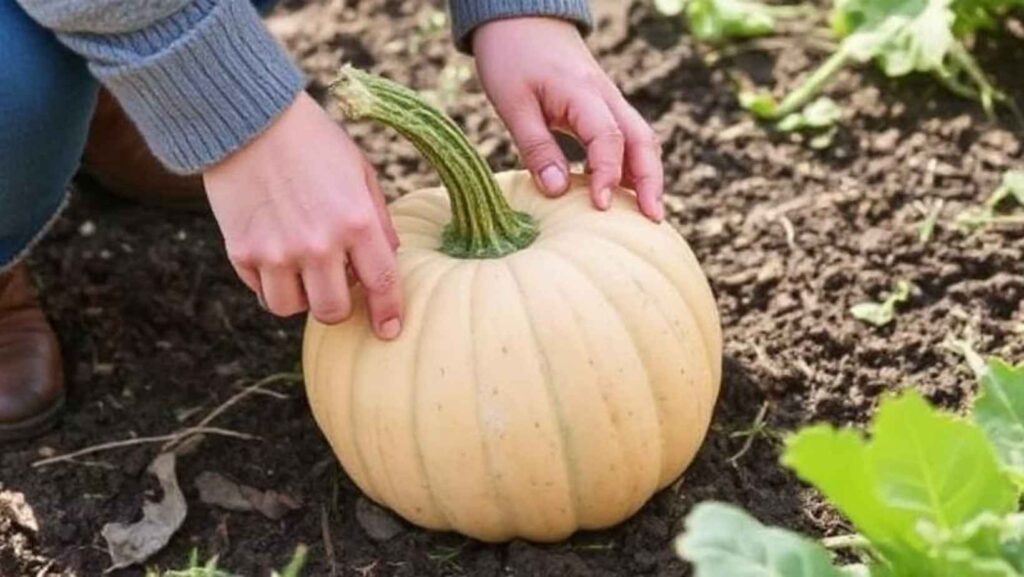
Would you want to know how to plant pumpkins? In my experience, pumpkin planting relies on weather. Plant pumpkins in a bright, protected spot in late May or early June.
A few weeks before planting, dig 20cm (10″) square x 20cm (10″) deep holes for each plant. Allow 2-3m (6.5-10ft) between plants and rows.
Put compost or well-rotted farmyard manure in each hole. Pumpkins require lush, healthy soil to yield nice fruit.
To train pumpkins as climbers, drive three stout poles into the ground around a planting pocket and connect them to form a tripod or wigwam.
The construction must be robust since even little pumpkin plants weigh a lot after harvest. Place climber-grown pumpkins 1m (3.5ft) apart.
Put pots outside during the day and indoors at night to harden seedlings for a week before planting.
Each planting pocket should hold one seedling. Water and firm the plant’s soil.
However, as you continue, I will explain more
Now, let’s get started
How to Plant Pumpkins
Plant pumpkins early in the spring, or if you live in a cold climate, sow seeds inside two to four weeks prior to the final spring frost.
In order to enable the sun to warm the soil in the early spring, pumpkins are usually planted in hills or elevated rows.
Plant four to five inch-thick seeds per hill. Hills should be four to eight feet apart since these plants need lots of space.
In small spaces, pumpkins may be trained on a trellis, but it must be solid and well-maintained because each vine can hold nine pumpkins.
To keep one or two of the strong plants, thin out the seedlings when they are two to three inches tall.
Although they may be grown in containers, pumpkins need quite big pots to fit their mature size.
What is the Pumpkin Plant Care
Light: To develop and ripen their fruits, pumpkins need full sun or at least six hours of light every day, the same as other squash varieties.
About each week, turn the pumpkins gently to maintain symmetrical development. Take your time; you don’t want to break the vines.
Soil
Rich, loamy, well-draining soil is ideal for pumpkins. The ideal pH range for soil is between 6.0 and 6.8, which is slightly acidic.
Water: The key to successfully growing pumpkins is to provide them with plenty of food and water since both are necessary for producing enormous fruit.
When watering the developing vines, be careful around them because they are quite fragile.
Plants need 1–2 inches of water every week, especially during blooming and fruiting seasons. Drip irrigation or ground-level soaking is better than overhead watering.
Temperature and Humidity: Pumpkins, like other squash, require a lot of heat in order to provide quality fruit.
Temperatures between 65 and 95 degrees are ideal for pumpkin growth. If you reside in a humid environment, you should closely monitor your plants since heat and extremely humid circumstances can encourage fungal illnesses.
Fertilizer: To grow their huge fruit and vast vines, pumpkins need a lot of fertilizer. These plants need to be fed every two weeks.
When the plants are around one foot tall, start using a high-nitrogen fertilizer (10-5-5) to encourage healthy leaf growth.
To encourage fruit growth, use a fertilizer with a high phosphorus and potassium ratio (5-15-15) just before the plants start to blossom in the summer.
Finding the male and female flowers is the first step in manually pollinating your plants because pumpkins do not self-pollinate and must be pollinated by insects such as bees.
Female flowers have a rounded portion on the stalk just below the blossom that resembles a little bulb, whereas male flowers have slender, straight stems.
How to Grow Pumpkins
Soils: For optimal development, potatoes need rich, well-drained, sandy, organic soils. Pumpkins may be grown on most Utah soils as long as they have enough drainage.
To prepare the soil, do a soil test to determine the necessary fertiliser quantity before planting. Follow the advise in the test report.
Apply fertiliser to the top 6 inches of soil if needed.
If you compost fertilise, use 1 inch of well-composted organic waste per 100 square feet.
Plants: Transplants or seeds can be used to cultivate pumpkins. Plant the seed one to two inches deep.
Transplants have to have a strong root system and three to four fully grown leaves.
Planting and Spacing: When soil temperatures reach 65°F or when there is no longer a risk of frost, potatoes should be planted.
Plant four to six seeds four feet apart in mounds. Reduce the number of plants per mound to two after they have two leaves. Transplants should be spaced two to three feet apart in rows of four to six feet.
When planting, take care not to damage the roots, as this will hinder establishment and development.
Mulches: Black plastic mulch helps keep weeds under control, warms the soil, and saves water.
Particularly when using transplants, plastic mulches enable earlier planting and maturity. Place the plastic on the ground, cover the edges with dirt, then make holes for the transplants or seeds.
It is possible to plant seeds or plants two weeks prior to the final frost when utilizing plastic mulches and row coverings.
Until soil temperatures reach 75 degrees Fahrenheit, do not add organic mulches. Newspapers, straws, grass clippings, and other materials help keep weeds under control and save water.
Row coverings: Fabric covers, plastic tunnels, and hotcaps shield transplants and seedlings from chilly air temperatures.
Row coverings promote early maturity and development. When plants begin to bloom or when the temperature rises over 90 degrees Fahrenheit, the covers must be taken off.
Water: Apply 1-2 inches of deep water per week, sparingly. If you can, use drip watering. Plants surrounded by mulch will retain soil moisture and inhibit the growth of weeds.
In order for rainwater to penetrate deeply into the soil, irrigate. As the fruits mature, water less often.
Fertilization: Apply 1-2 teaspoons of nitrogen fertilizer (21-0-0) per plant or mound as a side dressing after the vines start to produce runners. Apply the fertilizer to the plant at least 6 inches away.
When to Plant Pumpkins
Pumpkins are susceptible to chilly temperatures. Before planting seeds, wait until the soil is 65° to 95°F (18° to 35°C) and frost-free
View your zip code-specific planting calendar.
Start indoors in peat pots two to four weeks before to the final spring frost in areas with a very limited growth season.
After that, harden off seedlings before moving them into warm soil that has been enhanced with compost or aged manure.
Do you want pumpkins for Halloween? Plant in the extreme south starting in early July, and in the north starting in late May.
To find out how many days till harvest, check the seed packaging. Start counting backward from about a week before to Halloween. Avoid planting too soon, or they may decay!
How to plant out your pumpkins
Here’s a summary:
Give your pumpkins seven to ten days to get used to being outside before moving them into warm, well-drained soil that is rich in humus.
They want a spot that is protected from the wind and receives full sun. Depending on the cultivar, planting distances might vary from 90 cm to 3 m, so you’ll need to consult the seed packaging.
Create mounds of dirt that are around 15 cm (6″) high at each planting site. To provide proper drainage, place each pumpkin plant atop a mound and water it frequently until it becomes established.
A few weeks after planting, pumpkins benefit from a regular fertilizer feed since they love lots of nitrogen.
To stop them from spreading too far, they can be taught to grow long stems in a circle around the plant.
They have deep roots and can typically locate water in the soil on their own, but during really dry spells, they can need some extra watering.
How To Plant Pumpkin Seeds? Steps And Tip
Here’s a summary:
Give your pumpkins seven to ten days to get used to being outside before moving them into warm, well-drained soil that is rich in humus.
They want a spot that is protected from the wind and receives full sun.
Depending on the cultivar, planting distances might vary from 90 cm to 3 m, so you’ll need to consult the seed packaging.
Create mounds of dirt that are around 15 cm (6″) high at each planting site. To provide proper drainage, place each pumpkin plant atop a mound and water it frequently until it becomes established.
A few weeks after planting, pumpkins benefit from a regular fertilizer feed since they love lots of nitrogen.
To stop them from spreading too far, they can be taught to grow long stems in a circle around the plant.
They have deep roots and can typically locate water in the soil on their own, but during really dry spells, they can need some extra watering.
Final thought
Now that we have established how to plant pumpkins, In regions with high temperatures You can grow pumpkins all year round.
A balanced combination of nutrients is found in the finest fertilizer for pumpkins, which encourages the growth of healthy green leaves and stems as well as an abundance of blossoms and fruit.
Pumpkins thrive on Yates Thrive Natural Vegetable & Herb Organic Based Pelletized Plant Food; sprinkle the pellets around the root zone every six to eight weeks.