
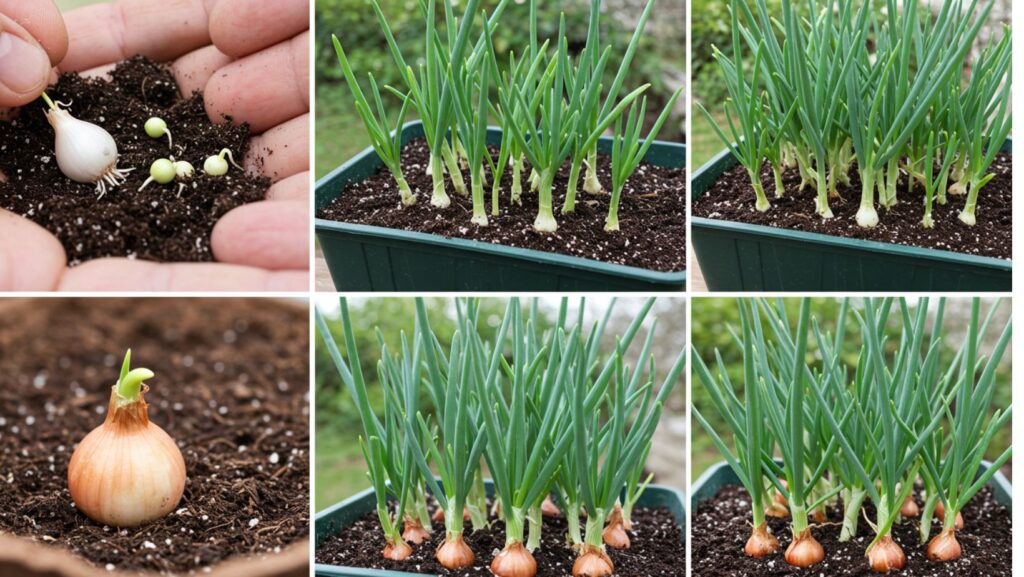
Would you want to know How to grow spring onions at home? In light of my experience, Spring onions can be grown at home by either planting the seeds directly in well-drained soil, about 2 inches apart, or
by simply regrowing the green tops of store-bought onions by setting the root ends in a shallow dish of water with enough sunlight.
In both cases, keep the soil moist and harvest the green shoots as needed.
Because they grow quickly and easily, spring onions are ideal for novices and fit well in tiny areas. Their mild and sweet flavor makes them perfect for garnishing or quick cooking.
They may be chopped into matchstick lengths for fast stir fries, added to scrambled eggs for a faint onion taste, or finely chopped and used as a garnish on almost anything.
But that’s not all; I’ll teach you more about the topic as you continue to read.
Now, let’s get started
How To Grow Spring Onion At Home
Cuttings or seeds can be used to cultivate spring onions. Spring onion seeds are available from a nursery. Verify the quality of these seeds.
Select fresh, healthy spring onion seedlings from a nursery if you want to use cuttings or transplants.
Choose a pot with enough drainage that is 6 to 8 inches deep. Select a pot that has holes for drainage.
The ideal pH range for the soil is neutral to slightly acidic. Tell the gardening expert that spring onions require soil.
If necessary, they might replenish the soil with nutrients by adding some compost.
Plant the seeds in rows approximately 1/4 inch deep. The ideal distance between seeds is one inch.
Place the cutting with the same spacing if it’s a transplant.
Give the plant regular watering. The soil’s top inch shouldn’t be dry.
For a minimum of six hours every day, expose the plant to direct sunshine. Use artificial growth lights or put them next to a sunny window if you’re growing them inside.
After sowing, spring onion seeds start to sprout one to two weeks later. Within two to four weeks, seedlings begin to develop, and within a month, bulbs start to appear.
When the bulbs attain the desired size, spring onions have completely matured; by that time, the plant is typically 6 to 8 inches tall. The plant should be harvested now.
What are the basic Tips To Grow Spring Onions Quickly
There is a risk of fungal infections affecting a spring onion plant if it receives excessive watering.
Alternately, water the plant in such a way that it receives sufficient water at the base of the plant.
When the top layer of the soil starts to feel dry, it is time to water the plant properly.
Spring onion plants should be fertilized every four to six weeks. Make use of a fertiliser that is well-balanced.
Make sure there are no weeds in the area around the spring onion plant, and if necessary, apply a weed spray or seek the assistance of a professional.
Onion flies and other pests should be looked for. Utilize a pesticide as soon as possible.
Maintaining the health of your plant requires that you take care of your home garden and do regular cleanings to prevent the spread of illnesses.
It is important to remember to take off the top few inches of the spring onion when you harvest it but to leave the roots in the soil.
This will ensure that your plant continues to produce spring onions even after you have stopped doing this. As soon as you harvest spring onions, they begin to develop rapidly.
How to Grow Spring Onions
All year long, spring onions may be cultivated in full sun to partial shade.
They can be cultivated all winter long since they can withstand frost, although they will grow more aggressively in the warmer months.
Soil that is rich in organic matter and has good drainage is ideal for growing spring onions. If starting from seed, they can be planted in punnets first or straight into the vegetable plot.
To promote germination, gently cover and moisten with OCP eco-seaweed. It’s crucial to keep the soil moist but not soggy during the 10–14 days it takes for seeds to germinate.
If the seed is left damp, it will decay. Nurseries and garden centers also have seedlings accessible.
The simplest way to plant seedlings is to dig a small trench and place the seedlings in it, 2-4 cm apart.
After that, you may backfill fast by putting dirt over the roots with your hand moving down one side. If the seedlings aren’t standing straight, don’t worry; they will straighten themselves out as they take root.
They don’t have to be planted in rows, even though it creates a nice vegetable patch.
You can easily squeeze plants into arbitrary vacant areas anyplace in your vegetable garden because they don’t take up much room.
Eliminate any weeds that emerge as your plants grow, and when the seedlings are big enough, cover them with sugar cane mulch to help them stay wet and inhibit weeds.
Since you may start collecting the smaller spring onion seedlings as soon as 8–10 weeks after planting, there’s usually no need to trim them out.
Additionally, spring onions do nicely in containers or pots. Select a pot that has enough drainage and is at least 15 cm deep.
Keep an eye on them in hot weather since potted plants require more regular watering and will dry up more quickly than plants grown in beds.
What is the best way to grow spring onions
The easiest approach to cultivating spring onions is to put them straight into your vegetable patch from seed. As said above, they will almost take care of themselves.
But the majority of big garden centers sell spring onions in trays or as plug plants that you can cultivate in pots or put outside.
You may get fragile, thin spring onions in around eight weeks if you plant your seeds in the early spring or early summer.
Early spring will see the production of larger spring onions with larger bulbs from later sowings that will overwinter.
How to grow spring onions in containers
: spring onions are an excellent choice for container ideas for vegetable gardens. “Surprisingly, you can actually sow spring onions in pots as well.
All you need to do is place them on the windowsill where they will have access to the sun and make sure the pot has good drainage holes.”
“A common problem that occurs when growing spring onions is a fungal disease known as onion downy mildew.”
This applies whether you are growing your spring onions inside in pots or outside in the garden plot.
Good drainage is just as crucial in either case. The bulbs are harmed as a result of this, which normally takes place when the surroundings is too moist.
Can you grow spring onions from spring onions
It is feasible to regenerate spring onions from the tips of any spring onion that has been harvested or purchased, provided that the roots of the spring onion are still present.
In this manner:
Place the root of a spring onion in a shallow pot of water, with the stem slightly above the water line.
Remove approximately one inch or two and a half centimeters from the root end of the spring onion.
Within a short period, you will observe the commencement of new growth emerging from the top of the plant.
After the roots have developed, you may plant them in the ground or a container, being sure to put them at a depth that is sufficient to cover the origins while yet allowing the new growth to appear above the soil surface.
Where to Sow Spring Onions
Spring Onions, like most other types of onions, thrive in light soil, but they may also be grown in soils that are rich in organic matter without harming their growth.
Onions that are harvested in the spring do not have very deep roots so they may be planted in the ground, in a raised bed, or in a shallow vegetable planter.
It is also possible to cultivate them in window boxes using a potting mix that does not contain peat, such as Growlite.
It may be a pleasant experience to have them growing in a protected area right outside your back door just a few feet away.
An open, sunny location is ideal for the growth of spring onions, although they may also take slight shade.
Fnal thought
Now that we have established How to grow spring onions at home, When the plants are around 15 centimeters (6 inches) tall and the bulbs are still quite little, measuring less than 2.5 centimeters (1 inch) wide, spring onions are ready to be harvested some eight weeks after they were planted.
Take the plants by hand and pull them up as you need them, using the assistance of a hand fork or a trowel.
Onions of spring being stored
Although it is better to utilize spring onions as soon as they are harvested, they may be kept in the refrigerator for up to two weeks if they are put in plastic bags that have been sealed.
Another option is to store your gathered spring onions in a jar filled with water until you are ready to use them.
This will ensure that they remain moist and fresh. This approach may also be used to cultivate spring onions that have been purchased from a store in water.