
would you want to know if onions expire? In my experience, onions do have an expiration date, but they can keep well for a long time if stored correctly.
Raw, whole onions will keep for at least two to three months in the refrigerator, and up to three months in a cold, dry, and dark environment.
Store raw, whole onions in a cool, dry location and they will keep for two to three months. These circumstances can be found in your garage, unheated basement, pantry, or cellar.
However, that is not all; I will provide additional information on the topic as you continue reading.
Now, let’s get started
Can onions go bad
The same as any other food, onions can become rotten. From the moment you get them home from the store, it is very vital to keep them appropriately.
There is a critical need for adequate ventilation while storing onions, regardless of whether they are kept at room temperature or in the refrigerator.
Baskets, canvas bags, or paper bags with a loose cover might all work as suitable containers.
It is best to avoid putting them in plastic bags because these bags do not offer adequate ventilation and have the potential to retain moisture.
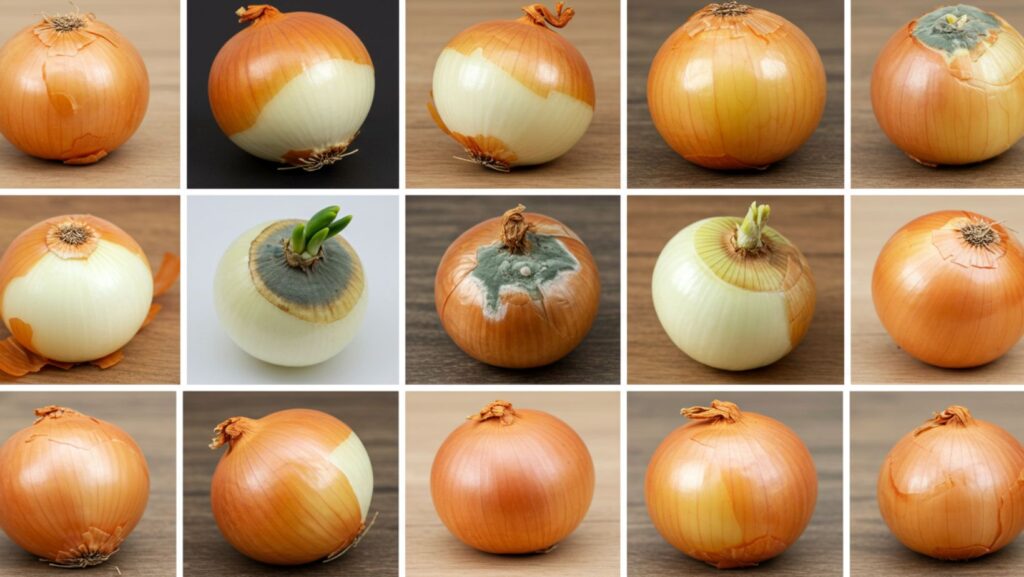
Any onions that have patches that are black or soft should be thrown away.
Onions, in contrast to potatoes, start to go rotten as soon as they begin to develop flowers. They should be thrown away if they sprout.
How long do onions last after the best-before date
In the event that they are stored appropriately, onions can be kept for up to three months beyond the date that they are recommended to be consumed.
Because it differs from onion variety to onion variety, it is essential to verify each onion variety separately before eating it.
When it comes to onions, they are quite resilient, and it is simple to remove any layer that has been dried.
If you are looking for symptoms of mold, rot, or sprouting on onions that have passed their best-before date, you should always perform a visual inspection.
In the event that onions exhibit any of these qualities, it is not recommended that they be consumed.
How long do onions expire
When properly stored in a cold, dry, and well-ventilated location, such as a pantry or cool cellar, raw onions have a shelf life of around two to three months that is reasonable.
The following is a more in-depth look:
Putting away:
Cool, Dry Location: When storing whole, dry onions, be sure to keep them in a cool, dry, dark location that has adequate ventilation and is out of the direct sunlight.
Pantries, cellars, and basements are all excellent choices with regard to ideal locations.
Stay away from the refrigerator: Although chilling helps lengthen the shelf life of sliced onions, keeping whole, dry onions in the fridge might cause them to become mushy and lead them to lose moisture on the inside.
Duration of Use:
Whole onions have a shelf life of two to three months, and if they are stored correctly, they can last up to six months.
Onions that have been cut can be kept in the refrigerator for up to a week.
To ensure that frozen onions are consumed within eight months, it is recommended that they be stored in the freezer at a temperature of zero degrees or below.
How to Store Onions at Different Processing Stages
The key to keeping onions fresh for longer is to store them correctly.
These are the most effective methods for keeping them at various stages of processing.
Peeled:
To prevent bacterial infection, an onion should be kept in the refrigerator after peeling.
If you place peeled onions in an airtight container and refrigerate them at 40°F (4°C) or below, they will keep for 10 to 14 days.
Diced, Sliced, or Cut: Diced, sliced, or cut onions keep well in the refrigerator for up to ten days.
Just store them in a resealable container or wrap them firmly in plastic wrap.
As an alternative, many stores sell pre-sliced onions. Use them before their expiration date and keep them in the refrigerator.
Sliced, chopped, or diced onions have a three- to six-month shelf life in the freezer. Soups, stews, and casseroles are great places to use them.
Cooked: You may keep cooked onions in the refrigerator for three to five days.
After cooking, just put them in a resealable bag or an airtight container. They might contain germs if kept outdoors for extended periods of time.
Even better, cooked onions keep for up to three months in the freezer.
Pickled: Pickling onions is an inexpensive method of prolonging their shelf life.
Vegetables are kept in a solution that prevents the formation of germs that usually ruin them. They may be stored for up to six months when prepared in this manner.
In a jar, combine peeled onions with vinegar, sugar, salt, and any spices you choose to make pickled onions.
They will keep longer if you store them in the refrigerator after they are opened.
How to Use Up Onions
Onions can be consumed in either their raw or cooked forms. It is recommended that you soak chopped or sliced onions in a dish of cold water for ten minutes before serving them uncooked.
After that, rinse the onions well and pat them dry with paper towels. Because of the cold water, the flavor of the raw onion will become more subtle.
If you have a large quantity of onions on hand, you might want to try caramelizing them.
Onions may be stored in the refrigerator for up to five days or frozen for up to two months if they are cooked very slowly over low heat.
They become incredibly soft and delicious when they are cooked in this manner.
Caramelized onions may be used as the foundation of a soup, layered on top of a grilled cheese sandwich, or blended into a creamy dip like this Caramelized Onion Dip.
How To Spot Spoiled Onions
When an onion has gone bad, there are a few telltale indicators that may be easily identified via the use of sight, smell, and touch.
Try to find any black patches. Not only is this an obvious indication that your onion is beginning to change, but it is also a common prelude to mold.
You should check to see if your onion has begun to develop sprouts.
Despite the fact that this alone is not necessarily a warning that your onions have gone bad, it is a clue that you have a limited amount of time remaining to use your bulbs.
When an onion is in the process of germinating a new bulb, sprouts will form. The longer a sprout remains, the more tender the parent onion will become.
Have a sense of firmness. Therefore, if you feel mushy patches on the onion, it is past its prime and should be avoided.
A nice onion should be firm to the touch.
Put your nose to the bulb and smell it. If the onion has a scent that would be described as “off,” it is definitely a good idea to get rid of it and go for a fresh onion instead.
Final thought
Now that we have established that onions do expire, Although I do not advocate freezing entire onions, it is possible to freeze onions that have been chopped or sliced.
Before putting the chopped onions in the freezer, make sure to squeeze out as much air as you can from the bag.
It is recommended to use frozen onions in prepared meals such as soups and stews since their texture will be somewhat altered when they are removed from the freezer.
However, frozen onions are ready to be used immediately after being unfrozen.
When utilizing raw onions in applications such as topping chili or hot dogs, you should avoid using frozen onions when possible.