
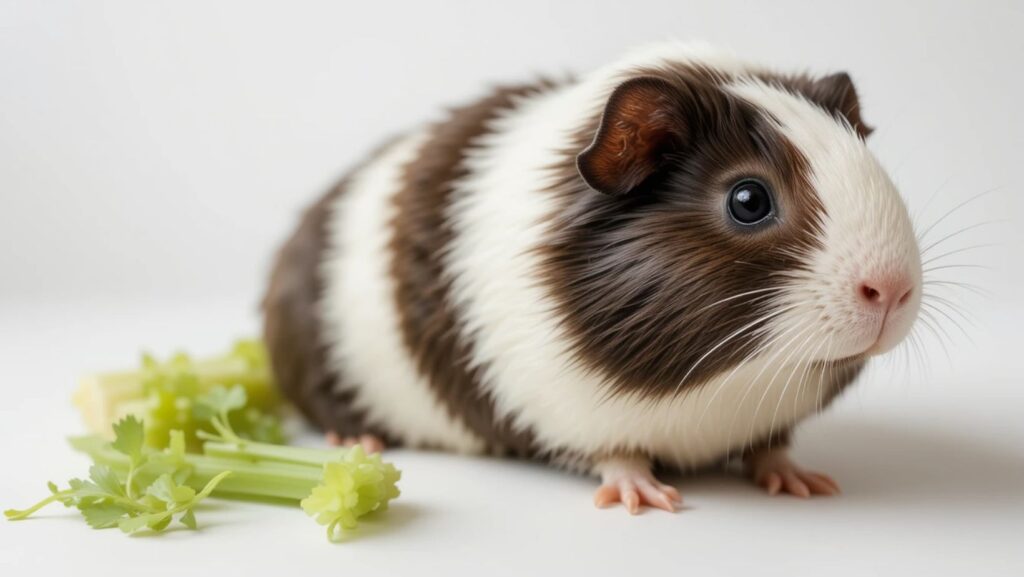
Would you want to know about Celery for guinea pigs? I would answer that, based on my experience, guinea pigs can be fed Celery, but not every day.
Up to three times a week, guinea pigs can safely eat [one] 2-inch slice of Celery with part of the leaves.
Our Guinea Pigs adore the crunch and freshness of Celery, making it one of their favorite snacks!
Celery is the ideal snack for our Cavys since it is high in nutrients and minerals and, better yet, low in calories.
The Celery stems, and leaves are the most favored portion, adored by all guinea pigs.
When you purchase at a local market or farm shop, they are typically left on the Celery and are an excellent bonus for your pet, but most supermarkets sell the Celery without them.
Cut the Celery into little pieces and give it to your Guinea pigs sparingly, just like you would with any other fruit or vegetable.
But that’s not all; as you continue reading, I’ll provide additional information on the topic.
Now, let’s get started
What is the Nutritional Benefits of Celery for Guinea Pigs
The fact that Celery is low in calories and high in vitamins and minerals makes it an excellent treat for guinea pigs since it is healthy.
Here are some of the most important advantages:
Guinea pigs cannot synthesis vitamin C independently; thus, they must obtain it from their diet.
Scurvy may be avoided with the aid of vitamin C, which also promotes general health.
Both digestion and the maintenance of a healthy gut are facilitated by fiber. Antioxidants are necessary for maintaining a healthy immune system and general body.
How can celery help guinea pigs, and what exactly is it
In the family Apiaceae, you’ll find celery. Nutritious and calorie-light, this verdant vegetable is a great choice.
Celery has several health advantages, such as lowering inflammation, strengthening the heart, helping people lose weight, and lowering the risk of high blood pressure and stroke.
Additionally, Celery is an excellent source of potassium, vitamin C, and fiber.
Celery is equally beneficial to guinea pigs as it is to people. Celery’s nutrients assist guinea pigs stay healthy and lower their chance of developing health issues.
Celery is an essential part of a balanced diet for guinea pigs.
Decreases inflammation
Enhances heart health and promotes weight reduction
It contains potassium, fiber, and vitamin C and helps prevent high blood pressure and strokes.
How to feed Celery to a Guinea Pig
Fresh Celery is the best kind to give to a guinea pig.
If you have a low-growing celery plant, you may let your pet gnaw on the leaves, or you can cut up bits and place them in a bowl for them to eat from.
You may also purchase some meals that are created especially for guinea pigs and already include Celery.
These include different fruits and veggies and all the nutrients a guinea pig needs to keep healthy! These items can be just what you need if you are unable to give your pet fresh Celery.
Before giving your guinea pig celery, make sure to remove any leaves from the stem as they may obstruct the feed.
Make sure the veggies are thoroughly dry after washing them. Additionally, you should only offer them one piece of this vegetable or other fruits and vegetables each day rather than too much at once!
What are The best ways to prepare Celery for your guinea pig
Guinea Pigs have several different methods of eating Celery! Consider placing bits inside the cage or in their feeding dish.
Additionally, you may hang celery leaves and stalks for your pet to enjoy by tying knots in an old pantyhose.
Your guinea pig should only eat as much Celery as they can in a single sitting. Before giving them Celery, you should always make sure that it has been cleaned and dried.
Give them to your guinea pig after making sure the leaves are removed.
Before giving veggies to your guinea pig, wash them and make sure they are totally dry.
Feeding your pet more than one stalk of Celery each day might lead to health issues!
Where to buy Celery for your Guinea pig
You should go to any of the many pet stores if you want to get Celery for your pet.
Premade goods like these (typically in pellet form) are available at most pet stores and are always the best choice because they include all the nutrients a guinea pig needs to keep healthy.
You may get fresh Celery as well.
Make sure the Celery you select is plump and green, free of wilting or browning. In addition to being deep green, the leaves should be free of worms and other parasites.
Look for Celery and celery-related products: Green, plump celery leaves that aren’t yellowing or drooping; premade pellets made with Celery; and fresh, cleaned and dried Celery
Avoid Celery:
The leaves on the stem are becoming brown or withering.
Worms and bugs in fresh veggies. This indicates deterioration. Don’t buy these things! They could cause your test subject to become ill!
What is the Potential Risks of Feeding Celery
For guinea pigs, Celery may be a nutritious treat; nevertheless, there are specific possible hazards that should be taken into consideration.
Consuming it in excess could lead to diarrhea because to its high water content, thus moderation is key.
In addition, if it is not cooked correctly, Celery poses a risk of choking by the individual.
It is essential to remove the stiff threads from Celery and chop it into bite-sized pieces before eating it in order to avoid choking.
When you keep these considerations in mind, you will be able to safely incorporate Celery into your guinea pig’s diet as a supplement or occasional treat.
Final thought
Now that we have established Celery for guinea pigs, Celery can become a beneficial component of your guinea pig’s diet if it is offered in moderation.
The antioxidants, vitamins, and minerals that your guinea pig requires in order to maintain its health and keep it active are all present in this food.
However, there is such a thing as eating too much Celery, so make sure to restrict the amount of Celery that your pet consumes. Celery is not intended to serve as a substitute for meals or as a snack on a daily basis.