
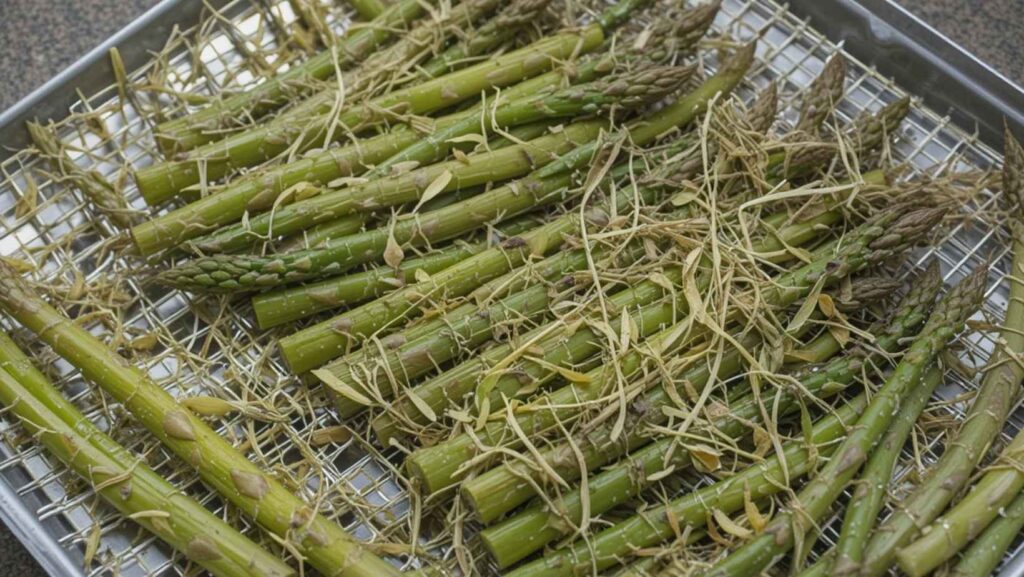
Would you want to know if you can dehydrate asparagus for long-term storage? According to my personal experience, the answer is yes;
Asparagus can be dehydrated for long-term preservation. When properly preserved, asparagus has a shelf life of around six to twelve months.
However, that is not all; as you continue reading, I will provide you with further information on the topic matter.
Now, let’s get started
Why Dehydrate Asparagus
A handy and wholesome addition to your cupboard, dehydrated asparagus has several advantages. The following are a few benefits:
1. The first is an extended shelf life. By removing its moisture, dehydrating asparagus stops yeast, mold, and bacteria from growing.
Its shelf life is greatly increased as a result, making it appropriate for long-term storage. As preppers, this is precisely what we want—long-lasting items!
2. Nutrient Preservation: As noted earlier, asparagus’s nutritional value is remarkably preserved through dehydration.
It is a nutritious choice for your meals, as it retains the majority of its vitamins, minerals, and antioxidants.
3. Small Storage: Compared to fresh or frozen asparagus, dehydrated asparagus is lightweight and small, requiring significantly less storage space.
Because of this, it’s a great choice for emergency food storage and stockpiling.
4. Decreased Food Waste: By dehydrating asparagus, you can utilize extra or surplus asparagus, which helps reduce food waste.
When asparagus is in season, it can also be preserved for use in later seasons. I decided to protect my fruit at this precise moment.
Seasonal vegetables frequently go on sale for a few pennies, so keep an eye out for those deals.
5. Convenience: It’s quick and simple to utilize dehydrated asparagus. It may be added straight to soups, stews, or casseroles without cutting or cooking, or it can be rehydrated by soaking in water.
6. Adaptability: You may use dehydrated asparagus as a side dish or in soups, pasta dishes, and omelets, among other recipes.
It gives your meals a nutritional boost as well as a taste and color boost. Pasta with asparagus pesto is my favorite.
7. Low Weight and Bulk: Because dehydrated asparagus is lightweight and has a lower bulk, it’s ideal for outdoor activities such as hiking and camping.
It’s a practical method for transporting wholesome vegetables when refrigeration isn’t available.
8. Long-Term Food Preservation: When carefully preserved in Mylar bags or airtight containers and dehydrated, asparagus can last for many years.
It is undoubtedly a valuable addition to your emergency food supply.
Although dried asparagus is a useful addition to many recipes and maintains its nutritious benefits, it won’t have the same feel as fresh asparagus.
It becomes crisp and dry throughout the dehydration process, so recipes that call for the original texture must rehydrate it; nonetheless, it will still be somewhat different and less aromatic.
Does asparagus dehydrate well
Indeed. Dry in a dehydrator or oven at 140°F (60°C). During the drying phase, flip large pieces over every three to four hours, as needed.
As the drying process comes to a close, keep a closer eye on the asparagus, as it may easily burn. The asparagus will be brittle to leathery when cooked.
thorough justification: Dehydration
Successful dehydration techniques for asparagus include using a dehydrator oven or the sun.
Preservation: Like other fruits and vegetables, asparagus may be effectively preserved for later use by drying it.
Rehydration: Although dried asparagus may be rehydrated and used in stews, soups, and other recipes, its size and texture might not completely return.
Blanching: To prevent enzymatic activity and maintain the asparagus’s color, texture, and taste, blanching is advised prior to drying.
Storage: To preserve the asparagus’s quality after dehydration, keep it in an airtight container in a cold, dark location.
Advice for drying:
After washing, trim the woody ends of the asparagus. Arrange the asparagus on dehydrator trays, being careful not to pack them too full, and cut any large tips in half.
Drying time: Let it dry and become brittle by dehydrating it for four to six hours at 140°F (60°C).
How to dehydrate asparagus
Get the asparagus ready. To start, give it a thorough cleaning to remove any dirt. The asparagus will dehydrate more quickly if you cut it into little pieces.
For a moment, don’t even consider throwing away the stems; they are more nutritious than the rest of the asparagus.
Additionally, keep in mind that you sometimes pay for asparagus based on its weight.
Blanch the asparagus; this will help it maintain its texture and color. Bring a saucepan of water to a boil to do this.
• Boil the asparagus florets for two to three minutes.
• To halt the cooking process, quickly remove the asparagus and submerge it in cold water. Then, drain the asparagus completely.
Arrange the asparagus florets on the dehydrator trays in a single layer. Set the dehydrator to 65 degrees.
Celsius and ensure they are not in contact with one another to allow for sufficient air circulation.
Although the duration may vary, the drying process typically takes six to ten hours.
To ensure equal drying, rotate the trays periodically. When the asparagus is dry, brittle, and devoid of moisture, it is ready.
Let the dried asparagus cool until it reaches room temperature. It’s natural to have crumbling bits.
To prevent condensation from forming, place the asparagus in an airtight container and monitor it for a day or two.
If so, return it to the dehydrator for a few more hours.
The asparagus must be completely dry; otherwise, it will begin to mold while being stored, which is something we do not want.
Advice: Dehydrating frozen asparagus is another option; however, it can take longer due to the original moisture level.
For added flavor, try flavoring the asparagus with salt, garlic powder, or herbs before dehydrating.
To rehydrate dehydrated asparagus, soak it in warm water for 15-20 minutes before use.
Can you dehydrate frozen asparagus
The procedure of dehydrating frozen veggies is quite simple.
I spread the frozen veggies out on a tray and placed them in my Excalibur dehydrator, set to 135°F, for approximately 8 hours, or until they were firm.
One thing I recently discovered is that frozen veggies shouldn’t be placed in the dehydrator with partially dried things.
About three-quarters of the other veggies were finished on two trays, and I also added frozen vegetables.
My other vegetables began to rehydrate as a result of the steam produced by the heat from the dehydrator and the moisture from the frozen vegetables!
I use vacuum-sealed bags for more durable veggies, but I preserve greens in half-gallon jars. Before vacuum-sealing the jars and bags, I added an oxygen absorber.
Compared to jars, the veggies in bags occupy even less space before being placed in a food-grade pail.
I have just begun filling my bucket. I’m awaiting the delivery of oxygen absorbers before putting the rest away!
These veggies last for years without air or light. I do have some in my cupboard in a jar that I use to add to soups, such as a fast bowl of ramen.
Try these wholesome, attractive pantry staples for daily and long-term usage.
Is it better to dehydrate or freeze vegetables
Comparing Freeze-Drying and Dehydration: Shelf Life. Shelf life is directly related to moisture. High moisture reduces shelf life.
We will compare the moisture content of freeze-dried and dehydrated meals. Food dehydrated loses up to 90% of its moisture.
However, DIY dehydrators may only remove 80% of the water in food, resulting in a reduced shelf life.
Most high-end dehydrated food can last 15–25 years, depending on the variety.
However, freeze-dried food is better for long-term preservation. Freeze-dried food has a shelf life of 25 years or more due to the removal of 98.99% of moisture throughout the process.
Cooler temperatures extend shelf life in both circumstances. At temperatures below 70°F, food should be stored in a cold, dark, and dry environment.
Preparing to Eat Freeze-dried meals are simple to make. With pre-cooked ingredients, add water, wait a few minutes, and enjoy your meal!
Best of all, it tastes remarkably similar to the original, so you may not even notice the difference. The preparation of dehydrated food differs.
Cook your meal instead of soaking it for a few minutes. Rehydrating it to taste like food usually requires boiling.
This may take 20 minutes or more, depending on the cuisine.
While not a significant deal, it can make a big difference if you’re in a hurry or don’t have access to cooking utensils, a stove, or fuel.
Nutrition Freeze-dried food retains nutrients and has equal nutritional value to fresh food when rehydrated.
In comparison, dried food retains just 60-75% of its original nutrients. About 97% of nutrients are maintained in freeze-dried meals.
Taste Flavor matters in meals. If it doesn’t taste nice, why eat it? Fortunately, both freeze-dried and dehydrated meals taste fantastic.
Freeze-dried food retains its flavor due to the low heat involved in the process. This preserves taste, texture, and fragrance.
Foods lose flavor, texture, and scent when dehydrated due to heat. Most individuals think that freeze-dried food tastes better.
Weight is irrelevant if you store food in your pantry or emergency food storage until it is utilized.
Dehydrated and freeze-dried food is tasty and convenient for camping, hiking, and emergency preparedness.
Dehydrated food is heavier than freeze-dried food due to its higher moisture content. For those concerned about weight, freeze-dried food is the best option.
Yes or no rehydration: Rehydrating dried food requires water and boiling. Some dehydrated foods are snackable without rehydration.
Freeze-dried fruits, vegetables, and meats are convenient for on-the-go snacking without the need for rehydration.
The texture and flavor of freeze-dried meals are more authentic than dehydrated food.
Food Types: Few fruits and vegetables require heating before freeze-drying, and rehydrating them also requires minimal cooking.
Dehydrated meals containing fibrous vegetables and meat must be cooked to rehydrate them. If the dish is pre-cooked and freeze-dried, it may be eaten without cooking.
Pros and Cons: The Pros and downsides of dehydrated and freeze-dried food depend on your needs, intended usage, and investment budget.
The freeze-drying process takes slightly longer. Dehydrating Pros: Cheaper equipment; equipment requires little upkeep.
Cons: Shorter shelf life, Lower nutrition and flavor retention, and more difficult to rehydrate. Freeze-drying increases food weight.
Pros: Longer lifespan Keeps nutrition and flavor Easy to rehydrate Fewer items require rehydration, but freeze-drying equipment is costly and challenging to operate
Final thought
Now that we have established that you can dehydrate asparagus for long-term storage, it is possible to dehydrate any and all varieties of asparagus, and there are over 300 different kinds.
These types are distinguished by their unique hues, and I strongly suggest that you sample each one simultaneously.
Its strong and earthy flavor is largely responsible for the green variety’s popularity in the United States.
White asparagus has a slightly sweeter flavor, although it might be more fibrous than green asparagus. T
he sugar content of purple asparagus is the greatest because it is the sweetest of all the types of asparagus.