
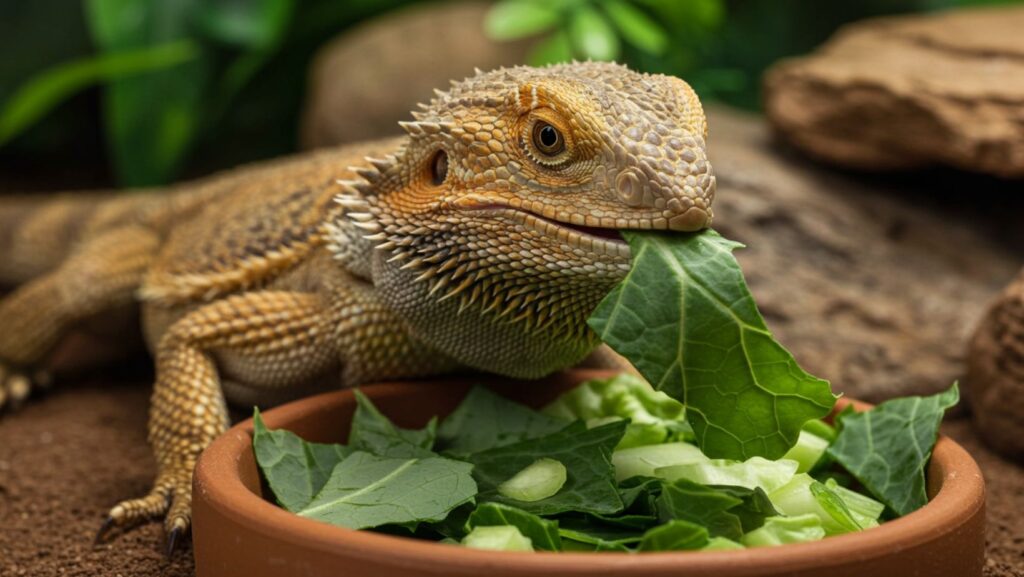
Would you want to know if reptiles can eat vegetables? In light of my experience, It is true that some reptiles, especially those that are categorized as herbivores or omnivores, can eat vegetables.
For instance, green iguanas, bearded dragons, and blue-tongue skinks can eat a variety of leafy greens, squash, zucchini, carrots, and bell peppers in moderation.
However, it is important to find out what your reptile species’ specific dietary requirements are before giving them any vegetables, as some are strictly carnivorous and shouldn’t consume plant material.
The two groups of herbivores and omnivores are incorrectly used to describe reptiles that consume plants.
One may conclude from this that they can all be fed in the same manner. But that’s not all; I’ll teach you more about the topic as you continue reading.
Now, let’s get started.
Can Lizards Eat Fruits and Vegetables
Yes, and they ought to do so. Lizards are omnivores, which implies that their diet includes both plant and animal matter, including fruits and vegetables. They consume both plant and animal stuff.
Moreover, some fruits and vegetables have the potential to be poisonous to lizards.
On the other hand, many fruits and vegetables are particularly advantageous for lizards, while others are not.
The following is a list of fruits and vegetables that are widely fed to lizards, as well as other selections that are less popular.
Prior to adopting a lizard, it is essential to have a solid understanding of the ideal food for them.
It is recommended that a proper vitamin supplement be applied to all of the fruits and vegetables that are fed to lizards.
This will guarantee that the lizards receive the vitamin D that they require in order to avoid bone illnesses that can be harmful and to maintain great health.
What Reptiles Are Vegetarians
Numerous traits set all reptiles apart, including their cold blood, scales, and egg-laying method of reproduction.
Despite their common classification, reptiles differ in their disposition, habitat, and nutrition.
Although a large number of reptiles, including snakes and lizards, are carnivorous, some only eat plants, including plants.
The tortoise
Being a diurnal and solitary reptile, the tortoise may survive for well over a century. All of the local grasses, weeds, flowers, leafy greens, and occasional fruit make up the tortoise’s herbivorous diet.
Timothy hay, Bermuda grass, wheat grass, and yard grass are among the hays and grasses that land tortoises consume.
Because alfalfa hay is abundant in proteins, tortoises can drink it, but only in modest quantities. Growing tortoises with excessive protein may develop malformed shells.
Iguana: Because they are strictly herbivores, iguanas have difficulty digesting the high protein and fat content of animal tissue and fat.
Leafy greens and flowers make up the majority of an iguana’s diet, with other veggies including orange-fleshed squashes and green beans.
A tiny amount of the iguana’s diet may consist of fruit and grains, but they should only be given as rewards.
Iguanas don’t need supplementary supplements in their meals since their digestive systems are capable of effectively absorbing protein and minerals from green leaves.
Chuckwalla: One of the biggest lizards still alive, chuckwallas may grow up to 30 inches in length and are found in the American Southwest.
Despite their size, these iguana relatives are harmless to people and smaller animals. They are stocky and wide-bodied, and they like to dwell on rocky ground.
In their natural habitat, chuckwallas mostly consume the blooms of perennials and annuals, although they also eat leaves and fruit.
The chuckwalla will eat anything in captivity, including radish tops and many types of melons.
Uromastyx: The spiny-tailed lizard, or uromastyx, is a robust, spike-tailed lizard that is native to Asia and the Middle East.
In the wild, the uromastyx will consume plants from different shrubs and shrubbery, gourds, wild squash, and coarse desert grasses.
The uromastyx naturally consumes local flowers, including hibiscus and acacia. Unfortunately, local indigenous people frequently pick acacia to produce charcoal.
As a result, portions of the uromastyx’s habitat and food supplies have been diminished.
What are the Greens and Vegetables for Herbivorous Reptiles
These greens and vegetables are suggested for diets for reptiles.
Select a range of the following to feed every day:
Squash (acorn, butternut, Hubbard, scallop, spaghetti, summer), turnip greens, escarole, mustard greens, spring mix, field greens, dandelion greens, and collard greens.
Additionally, alfalfa plants, cactus pads and leaves (prickly pear), lettuce (red leaf, romaine), hibiscus, cape honeysuckle, mulberry, strawberry bush, grape leaves, viola, violet, pansies, poppy, petunia, geraniums, etc.
Giving the following as sporadic treats is acceptable:
Alfalfa sprouts, Apples (seed removed), Apricots (fresh, pit removed), Banana, Cooked Beans (garbanzo, green, kidney, lima, and pinto), Beet greens, Beets, Broccoli, Corn, Kiwi, Bell peppers, Blackberries,
Blueberries, Cabbage (red), Cantaloupe, Carrots (raw), Celery, Cherries (no pit), Cilantro, Clover,
Cranberries (fresh), Cucumbers, Kale, Spinach, Parsley, Peas, Pomegranate, Grapefruit (seedless), Grapes (em Wheatgrass (also known as “pet grass”), pea sprouts, peaches (pit removed), pears, pineapple, pumpkin (raw), radish, strawberries, kelp, strawberries, Swiss chard, tomato, watermelon, and yams (raw).
What foods are toxic to reptiles
Don’t give your reptile any of these potentially harmful foods:
Citrus fruits, avocados, and specific vegetables are among the foods and plants that can cause toxicity in reptiles.
The avocado is poisonous to reptiles.
For reptiles, citrus fruits are poisonous.
Garlic and onions are both toxic to marine reptiles.
Tomatoes are: Because they contain citric acid, bearded dragons are susceptible to experiencing diarrhea and dehydration.
Food for a dog or cat: For herbivorous reptiles, the amount of protein and vitamins is too high.
Those seeds from plants that are toxic to reptiles include those from apples, apricots, cherries, nectarines, peaches, and pears.
Foods that are toxic to reptiles include eggplant, rhubarb, rosemary, and sage.
All of the following plants are poisonous to reptiles: azalea, buttercup, daffodil, lily of the valley, marijuana, and tulip.
Dieffenbachia, sometimes known as dumb cane, is toxic to reptiles.
What is reptile breeding called
The process of keeping reptiles in captivity is referred to as herpetology, while the breeding of reptiles is referred to as herpetoculture.
Sheep husbandry and animal husbandry
The act of keeping reptiles in captivity, whether for the purpose of reproducing them for commercial purposes or as a pastime.
The study of reptiles
The study of reptiles and amphibians includes research conducted in laboratories, studies conducted in the field, and support from veterinarians.
Oviparity, ovoviviparity, and parthenogenesis are the three methods that are utilized by reptiles in order to breed effectively.
The oviparity
Reptiles commonly reproduce by the process of laying eggs, which then develop into juveniles. This is the most prevalent technique.
Reptiles are said to exhibit ovoviviparity when they generate eggs that mature and hatch inside of their mother’s body, and then they are born alive.
The exhibition and breeding of reptiles and amphibians is the primary focus of a herbarium, which is a specifically designed vivarium.
A vivarium that is utilized specifically for the purpose of exhibiting and raising reptiles is known as a tepidarium.
A serpentarium is a type of vivarium that is created specifically for the purpose of displaying and reproducing snakes.
Final thought
Now that we have established reptiles can eat vegetables Generally speaking, you need enough room in your diet to process enough fibrous, relatively low-calorie plant matter to meet your demands if you’re consuming fruit or leafy greens.
The majority of herbivorous lizards are medium-sized to large species, which include iguanas and different uromastyx.
Even if some tortoises are “moderate” in size, from the standpoint of a reptile keeper, they nonetheless probably require substantial enclosures to meet their environmental needs.
There are no snakes that eat plants.
Crested geckos benefit from having live insects to pursue and keep them physically fit, thus, I wouldn’t maintain them on a powdered gel diet that only contains fruit and insects as some people do.