
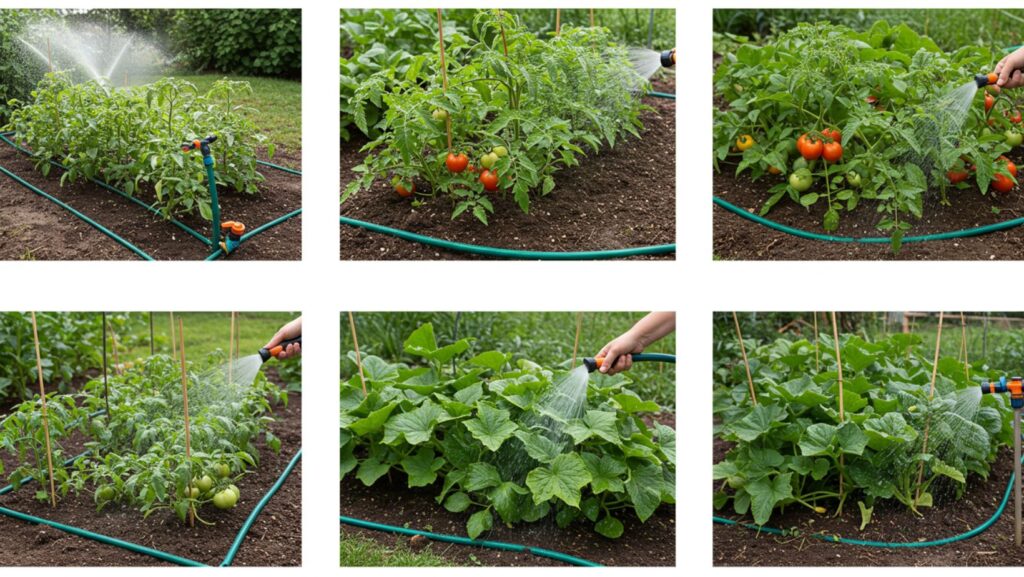
Would you want to know the Best watering techniques for vegetable plants? My experience has shown me that healthy plants require regular watering, both in your garden and in potted plants.
Regular watering, however, can be challenging, particularly during hot weather and when water supplies are limited.
During the summer and all year long, you may save water by keeping your plants cool, anticipating a possible water deficit, and maintaining attractive plants—or preserving your plants.
Selecting the ideal time to water is crucial. When the temperature rises in the spring, water in the middle or late morning to avoid the plants drying up too rapidly after being watered by the cold wet.
In order for the plants to get the most out of the water during the coolest hours of the summer and for evaporation to slow down on the warmest days, it is best to water them in the evening.
There is an exception, though, if slugs are taking over your vegetable garden. In this situation, watering in the morning will help minimize damage.
Water during the warmest hours of the day and space out waterings widely in the fall and winter.
But that’s not all; as you continue reading, I’ll provide additional information on the topic.
Now let get started
What are the Tips for Watering Vegetables and Seedlings
However, evaporation typically results in greater water loss than poor drainage.
No. 1: Use water carefully and completely as a guide. You run the danger of harming seedlings and young plants if you let the water run on full blast on every plant for a few seconds.
No. 2: If the soil is dry, soaking it with 10 to 15 liters per square meter per week will greatly help Brassica crops.
An overturned, cut-off plastic drink bottle placed in the ground next to an established plant—particularly tomatoes and squash—is an excellent way to provide water straight to the base of the plant.
No. 3: Even if it may draw slugs, watering in the evening is also the best option since the plants will absorb the water instead of losing it to evaporation.
Weeding will be simpler in the morning since the soil will be softer. But before evening, make sure the leaves are dry.
No. 4: Always plant seeds in damp soil or compost since they require water to germinate.
No. 5: Improper watering is one of the main causes of seedling death. They stand in trays and, if at all feasible, water the trays since they prefer to be watered from the base.
No. 6: Heavy watering during this period will enhance yields since fruit and flowering plants, including tomatoes, beans, and cucumbers, require water to stimulate their fruits to grow.
No. 7: Root crops require a consistent flow of water; too much will produce more foliage instead of large roots.
Water when the soil begins to dry up will increase the frequency as the roots begin to swell.
No. 8: Water requirements are higher for leafy crops like spinach, lettuce, cabbages, etc. than for root crops.
No. 9: Watering the foliage of plants instead of the roots makes them more vulnerable to fungal infections.
No. 10: To improve the soil’s ability to retain water, include as much bulky organic matter as possible, such as compost or well-rotted manure.
No. 11: powerful To stop evaporation, mulch the soil surface after watering. Spread a layer of compost, straw, or leaf mold over the soil and around the plants.
No. 12: Steer clear of cultivating soil during dry spells since this will cause liquid to rise to the top and then evaporate.
No. 13: Since weeds will compete with plants for water, keep the soil as free of weeds as possible.
Install windbreaks (number 14). The soil is rapidly dried by wind, which speeds up evaporation once again.
What is the Best Time to Water a Vegetable Garden
Watering vegetable gardens in the morning is typically better, as you’ve heard. We recommend watering in the morning to prevent the heat.
Another tip is to check the weather report for rain. If so, you may usually avoid garden irrigation.
Like anything, there are exceptions. Waiting for rain or dawn is bad for thirsty, wilting plants. When plants require water, water them.
How do you know plants need something? Check your plants and soil wetness. If plants are wilting or showing heat stress, give them a drink quickly, even in the afternoon on a hot day when rain is forecast.
Check soil moisture to see whether your plants need watering if they’re not withering. Dig 2 inches (5 cm) deep. Water plants if dry.
In ideal conditions, irrigate a vegetable garden in the morning when it is still chilly.
This lets water soak into the soil and reach plant roots without evaporating. Sunlight and higher temperatures enhance evaporation and plant water loss.
Early morning irrigation sets plants up for the day. They can endure the light better if they drink in the morning.
Another benefit of early irrigation is decreased wind, which can cause water loss. Afternoon winds push water from plants onto the yard or sidewalk.
The notion of watering in the afternoon is often perpetuated in gardening. According to legend, water droplets on leaves amplify sunlight and burn plants.
This is false. The majority of locations don’t get enough light for water to burn foliage. Second, even in a hot climate, water droplets evaporate before they can concentrate sunlight and burn foliage.
Alternatives include late afternoon or early evening. Late afternoon heat is gone, but enough sun remains to dry leaves before nighttime.
Wet leaves at night increase powdery mildew and sooty mold, which injure crops.
Late afternoon or early evening watering reduces evaporation and provides plants a few hours with less light to absorb water into their roots, stems, and leaves.
Your irrigation system can also affect when you water. With drip irrigation or soaker hoses, you may irrigate until sunset.
How Often to Water a Vegetable Garden
Although there are gardening publications that provide a strict watering schedule—every other day, for instance—the reality of how frequently plants require watering is a little more nuanced.
The weather, the age of your plants, and the kind of soil in your garden all affect how often you need water.
For instance, water may readily move through sandy soil.
However, clay soils retain moisture, and plants can be drowned by too much water.
Weather-wise, frequent watering is essential if you live in a warm environment with scorching summers since water evaporates rapidly.
In addition, some places get a lot more rain than others. Another deciding aspect is the age of the plant; unlike established plants, young plants need more regular watering to develop strong, healthy root systems.
How Much Water Do Vegetables Need
Vegetable plants typically require 1 inch (2.5 cm) of watering or rainfall every week. Although it may seem like a little bit, an inch is actually a lot of water.
Your garden requires 62 gallons (235 L) per week if it is 10 by 10 square feet (30.5 square meters). A 20-foot (6-meter) by 30-foot (9-meter) garden requires 372 gallons (1408 L) of water every week.
The goal of watering is to moisten the root zone of the plant. However, the type of food determines how deeply those roots develop.
However, the origins of numerous long-season plants, including asparagus, tomatoes, maize, and squash, are twice as lengthy.
Provide enough water to each plant so that the soil is moistened all the way down to the roots.
What are the Watering Mistakes You’re Making In Your Vegetable Garden
Mistake 1: Watering Leaves
Looking at drooping leaves and thinking they need water? Think again. Whole-plant spraying can cause issues. Pests and plant disease might result from leaf watering.
You should water the plant from its base to reach its roots. Watering at the base promotes a healthy root system, allowing the plant to focus on leaves or production.
There are several ways to water vegetables. The best technique to hydrate plant roots is via drip irrigation or a watering wand.
Mistake 2: Heat-Watering
When it’s too hot and plants droop, we may remember to water the garden. Please give them a drink, but avoid watering in the heat.
Watering in the heat of the day causes more water to evaporate than be absorbed by plants.
Morning watering is best. Water vegetable gardens early in the morning to help them endure the heat of the day.
Non-rain gauge use: Mistake 3
Rain is pleasant in the garden since it means less work. However, after a day or week of rain, it might be hard to tell when your plants need another drink.
A rain gauge can assist you in estimating plant watering. “Most of us don’t know how much rain Mother Nature has provided in a week.
A rain gauge is a simple gadget that accurately measures garden watering.
whether you don’t want other garden equipment, you may inspect the soil to see whether your plants need water.
Failure to Check Soil Moisture
Hovis explains this: “Put your finger up to the second knuckle in the soil near the plants. At that depth, feel the soil’s moisture.”
You can tell if the soil is dry, damp, or overly wet and how to continue. If it seems dry, the higher soil layers may be drying out and require watering. Watering may not be needed if the soil feels moist.”
Mistake 5: Under/Overwatering
Moderation is vital; too much or too little is bad. Make sure your garden gets enough water—not too much or too little.
Overwatering your vegetable garden can make the soil wet. Overwatering vegetable gardens is common, but underwatering is conceivable.
If you submerge your vegetable garden, your plants may suffer. Underwatering causes wilting, leaf loss, and lower vegetable yields.
final thought
now that we have established the Best watering techniques for vegetable plants, Selecting the ideal time to water is crucial.
When the temperature rises in the spring, water in the middle or late morning to avoid the plants drying up too rapidly after being watered by the cold wet.
In order for the plants to get the most out of the water during the coolest hours of the summer and for evaporation to slow down on the warmest days, it is best to water them in the evening.
There is an exception, though, if slugs are taking over your vegetable garden. In this situation, watering in the morning will help minimize damage.
Water during the warmest hours of the day and space out waterings widely in the fall and winter.