
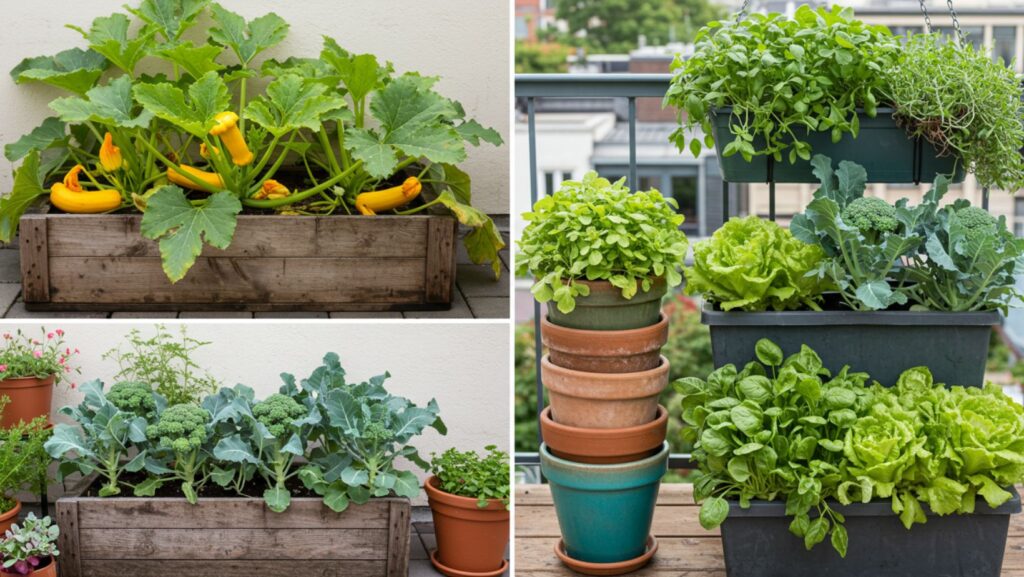
Would you want to know the Best vegetables to grow in pots and containers? My own experience has taught me that there is a wide range of veggies that may be grown in containers and various types of pots.
In the event that you have limited space, it may be beneficial to choose dwarf types or those that grow upwards, such as beans, peas, and tomatoes.
There is no need to be concerned if you are interested in cultivating your veggies but do not have sufficient room for a conventional garden.
Growing vegetables in pots is a pretty straightforward process, and the only things you will want are a sunny spot, potting mix, containers, and a surface that is even.
It is feasible to cultivate virtually every type of vegetable in a container; all you need to do is continue reading as I elaborate further on their cultivation
Now, let’s get started
What are the Best Vegetable to Grow in Pots
1. Lettuce
One of the easiest and fastest crops to raise is salad. They require little space, making them excellent for your first windowsill grow.
Romaine lettuce thrives in little containers.
Sow lettuce seeds on the compost surface and cover them with a tiny layer of compost since they require light to sprout. If you sow too deeply, they won’t grow.
Sprinkle lettuce over your pot to produce a mat of baby leaf salad leaves or seeds at the package spacings to obtain a complete head.
Lettuce requires 4 hours of full sun to grow. However, too much sun can be hazardous, so shade is sometimes better. So growing lettuce in pots is fantastic because you can move them easily.
2. Asian Greens
‘Asian Greens’ sells rocket, tatsoi, pak choi, and mustard leaf, among other fast-growing salad crops. They grow quickly and are great for ‘cut and come again’ cultivation (three or more harvests from one pot).
Mild mizuna, crisp pak choi, and spicy mustard leaves are among the many flavors and textures.
Asian greens grow year-round. For potted plants, use seed compost, which is finer and lower in nutrients than multipurpose compost.
3. Radish Radish one of the fastest-growing vegetables. They are ready to eat in three weeks, whether cultivated outdoors or in containers.
The crunch and spice of freshly harvested homegrown radishes are delightful.
The most popular types are ‘Cherry Belle’ and ‘French Breakfast,’ which are easy to cultivate.
Radishes are easy to cultivate in pots and provide a nice windowsill crop when space is restricted. Water them often and position them in the sun.
Radish doesn’t like wet soil; therefore, a container with drainage holes will help. Place the seeds 1/4 or 1/2 inch deep and 1 inch apart in the potting media and gently cover them with mix.
4. Baby Carrots
Since baby carrots are taken young, they grow well in pots and are tasty. Full-size carrots need elevated beds or huge, deep pots due to their deep root systems.
Heavy clay or stony soil makes growing carrots in a vegetable garden difficult. A fine compost in a container can help the carrot grow down and straighten its roots.
Good 6-8 hours of direct sunshine is ideal for newborn carrots. Watering requires finesse. Excess water depletes soil nutrients, while minimal or uneven watering can split carrots.
Setting a timetable and watering gently and properly lets the roots absorb moisture.
5. Peas, Beans
Potted peas and beans are great. They are charming container garden plants, especially when flowering before the pods appear.
Make sure the container can hold the plant support (a bamboo wigwam is great).
What are the Best Containers for Growing Vegetables
You need the proper pots before you can begin sowing seeds or seedlings to grow veggies in containers.
Choose containers that are appropriate for the crops you wish to grow and the available space.
Container Type: Although most veggies don’t mind the kind of container they grow in, there are a number of considerations that should guide your container selection. First, consider what looks nice.
Buckets, barrels of whiskey, and untreated cedar containers are good choices (be careful to include a drainage hole and an ½ inch layer of coarse gravel at the bottom). One
A self-watering planter box or hanging baskets are further choices. Place the containers on bricks or other objects to improve air circulation and drainage.
You may cover the pot with shade cloth as necessary if you plant your veggies on a patio that receives bright afternoon sunlight from the south or west.
• Material: Due to the porous nature of the material, plants growing in terracotta (clay) pots often require more watering care than those growing in other types of pots.
Steer clear of treated wood vegetable containers as they can contain chemicals that your veggies could absorb.
• Weight: If you intend to move your vegetable garden about, try to select a lightweight container. It may become rather heavy once planted, particularly after watering.
• Color: Because dark hues absorb heat, they may cause the soil to become excessively warm for certain summer vegetable crops, particularly in hot climates.
What are the Easiest Vegetables to Grow in Flower Pots
1. Peppers
Both sweet and spicy peppers grow well in containers. Try them alone or in a bigger container with flowers around them.
2. The tomato
Though you may also try small tumble cherry types in window boxes or hanging baskets, upright tomatoes will thrive in bigger pots with a cage or stake.
The Terenzo tumbler is only 16 to 20 inches broad and height.
3. Strawberries
Strawberries have their pots since they thrive in containers.
In order to prevent berries from rotting, specialized strawberry pots and planters have pockets on the edges where fruit may develop and fall without coming into contact with the ground.
Strawberry pots are perfect for producing strawberries, as their name implies.
4. Summer squash
You may grow zucchini and summer squash in pots. Although these plants may develop to a big size, they do not generate long vines like winter squash, which is more suitable for growing in raised beds or on the ground.
5. You Can Even Taste Corn
It’s not the most straightforward vegetable to grow in pots, but it is definitely feasible. Once more, we advise searching for smaller variants.
In its pot, this maize grows well with containers of sweet basil and New Guinea impatiens.
What is Vegetable Container Gardening for Beginners
As long as it is the right size for your plant, has adequate drainage, and is composed of a material that is safe for eating, you may use practically anything as a planting container.
It will be simpler to maintain a larger container since it will store more soil and keep more moisture.
Handmade Containers:
Drill holes in the bottom of a 5-gallon plastic bucket from the hardware store to create a cheap container.
Making an odd container out of an old laundry basket or toy bin that you have lying around the home is an additional option. You may use anything as long as it’s large enough and has adequate drainage.
Container Sizes: At least a five-gallon container is required for the planting of tomatoes, eggplant, pepper, cucumbers, cabbage, and beans. Three-gallon pots may be used to plant green onions, lettuce, carrots, and beets.
The majority of radishes and herbs thrive in pots that are one gallon or less.
A deeper container is necessary for vegetables that need support, such as squash or tomatoes, to prevent tipping over due to imbalance or excessive wind resistance.
Unlike lush greens with short roots, root crops like potatoes and carrots require a deeper container.
Wooden Containers: Wooden containers look good, and you can typically locate reasonably priced, ideal-sized ones.
Another option is to construct a wooden planter box. Just keep in mind that wooden containers may start to decay after a few seasons.
Plastic Self-Watering Containers: Self-watering containers are an excellent way to grow veggies. They are big, simple to use, and made of very sturdy plastic. Keeping the water reservoir filled is all that is required, making watering plants a breeze.
Ceramic Containers: You may use terracotta or glazed ceramic pots, but it’s more difficult to keep your plants wet in terracotta since the clay makes it easier for water to escape from the soil.
This issue can be resolved by using a plastic pot as a liner, lining a terracotta pot with plastic, or sealing the pot with a stone sealing solution.
What are the Tips for planting vegetables
Choose the appropriate vegetable kinds to cultivate.
Obtain the transplants or seeds.
Choose the appropriate container.
Do not fill the container with potting mix.
Fertilizers should be added in the appropriate proportions because some potting mixes do not include them.
Fill the container with water until water runs out of the opening in the bottom.
Plant seeds (the number of plants per container and the depth of planting depend on the size of the seed).
As soon as the seeds are planted, water them. Plant transplants by spreading the roots, covering them with potting mix, then compacting the potting mix around the roots, just like you would in a garden.
Apply starter fertilizer and water transplants right away.
Depending on the plants’ need for sunshine, move the pots to the best spot (full sun for at least six hours and partial shade for four to six hours).
Throughout the growth season, make sure plants receive enough moisture.
Final thought
Now that we have established Best Vegetables to Grow in pots and containers, In conclusion, growing some root crops like potatoes and carrots in containers is possible, despite the fact that this may come as a surprise to some people.
Nevertheless, remember to choose pots that are at least 45 centimeters deep. Round or Nantes carrots are the best options for containers that are smaller.