
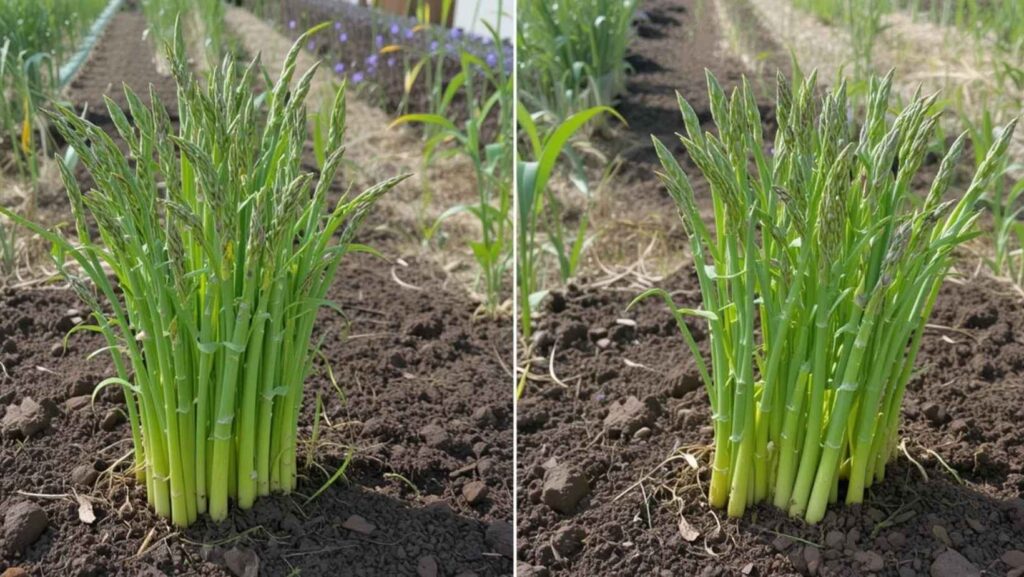
Would you want to know the Best soil for planting asparagus in a home garden? In my experience, asparagus can be grown in a wide variety of soil types; nevertheless, the ideal soils for growing asparagus are sandy-loam soils that have a subsurface with less permeability.
It is crucial to have good drainage. Ensure that you include two to four inches of organic matter in your sandy loam soil.
This should be incorporated into the soil to a depth of between six and eight inches. However, that is not all; as you continue reading, I will elaborate further on the topic that interests you the most.
Now, let’s get started.
What kind of soil is best for asparagus
Although asparagus may grow in most types of soil, it is like sandy, sandy loam, or loam soil that drains well.
Ensure your soil is loose, as the root systems need to spread out deep and wide. Prepare your poor soil by working with compost or manure before planting.
Steer clear of low-lying, moist regions and areas with thick or clay soil to prevent diseases like crown rot.
Checking the pH of your soil is a good idea because plants prefer a slightly acidic environment.
Plan to adjust in accordance with the optimal range, which is between 6.5 and 7.0.
Here’s a more thorough explanation:
Soil Type: Loamy or sandy soils with good drainage are ideal for asparagus.
It can withstand heavy soils, but in order to avoid root rot, they must be well-drained.
Crown rot can result from soils that hold water or have a high water table.
The ideal pH range for asparagus is between 6.5 and 7.0.
Add lime to your soil to improve its pH if it’s excessively acidic.
Preparing the Soil:
Boost drainage: Add organic matter, such as compost or well-rotted manure, to clay soils that are thick.
Include organic materials: To increase the fertility and structure of your soil, add compost, manure, or leaf mold.
Clear the planting area of any pebbles or debris that can obstruct the growth of roots.
Testing the Soil:
Check the quality of your soil: Get the pH and nutrient levels of your soil evaluated before planting.
Observe the advice: Depending on the results of your soil test, amend the soil accordingly.
What’s the best fertilizer for asparagus
Stark Brothers, a reliable supplier of asparagus, states that when it comes to fertilizing, asparagus plants like balanced, low-nitrogen fertilizers (5-10-10).
I consistently utilized vegetable fertilizer that was listed on the OMRI, and it always worked well for me.
Thorough analysis:
Balanced fertilizer:
A fertilizer with a balanced mix of nutrients is beneficial for asparagus, particularly for nitrogen for vegetative growth, phosphorus for root development, and potassium for general plant health and output.
Organic Matter: Adding organic matter, such as seaweed, compost, or well-rotted manure, enhances soil structure and offers a gradual supply of nutrients.
Fertilization Timing:
Before Planting: Before asparagus crowns are planted, fertilizer should be applied to the trenches.
Early Spring: Before the spears appear, apply a balanced fertilizer.
After Harvest: To assist the plants conserve energy for development the following year, fertilize in June with a nitrogen fertilizer after the last harvest.
Particular Fertilizer Choices:
Blood Meal: An excellent nitrogen source, particularly for young plants.
Phosphorus, which is essential for root growth, is provided by bone meal.
Wood ash or kelp May increase potassium levels.
Soil Testing: To determine your soil’s phosphate and potassium requirements, Stark Bro’s Nurseries & Orchards Co. recommends having it tested.
Nitrogen: After the final harvest, use a fertilizer rich in nitrogen or use a fertilizer with a greater nitrogen content since asparagus needs nitrogen, particularly in the first few years.
Phosphorus: When establishing crowns, phosphorus is particularly crucial for root growth.
Potassium: Potassium is essential for the general health and productivity of plants.
How do you make asparagus grow thicker
Asparagus should be fed with a nitrogen-rich fertilizer, and compost should be used at the end of each growing season after the fern fronds have been trimmed down.
This might be the root of the problem. If the asparagus patch does not receive sufficient sunlight, the spears may become spindly.
On the other hand, there are a number of reasons why your asparagus is so thin and soon turns into fern.
There is a possibility that the majority of the plants in your patch are female. The flowering of male and female plants can be used to differentiate between the two.
The blooms of both are a creamy white or yellow color. Stems that are yellow and orange are found inside the blooms of male plants, and the flowers themselves have the shape of bells.
It is the female flowers that contain a green ovary within the blossom; these ovaries develop into berries over the fall and winter months.
When compared to female plants, male plants often generate bigger yields of spears that are thicker, and they do so earlier.
Those plants that are female can be removed and thrown away.
In addition, there is the issue of over-harvesting, which results in the absence of sufficient fern fronds to accumulate food stores in the crown for the subsequent season.
How long does asparagus take to grow
Although asparagus can be produced from seed, it takes the plants three years to reach maturity; therefore, it is often cultivated from one-year-old crowns.
Nevertheless, the plant has the potential to continue producing fruit for ten years or longer, so the wait will be well worth it.
By the time the soil is ready to be worked, which is often in the late winter or early spring, you may begin planting.
Breakdown in great detail:
Developing from the Crowns:
Once you have planted crowns, which are the roots of plants that are one year old, you may often begin picking spears of asparagus after two years have passed.
Growing from Seed: If you begin with seeds, it will take an additional year for the plant to reach maturity, meaning you will have to wait around three years before harvesting it.
Why Do We Have to Wait?
To develop a robust root system and accumulate the necessary energy for spear production, asparagus is a perennial plant that requires time to mature.
In the first year of harvesting, it is advisable to harvest for a brief period (for example, one week).
This will allow the remaining spears to develop into ferns, which are essential for the plant’s ability to store energy.
Extended Periods of Productivity:
Asparagus plants, once they have established themselves, can continue producing fruit for a considerable amount of time, maybe for ten to fifteen years or even more.
How to Choosing a Location for Asparagus Plants
Making a strategy before planting is the most effective method to achieve success.
Suppose you are interested in cultivating root crops and/or vegetables; do you have a specific location in mind where you want to plant particular varieties?
Gain as much knowledge as you can about the requirements of each plant, taking into account the following components:
The sun and fertile soil
Provision for planting in the future
Sun and Good Soil: It is recommended that root crops and vegetables be grown in an area that receives a sufficient amount of sunlight, typically between six and eight hours per day.
Certain green plants, such as lettuce, will thrive in regions that receive more shade. Examine the exact criteria that are necessary for the types that you intend to cultivate.
An excellent planting area must also have soil that is both well-drained and rich in order to be considered suitable.
If your soil needs amendment, start this chore before deciding to plant.
Provision of Room for Future Plantings:
You should also consider the possibility that once you have harvested a few crops of your own homegrown foods, you will want to plant more while planning your garden bed.
To begin with, it is best to start with a smaller region and allow for development.
This is especially true if you have access to a high-quality growing place. You’ll be grateful to yourself in the future!
Final thought
Now that we have established the Best soil for planting asparagus in a home garden, as long as the soil drains properly and does not retain water after rain, asparagus may be grown on heavy, medium, or sandy soils.
You may still plant there, even if a pool of water remains in your planting location after a rainstorm.
As long as the water evaporates in a day. It could be possible to raise this region to a higher level by adding more dirt.
Have your soil tested to determine whether it contains the proper quantity of nutrients for asparagus growth before planting.
Before planting, spread a 2″ thick layer of weed-free compost over your soil if it does seem to be primarily clay.
I’ve provided a link to information about growing asparagus and checking soil.