
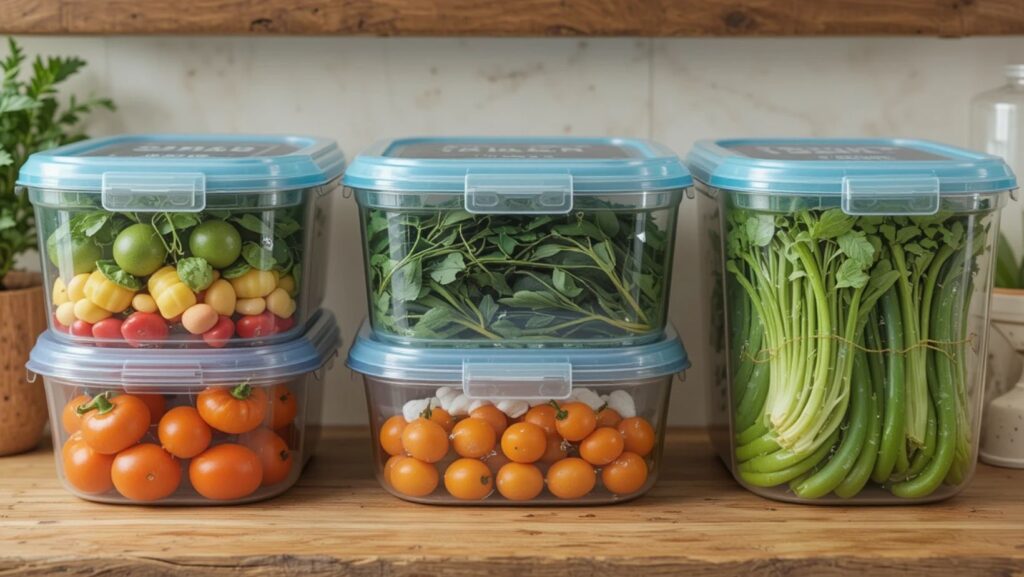
Would you want to know the Best containers for vegetable storage? In my experience, the best containers for storing vegetables are those that are appropriate for the type of vegetable being stored, as well as whether or not you want to keep the item moist or dry.
Airtight containers, containers that include vents, or bags that are just loosely closed are all options.
Different storage methods will be required for the various types of produce and herbs that are stored in the refrigerator based on the specific requirements of each item.
Some are incredibly advantageous to have air circulation in order to keep their freshness at their highest possible level, while others should be kept airtight.
There are times when moisture has to be removed, but there are other instances when it is required to be retained in water (like cut flowers).
To be sure, that is not all, but as you continue reading, I will provide you with further information on the topic.
Now, let’s get started
Can You Store Vegetables in an Airtight Container
The answer, in a nutshell, is yes. However, before you run out and spend a lot of money on just any old storage container, let’s have a look at what makes a genuinely excellent vegetable container for storage:
Management of Moisture: Overabundance of moisture is the most formidable adversary of fresh food. You should look for vegetable containers that have elements that regulate the humidity.
The Systems of Ventilation: For your vegetables to remain crisp and prevent premature deterioration, proper ventilation is essential.
Quality of the Material: Choose materials that are free of BPA and are of food-grade quality so that they do not leach toxins into your valuable fruit.
Cleaning Ease: Nobody wants a vegetable container that is a headache to clean, yet that’s precisely what they want!
What are the 5 Best Vegetable Containers for Extended Freshness
1. Good Grips by OXO Produce Keeper by GreenSaver
The cutting-edge carbon filter in these vegetable containers slows down the ripening process by absorbing ethylene gas.
The raised colander protects produce away from dampness, and the adjustable vent allows you to manage humidity
Advantages:
increases the lifespan of produce by up to 50%.
Safe for the dishwasher
You can see your vegetables because to the clear design.
Drawbacks: A little costly
takes up a lot of refrigerator room.
2. Freshworks Rubbermaid Produce Saver
Another fantastic choice that has become a kitchen mainstay. The elevated base protects produce from moisture, and the proprietary FreshVent technology controls airflow.
Advantages: Less expensive than OXO
There are several sizes available.
Design that stacks
Cons: Plastic seems less high-end.
Cleaning a lid might be challenging.
3. Produce Keeper by Progressive International Prepworks
What a cost-effective wonder! These veggie containers are capable of some very clever stunts. It is pretty adaptable for a variety of products because of the detachable base basket and adjustable vent.
Advantages: The most economical choice
Small-sized design
Detachable drainage basket
Excellent for compact refrigerators
Cons: Not as sturdy as high-end alternatives
Fewer options for sizes
Simple design
4. Preserver for Bluapple Produce
This is an original solution! These are ethylene gas-absorbing packets that you may put in your current produce drawers or containers in place of a conventional container.
Excellent for people who don’t want to spend a lot of money on brand-new storage solutions.
Advantages: Compatible with the current storage
Exceptionally low prices
Adaptable to various settings
Technology validated by science
Cons:
Replacement is required every three months.
Not a comprehensive storage option
requires precise positioning.
5. LUXEAR Container for Storing Fresh Produce
The Cadillac of vegetable receptacles! With the several compartments this high-end alternative offers, you can keep various kinds of fruit that require different levels of humidity apart.
Advantages: Several storage spaces
The best grade of construction
Exceptionally efficient humidity regulation
It looks fantastic in the refrigerator.
Cons: The priciest choice
Bulky style
Perhaps too much for smaller homes.
What are the best containers to keep vegetables fresh
Vegetables store best in containers with tight-fitting lids, good ventilation, and moisture control. You can use reusable silicone containers, stainless steel containers, or glass containers.
Glass containers are perfect for keeping fresh vegetables in storage.
Stainless steel is perfect for keeping fresh fruit in storage.
Silicone bags that can be reused: Keep vegetables wet and shield it from ethylene gas.
Containers with lids that fit snugly: Keep vegetables wet and shield it from ethylene gas.
Holes in the paper packaging: Good for preserving the freshness of vegetables
Nets made of plastic: Good for preserving the freshness of vegetables
Paper bags are helpful for keeping mushrooms in storage.
Storage advice
Remove vegetables from plastic bags with holes so it can air.
Brussels sprouts and cabbage should be kept dry and in airtight containers.
Keep the chard, mustard greens, collard greens, and kale in a sealed glass container or a loosely wrapped bag.
Fruits and vegetables should be refrigerated in perforated plastic bags to retain moisture and allow for airflow.
What are the Advantages of Growing Vegetables in Containers
For many gardeners, container gardening is a sensible option rather than merely a fad. There are several advantages to growing veggies in containers, particularly if you have limited space.
Here’s why this approach is becoming more popular:
1. Making the Most of Limited Spaces
Containers maximize your available space, whether it’s a sunny windowsill or a little balcony.
Container gardening transforms the minor corner into a functional green area in urban environments, such as a small apartment balcony or a crowded rooftop garden.
2. Making Urban Gardening Possible
The customary stretch of land is frequently a long cry from reality for city inhabitants.
Container gardening turns balconies and roofs into flourishing vegetable patches, bringing that fantasy right to your door.
3. Improved Plant Yield and Health
You are in charge when you decide to grow in pots. You avoid problems with low-ground soil quality by choosing the soil in which your plants grow.
Raising your plants above the ground reduces the number of pests and illnesses that affect them. The outcome? Rich, abundant vegetables without the typical complication.
How to Choosing the Right Containers for Vegetable Gardening
There are a few things to think about while selecting containers for vegetable planting. It’s essential to consider your plants’ demands in addition to their appearance.
Because various crops have varying root depths, one crucial factor to take into account is the container’s depth.
Aligning Root Depth with Container Size:
Here is a basic rule for matching container size to root depth so that your veggies have the best chance of thriving:
Herbs and salad greens are examples of shallow-rooted plants that thrive in smaller containers.
Vegetables with deep roots, like peppers and tomatoes, need bigger pots to fit their enormous root systems.
Container Materials: Benefits and Drawbacks
Vegetable garden containers come in a variety of materials, each with unique benefits and drawbacks.
Here are a few well-liked choices:
Plastic Plastic containers are inexpensive, lightweight, portable, and have good moisture retention. They might not be the most eco-friendly option, though, as they might break easily over time.
Ceramic Ceramic pots might be an appealing choice if you value aesthetics.
They are less prone to topple over since they are often heavier than other materials. On the downside, they are frequently more costly and breakable.
Wood: Wood containers may be a terrific option for a natural look. They also give the earth significant insulation.
It is essential to utilize treated wood or choose rot-resistant types, such as cedar, because untreated wood is prone to decay.
When choosing the container material, keep in mind to take durability, affordability, and general appropriateness for your particular gardening demands into account.
Final thought
Now that we have established the Best containers for vegetable storage, Temperatures between 0 and 4 degrees Celsius, Vegetables such as leafy greens (lettuce, spinach), root vegetables (carrots, beets), and brassicas (broccoli, cauliflower) do best when stored in colder settings.
The rates of respiration are considerably lowered at these temperatures, and the potential for the development of microorganisms is significantly decreased as well.