
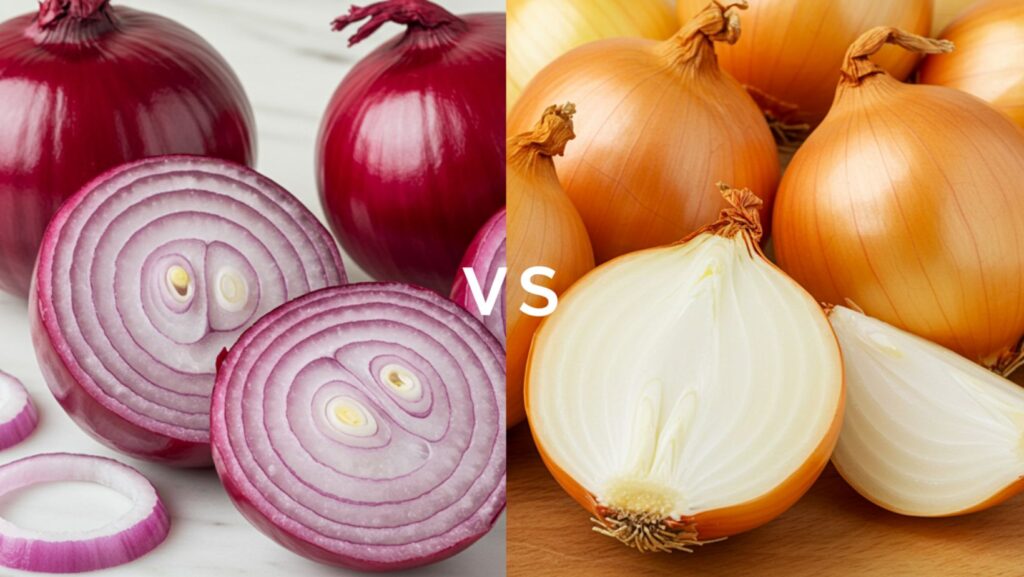
Would you want to know if red onions are better for you than yellow onions? It is generally accepted that red onions are slightly more beneficial to your health than yellow onions.
This is due to the fact that red onions contain higher levels of antioxidants such as quercetin and anthocyanin, which are responsible for their red color.
These antioxidants have the potential to offer greater health benefits, such as reducing inflammation and fighting chronic diseases.
However, it is important to note that all varieties of onions are nutritious and offer similar health benefits.
Onions that are white and onions that are yellow are nearly comparable in terms of their nutritional value; however, red onions contain anthocyanin, which gives them a vibrant color.
Anthocyanins are a form of antioxidant that has been associated with a reduction in the risk of developing chronic illnesses such as cancer and heart disease.
However, that is not all; as you continue reading, I will provide you with further information on the topic matter.
Now, let’s get started
What Is the Difference Between Red and Yellow Onions?
One of the most noticeable distinctions between red onions and yellow onions is the color of the onion.
A chemical known as anthocyanins is responsible for the reddish-purple color of red onions.
Anthocyanins are also responsible for the red, purple, or blue coloration of blueberries, purple cauliflower, eggplant, and other foods.
Anthocyanins are antioxidants that have been linked to possible health advantages, such as lowering the risk of heart disease and cancer, as stated by the Cleveland Clinic. T
hese anthocyanins are responsible for the beautiful appearance of foods while also being associated with potential health benefits.
There are several health advantages associated with onions of all kinds; however, if you are seeking a particular anthocyanin boost, red onions are the way to go.
What Are the Best Uses for Red Onions vs. Yellow Onions
The visual appeal of red onions is the superpower of red onions. When you want to add a stunning splash of color to pizza or salads, look for red onions because of their gorgeous color.
Red onions “provide dramatic presentation opportunities,” therefore you should seek them.
“Pity the Greek salad garnished with yellow or white onions, “
“The hue is an integral component of the dish’s character.
The “instant drama” that pickled red onions provide to a meal is another of Weinstein’s favorite things about them.
” The purple color of the red onions transforms into a vivid magenta when an acid is added to them. “Pickled red onions revitalize foods that are lacking in color.”
In addition to the color variations between red and yellow onions, certain distinct culinary characteristics distinguish red onions from yellow onions and make them more suitable for particular meals.
Red onions, which are more pungent than yellow onions when they are raw, are a great addition to salads, sandwiches, and salsas.
As they are roasted in the oven or on the grill, they have a texture that is similar to that of jam.
They are more sumptuous than their golden relatives when it comes to antipasti and grill dishes because of their very smooth inside.
What is the Nutrition of Red Onions vs. White Onions
Both red and white onions are mild and sweet, and they give flavor to a wide range of foods when they are cooked or raw.
The red onion has a minor nutritional advantage over the white onion.
Calorie Difference Is Minimal:
Both the red onion and the white onion are low in calorie content. White onions have 42 calories per 100 grams, compared to 37 calories per 100 grams of raw red onions.
Increasing your intake of low-calorie items, such as red and white onions, will help you reduce your caloric intake, which aids in weight management.
Comparing the Fibre:
The white onion has 1.2 grams of fiber per 100 grams, whereas the red onion has 2 grams, making it a little superior source of fiber.
Both onions can help you reach your daily fiber requirements of 14 grams per 1,000 calories consumed, or 28 grams on a diet of 2,000 calories, even though neither is very high in fiber.
Only over half of Americans consume the recommended amount of fiber per day. Increasing the amount of fiber in your diet lowers your risk of heart disease, diabetes, high blood pressure, obesity, and stroke.
Examining Minerals and Vitamins:
A 100-gram serving of red or white onions provides more than 10% of the daily requirement for vitamin C, making them both excellent sources of the vitamin.
Your body requires vitamin C, a water-soluble vitamin, to maintain immunological function and to produce collagen, a protein that aids in wound healing.
Additionally, it is an antioxidant that helps prevent your body from being damaged by free radicals.
Both red and white onions provide 2 percent of your daily calcium needs and 2 percent of your daily iron needs, in addition to vitamin C.
Color Matters:
Quercetin, an antioxidant flavonoid found in both red and white onions, may help against heart disease, stroke, and several types of cancer.
The dried outer layers of the onion have a higher concentration of flavonoids than the inner layers. Compared to white onions, red onions have more quercetin.
Which Onion to Choose: Red or Yellow
It is possible to use any of the two onions in place of the other despite the fact that they have somewhat different flavors, colors, and textures.
This is dependent on the reason why you plan to utilize the onion.
Because of their color and mild flavor, red onions are a great choice for raw dishes such as salads, salsas, and anything else that requires raw ingredients.
Because of its sweet flavor, however, yellow onion is the ideal choice for cooking and adding flavour to foods.
This is because yellow onion has a sweet flavor. In point of fact, the longer it is cooked, the more sweet it becomes.
Why are red onions better than white onions? How do they differ
Not only does the flavor of white onions differ from that of red onions, but there are also other differences.
In comparison to white onions, red onions have a few additional nutrients, such as a higher concentration of vitamin C, a significant amount of calcium (which is beneficial for bones and teeth), and a considerable amount of potassium (which is useful for the nervous system).
Both of them, like the rest of the onion family, contain a significant amount of antioxidants.
In addition to that, they contain a great deal of fiber and beneficial oils.
The red onions are preferred to be consumed raw because they have a somewhat sweeter flavour than the white onions.
Additionally, it is advised that red onions be consumed raw since cooking the onion causes a significant amount of the nutrients to be lost.
Despite the fact that they are members of the same family and share a similar appearance, every type of food has a unique flavor, a set of nutrients, and a set of advantages.
But both are extremely beneficial to one’s health.
Final thought
Now that we have established that red onions are better for you than yellow onions, Because red and yellow onions may be used interchangeably in the majority of prepared recipes, you are free to use whichever variety you happen to have on hand.
However, if you are looking for a magnificent color, as well as the antioxidant anthocyanins that come along with that color, then you should opt for fiery red onions.
They will provide that last touch of drama to your meal.