
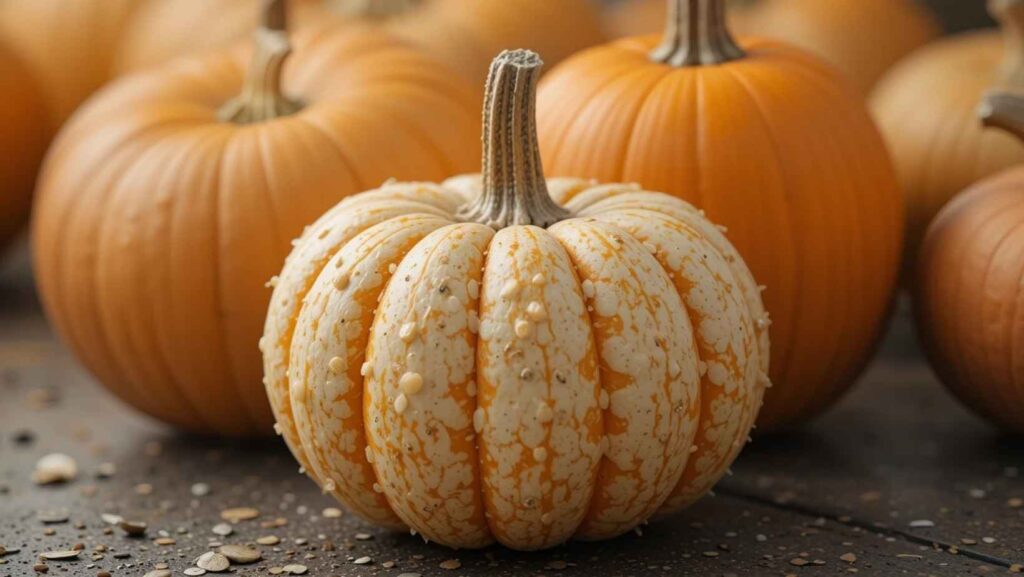
Would you want to know if pumpkins are fruits or vegetables? According to my experience, a pumpkin is considered a vegetable in cooking even though it is technically a fruit.
This is due to the fact that, although having seeds and growing from the plant’s bloom, it is frequently cooked and consumed like a vegetable.
But that’s not all; as you continue reading, I’ll provide additional information on the topic.
Additionally, The seeds of a pumpkin vine produce the fruit known as a pumpkin. But a lot of people question whether they are fruits or veggies. In any case, what distinguishes a fruit from a vegetable?
Surprisingly, the answer to this frequently asked question might differ depending on whether you are a cook or a botanist.
Please continue reading to learn more about pumpkins and how to categorize them because this can cause a lot of confusion.
Now, let’s get started.
Is Pumpkin a Vegetable or a Fruit
Actually, pumpkin is classified as a fruit. In plants, the portion of the plant that grows from the flower and the naked seeds is called the fruit.
However, pumpkins are considered vegetables in cooking since they are not too sweet and are used in stews and soups before cooking.
However, this is not the end of the debate on the definition of a pumpkin.
In the next paragraphs, you will learn what sort of fruit pumpkin is, when it is classified as a vegetable, and what kind of vegetable pumpkin is.
In addition, we will explain the reasons why you ought to consume more of this meal, regardless of the kind of food that you believe it to be
What Kind of Fruit Are Pumpkins
You may be curious about the type of fruit that pumpkins are now that you are aware that pumpkins are officially considered to be fruits.
Berries are any fruits that do not have a real pit and are formed from a single flower that has a single ovary.
This is the technical definition of a berry. All of the following are examples of real berries: grapes, blueberries, tomatoes, peppers, eggplants, and squashes.
Surprisingly, avocados are also classified as berries due to the fact that the seed that is located in the middle of the fruit is not a genuine pit.
Feel like that’s a bit confusing? To put this into perspective, strawberries, raspberries, and blackberries are not in any way classified as berries.
Why do you consider pumpkins fruit rather than a vegetable
In most cases, the names of fruits and vegetables are determined by the manner in which they are consumed.
There is frequently a difference between how individuals consume things and how they perceive them.
“The way that we often identify them is in reference to whether or not we consume them as a dessert, salad, or meal.
To illustrate, use a tomato or a cucumber.
As a result of the fact that people do not normally consume them as sweets but rather as part of a salad or as part of a meal, they have been categorized as vegetables despite the fact that they are technically considered to be fruits.
“Pumpkins are a tricky one” since some people use them to create soups or stews, which are considered to be meals, while others use them to make pies, which are considered to be desserts.
There are instances when that can be somewhat perplexing.
How Can I Tell the Difference Between a Fruit and a Vegetable
a fruit is anything that develops from a plant’s flower. At the same time, a vegetable is anything that develops from other plant components.
Vegetables frequently have roots, leaves, or stems, whereas fruits typically contain seeds.
In cooking, the flavor of the product dictates whether it is referred to as a fruit or a vegetable; savory suggests vegetables, while sweet indicates fruits.
Because of their savory flavor, foods like avocados, olives, and zucchini—which are technically fruits because they come from flowers—may be confused with vegetables as a result of this discrepancy.
While most cultures eat veggies as their main meals, they often frequently nibble on fruits or utilize them in desserts.
Because of their taste character, some meals are more often recognized under one category even when they officially belong to another.
The most prominent illustration of this disparity is the tomato. In 1893, the US Supreme Court categorized this real fruit as a vegetable in compliance with US customs laws.
In the end, both fruits and vegetables have many health advantages. They are a fantastic source of fiber and are packed with vitamins and minerals.
Compared to manufactured sugar, the natural sugar in fruits is far healthier, and there is very little fat and salt.
Is pumpkin good for you
Pumpkin has many wonderful health advantages in addition to being a fantastic Halloween décor.
“Pumpkins are a powerhouse for your health.
In addition to being high in beta-carotene, a powerful antioxidant that our bodies transform into vitamin A for immune and eye health, they are also high in fiber, which aids in digestion and keeps you feeling full.
Pumpkin has very few drawbacks, although if you control how much you consume, it might be high in carbohydrates.
If you’re too busy to prepare a fresh pumpkin, canned pumpkin is still a great option. However, be sure to get plain canned pumpkin instead of pumpkin pie filling, which has “a significant amount of added sugar.”
“When comparing fresh pumpkin to canned, they’re nutritionally similar, but canned pumpkin often has a more concentrated amount of fiber and nutrients because it’s slightly more processed.”
While both alternatives are excellent, canned pumpkin is the best choice for simplicity of preparation and convenience.
What are The Health Benefits of Pumpkin
There is little doubt that pumpkins have several health advantages, regardless of the dietary category you assign them.
Pumpkins are a fantastic source of fiber to start. Dietary fiber has a significant role in blood pressure reduction, weight loss, and heart health maintenance.
Consuming foods high in fiber might also help you avoid unhealthy snacking and feel fuller after meals.
Like pumpkins, orange squashes are a great source of beta-carotene. Immune, ocular, and reproductive health are all supported by this antioxidant.
This unquestionably nutritious dish may even help prevent cancer. It contains a lot of vitamin A, which has been shown in studies to help prevent lung and prostate cancer.
By encouraging a healthy probiotic load in the gut, which translates to a stronger immune system that is better equipped to combat cancer cells, all that dietary fiber in pumpkin can also aid in the battle against cancer.
The orange flesh of the pumpkin is only one of the many health advantages it offers.
Packed with protein and unsaturated fatty acids, pumpkin seeds are particularly nutrient-dense.
Consuming pumpkin seeds has been demonstrated to lower the chance of chronic illness and combat several forms of cancer.
Like many other fruits in the gourd family, pumpkins are high in minerals, such as magnesium.
When and How Do I Harvest my Pumpkins
The harvesting of pumpkins should take place whenever they have attained their maximum development potential.
It is important to examine the seed packaging in order to determine when the pumpkins have reached their full maturity.
When it is ready, a pumpkin will have a dark, solid hue and a stem that is more rigid than typical. When the skin is more rigid, the pumpkin is more mature.
If the skin of the pumpkin can be punctured with your fingernail with only a slight amount of pressure, then the pumpkin is not yet ready to be picked.
Choose a day that is dry and warm, and then remove the pumpkins from the vine using pruners or a sharp blade.
Once your pumpkins are ready to be harvested, you may harvest them. A cut should be made around four inches above the top of the pumpkin, and the pumpkin should not be transported by its stem.
Be careful while transporting pumpkins because they are prone to bruising.
Final thought
Now that we have established that pumpkins are vegetables, From the point of view of a botanist, a pumpkin is considered to be a fruit since it is a product of the structure of flowering plants that includes the ability to bear seeds.
In contrast, vegetables are the parts of plants that may be consumed, including the leaves, stems, roots, flowers, and tubers. Vegetables are also known as “vegetables.”